

Key Takeaways
Our Verdict
No single method is universally superior. Raised beds balance control and yield for most beginners with outdoor space, containers work well for those with limited room or poor-quality land, and ground planting rewards gardeners willing to invest time in soil improvement. Many experienced gardeners use a combination of all three.
| Best for | Recommended |
|---|---|
| Beginners with poor or unknown native soil | Raised Beds |
| Renters, balcony gardeners, or those with very limited space | Containers |
| Those with good soil and larger growing ambitions on a tight budget | Ground Planting |
| Gardeners who want maximum flexibility and variety | A combination of all three |
Why Your Setup Choice Matters More Than You Think
Before you buy a single seed packet, deciding how you'll grow is just as important as deciding what you'll grow. Your setup affects drainage, soil quality, maintenance workload, upfront cost, and even which plants will thrive. Each method - raised beds, containers, and ground planting - has genuine strengths and real trade-offs. Understanding them early can save you frustration down the season.
If you're still deciding what to grow once you've chosen your method, our guide to rewarding vegetables for first-time edible gardens is a practical next step.
| Raised Beds | Containers | Ground Planting | |
|---|---|---|---|
| Upfront cost | Moderate to high | Low to moderate | Low |
| Soil control | Excellent - you fill it | Excellent - you fill it | Depends on existing soil |
| Drainage | Very good | Good with drainage holes | Varies by native soil |
| Watering frequency | Moderate | High - dries quickly | Lower in ground |
| Suitable for renters | Usually no | Yes | Usually no |
| Space required | Outdoor ground space | Minimal - balcony ok | Outdoor ground space |
| Physical effort (bending) | Low if tall enough | Variable by pot height | High |
| Scalability | Moderate | Easy to add pots | Highly scalable |
| Best for large crops | Yes | No - root space limited | Yes |
| Weed pressure | Low | Very low | High |
Raised Beds: Control and Comfort
A raised bed is a bottomless frame - typically wood, galvanized metal, or composite - filled with a custom soil mix and set on top of your existing ground. You control exactly what goes into that soil, which is a significant advantage if your native earth is compacted clay, sandy, or of unknown quality.
Key advantages
- Drainage: Water moves freely through a well-blended mix, reducing the root rot risk common in dense native soils.
- Soil quality: You fill it with what plants need from day one. Pair this with advice from our guide to garden soil types to get the blend right.
- Ergonomics: A bed that's 12-18 inches tall reduces bending, making gardening more accessible for those with back or knee concerns.
- Warming faster: Raised soil warms earlier in spring, extending your growing window.
Honest trade-offs
- Upfront cost for lumber or metal frames plus quality fill soil can be significant.
- Beds dry out faster in hot weather and need consistent watering.
- Not suitable for renters or those without stable outdoor ground.
Containers: Maximum Flexibility
Container gardening means growing in pots, planters, fabric bags, window boxes, or any vessel with drainage holes. It's the most adaptable method - you can garden on a balcony, a concrete patio, or even indoors near a sunny window.
Key advantages
- Portability: Move plants to follow the sun or protect them from frost.
- Space efficiency: Ideal when square footage is limited.
- Pest management: Elevated and isolated containers can reduce some ground-level pest pressure. Our guide to identifying garden pests covers what to watch for regardless of method.
- Low commitment: A good option if you're renting or experimenting before investing in permanent infrastructure.
Honest trade-offs
- Containers dry out quickly - daily watering may be needed in summer heat.
- Nutrients deplete faster; plants need more frequent feeding. See our overview of organic vs. synthetic fertilisers to understand your options.
- Volume limits root development, making containers unsuitable for large crops like corn, sprawling squash, or deep-rooted perennials.
Ground Planting: Low Cost, High Commitment
Growing directly in the earth is how gardens have worked for millennia. You amend the existing soil, mark out rows or planting zones, and get growing. It's the most economical entry point - no frames, no bags of purchased mix required beyond amendments.
Key advantages
- Lower upfront cost: The main investment is labor and soil amendments rather than structures or containers.
- Unlimited root space: Plants like tomatoes, squash, and root vegetables can spread freely.
- Scalability: Expand your plot simply by digging more area.
- Natural ecosystem integration: Earthworms, beneficial microbes, and natural water tables all support plant growth in well-tended native soil.
Honest trade-offs
- Poor existing soil requires real work - testing, amending with compost, and potentially waiting a full season for improvements to take effect. Our article on composting at home explains how to build your own amendments inexpensively.
- Drainage problems in clay-heavy soil can be difficult to solve without raised alternatives.
- Weeds compete directly with your plants and require consistent management.
- Bending and kneeling are unavoidable, which may be a physical barrier for some gardeners.
Combining Methods: A Practical Approach
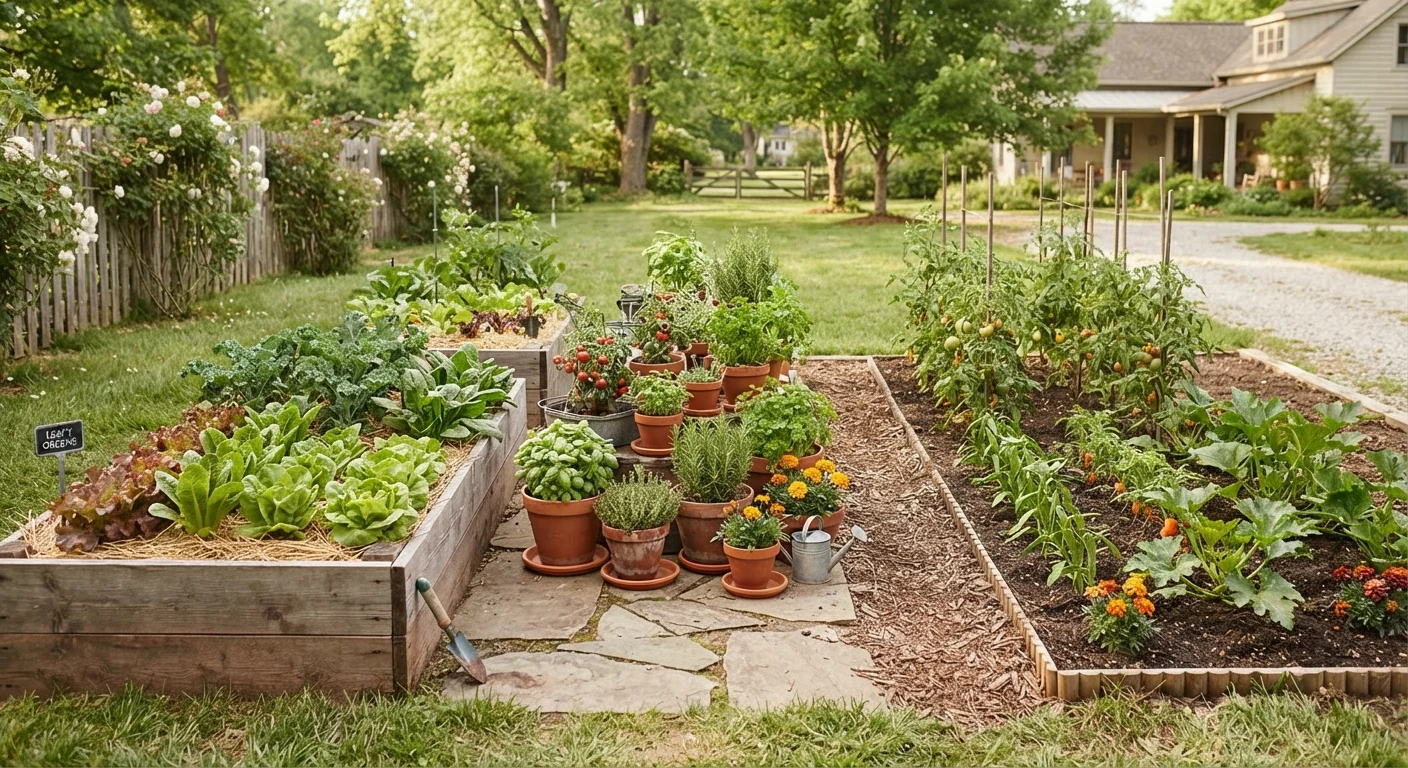
Many gardeners find that a hybrid approach serves them best. For example: ground-plant sprawling crops like pumpkins, use raised beds for salad greens and herbs where soil control matters most, and keep a few containers near the kitchen door for frequently harvested herbs like basil or chives.
Once your setup is chosen, your next decision is what to plant in it. If you're considering starting from seed versus purchasing young plants, our seed vs. seedling comparison walks through the trade-offs clearly. And if you want to make the most of your growing space regardless of method, companion planting principles can help you plan a layout where plants support each other.
The right setup isn't about what looks impressive - it's about what fits your space, your schedule, and your goals this season.