

Key Takeaways
Improves long-term soil structure and biology
Organic matter feeds beneficial microbes, which in turn improve soil texture, aeration, and water retention - benefits that compound across seasons.
Lower risk of root burn from over-application
Because nutrients release slowly through microbial breakdown, organic fertilisers are generally more forgiving if a beginner applies slightly too much.
Adds beneficial trace minerals alongside primary nutrients
Many organic sources like kelp meal or compost contain a range of micronutrients that support overall plant health beyond the basic N-P-K requirements.
Reduces nutrient runoff risk over time
Slow-release nutrients are less likely to leach rapidly through soil into waterways, lowering the potential for environmental impact compared to soluble synthetics.
Nutrients are not immediately available to plants
Because microbial breakdown is required first, organic fertilisers cannot quickly correct a visible nutrient deficiency - they are a long-game strategy.
Nutrient content varies and is harder to measure precisely
Unlike synthetic options with a guaranteed N-P-K ratio on the label, the nutrient content of organic materials such as compost can vary significantly by batch and source.
Can be bulkier and more labour-intensive to apply
Organic amendments like compost or manure often need to be worked into soil in larger volumes, which requires more physical effort than broadcasting granules or mixing a liquid feed.
Some products carry an odour during application
Blood meal, fish emulsion, and composted manure can have strong smells that some gardeners - particularly those gardening in small spaces or indoors - find difficult to manage.
Our Verdict
Organic fertilisers build long-term soil health and carry a lower risk of plant damage from over-application, making them a forgiving choice for most beginners. Synthetic fertilisers act faster and can correct nutrient deficiencies precisely, which is useful when plants show clear signs of stress. Many experienced gardeners use both strategically, rather than treating it as an either-or decision.
Organic fertilisers suit beginners focused on long-term garden health and sustainability, while synthetic fertilisers better serve those who need fast, targeted results or are growing in containers with limited soil volume.
What Fertilisers Actually Do
Plants need three primary nutrients to grow: nitrogen (N), phosphorus (P), and potassium (K). You'll see these listed on fertiliser packaging as an N-P-K ratio, such as 10-10-10. Fertilisers - whether organic or synthetic - are products that supply these nutrients to plants, along with secondary and trace minerals depending on the formulation.
What separates organic from synthetic fertilisers is not what nutrients they contain, but where those nutrients come from and how quickly plants can access them. Understanding this distinction helps you make a more informed choice for your garden setup - whether you're growing outdoors in beds or experimenting indoors for the first time.
How Organic Fertilisers Work
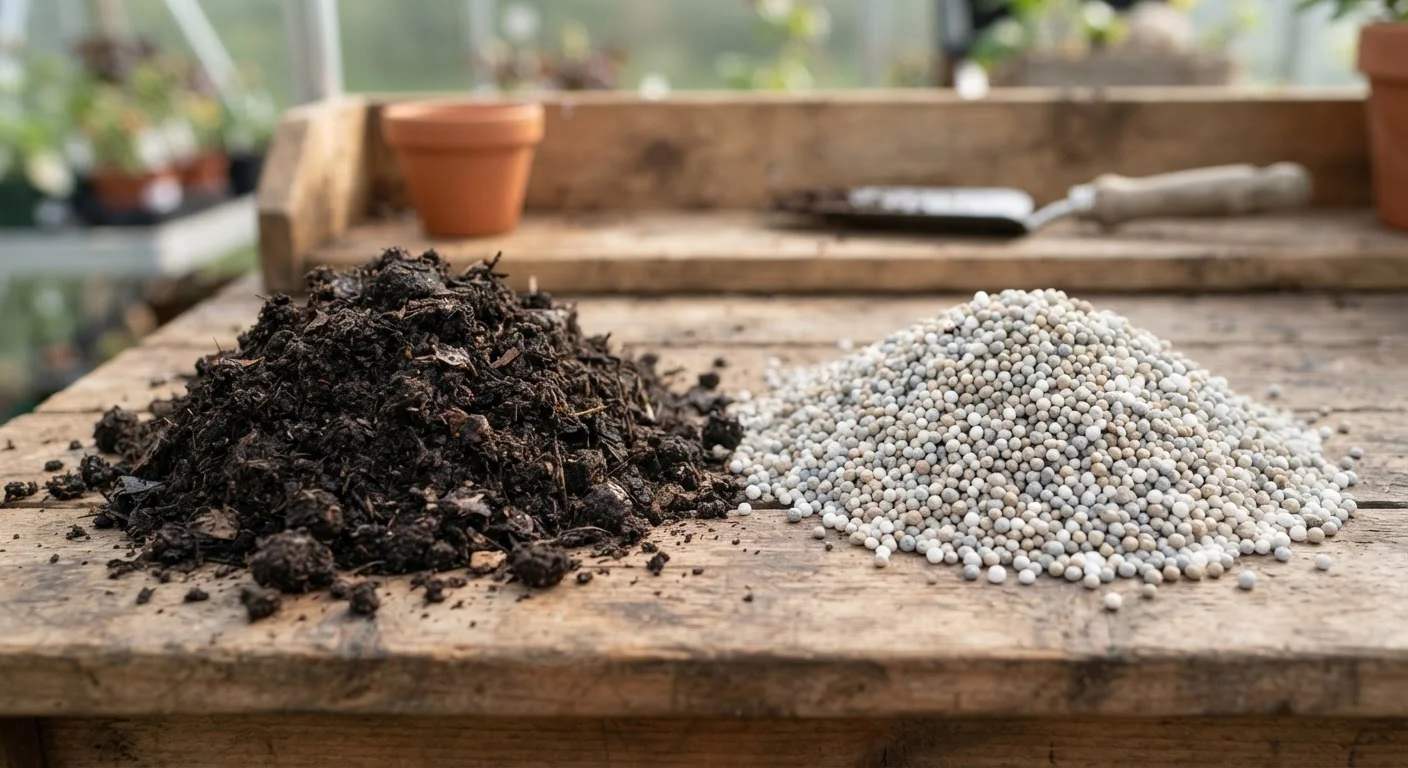
Organic fertilisers are derived from natural sources: composted plant matter, aged manure, bone meal, blood meal, kelp, and worm castings are common examples. They contain nutrients in forms that are not immediately available to plants. Instead, soil microbes - bacteria and fungi - must first break down the organic material, releasing nutrients gradually over weeks or months.
This slow-release process has a key side effect: it actively feeds the soil ecosystem. Healthier soil biology improves soil structure, drainage, and the ability to retain moisture over time. For gardeners working in raised beds or in-ground plots, building this biological foundation tends to pay off across multiple growing seasons.
Improves long-term soil structure and biology
Organic matter feeds beneficial microbes, which in turn improve soil texture, aeration, and water retention - benefits that compound across seasons.
Lower risk of root burn from over-application
Because nutrients release slowly through microbial breakdown, organic fertilisers are generally more forgiving if a beginner applies slightly too much.
Adds beneficial trace minerals alongside primary nutrients
Many organic sources like kelp meal or compost contain a range of micronutrients that support overall plant health beyond the basic N-P-K requirements.
Reduces nutrient runoff risk over time
Slow-release nutrients are less likely to leach rapidly through soil into waterways, lowering the potential for environmental impact compared to soluble synthetics.
Because the nutrient release is tied to microbial activity, organic fertilisers are unlikely to burn plant roots when applied at reasonable rates - a common beginner concern.
How Synthetic Fertilisers Work
Synthetic fertilisers are manufactured through industrial chemical processes. Their nutrients are formulated to dissolve in water and become immediately available for plant uptake, often within days of application. This speed is their main practical advantage.
If a plant is showing yellowing leaves from nitrogen deficiency, a liquid synthetic fertiliser can visibly improve the plant within a week. For container gardeners - where potting mix has limited natural fertility - targeted, soluble feeding can also be more practical than relying on organic matter alone.
Nutrients are not immediately available to plants
Because microbial breakdown is required first, organic fertilisers cannot quickly correct a visible nutrient deficiency - they are a long-game strategy.
Nutrient content varies and is harder to measure precisely
Unlike synthetic options with a guaranteed N-P-K ratio on the label, the nutrient content of organic materials such as compost can vary significantly by batch and source.
Can be bulkier and more labour-intensive to apply
Organic amendments like compost or manure often need to be worked into soil in larger volumes, which requires more physical effort than broadcasting granules or mixing a liquid feed.
Some products carry an odour during application
Blood meal, fish emulsion, and composted manure can have strong smells that some gardeners - particularly those gardening in small spaces or indoors - find difficult to manage.
However, because synthetic nutrients are highly concentrated and water-soluble, over-application is easier to do and more consequential. Excess nutrients can accumulate in the soil, affect pH over time, or leach into groundwater. Following label rates carefully is especially important.
3-5 days
Typical nutrient uptake time for liquid synthetic fertilisers
Water-soluble synthetic fertilisers are generally absorbed within days of application, compared to weeks or months for organic slow-release materials.
~30%
Estimated fertiliser nitrogen lost to leaching in heavy rain
Research from university extension programs indicates that a significant portion of applied nitrogen - especially from soluble synthetics - can leach out of the root zone before plants absorb it.
Choosing an Approach as a Beginner
There is no obligation to choose strictly one camp. Many gardeners use a slow-release organic product as a baseline soil amendment, then supplement with a synthetic fertiliser when plants signal a specific need. That said, if you're just starting out, here's a simple framework:
- Start with a soil test. Many cooperative extension services and garden centres offer inexpensive soil testing. Knowing your baseline nutrient levels prevents unnecessary fertilising.
- Match your method to your setup. Organic amendments work best in garden beds where soil biology can develop. Containers with sterile potting mix often respond better to liquid, soluble feeds.
- Follow application rates. More fertiliser does not equal more growth. Both types can cause fertiliser burn or nutrient imbalances if over-applied.
If you started your garden from transplants, see our guide on seeds versus seedlings for more on how your starting point affects early nutrient needs.
A Note on Organic Certification
If you are growing food and want your produce to qualify as organically grown under formal certification standards, synthetic fertilisers are generally not permitted under those programs. However, for home gardeners with no certification goal, the choice is purely practical. Check with your local agricultural extension office if certification is relevant to your situation.