

Key Takeaways
Garden Soil Type
Soil type refers to the physical composition of the ground in your garden - specifically the balance of sand, silt, and clay particles it contains. This ratio determines how well your soil holds water, drains excess moisture, and allows plant roots to grow. Different plants thrive in different soil types, so knowing yours is the first step to growing successfully.
Soil texture is classified by particle size: sand particles are largest (0.05-2mm), silt is medium (0.002-0.05mm), and clay is finest (under 0.002mm). The relative proportions determine drainage, aeration, and nutrient-holding capacity.
The Three Main Soil Types - and What Sets Them Apart
Before you plant anything, it helps to understand what's actually underfoot. Most garden soils fall into three broad categories: sandy, clay, and loam. Each has a distinct feel, behavior, and set of strengths and weaknesses.
Sandy soil is gritty and loose. Water passes through it quickly - which means it drains well but also dries out fast and struggles to hold nutrients. Plants in sandy soil often need more frequent watering and feeding.
Clay soil is the opposite: dense, sticky when wet, and prone to compacting into hard chunks when dry. It holds moisture and nutrients well, but poor drainage can suffocate roots and invite fungal problems. It also warms slowly in spring, which delays planting.
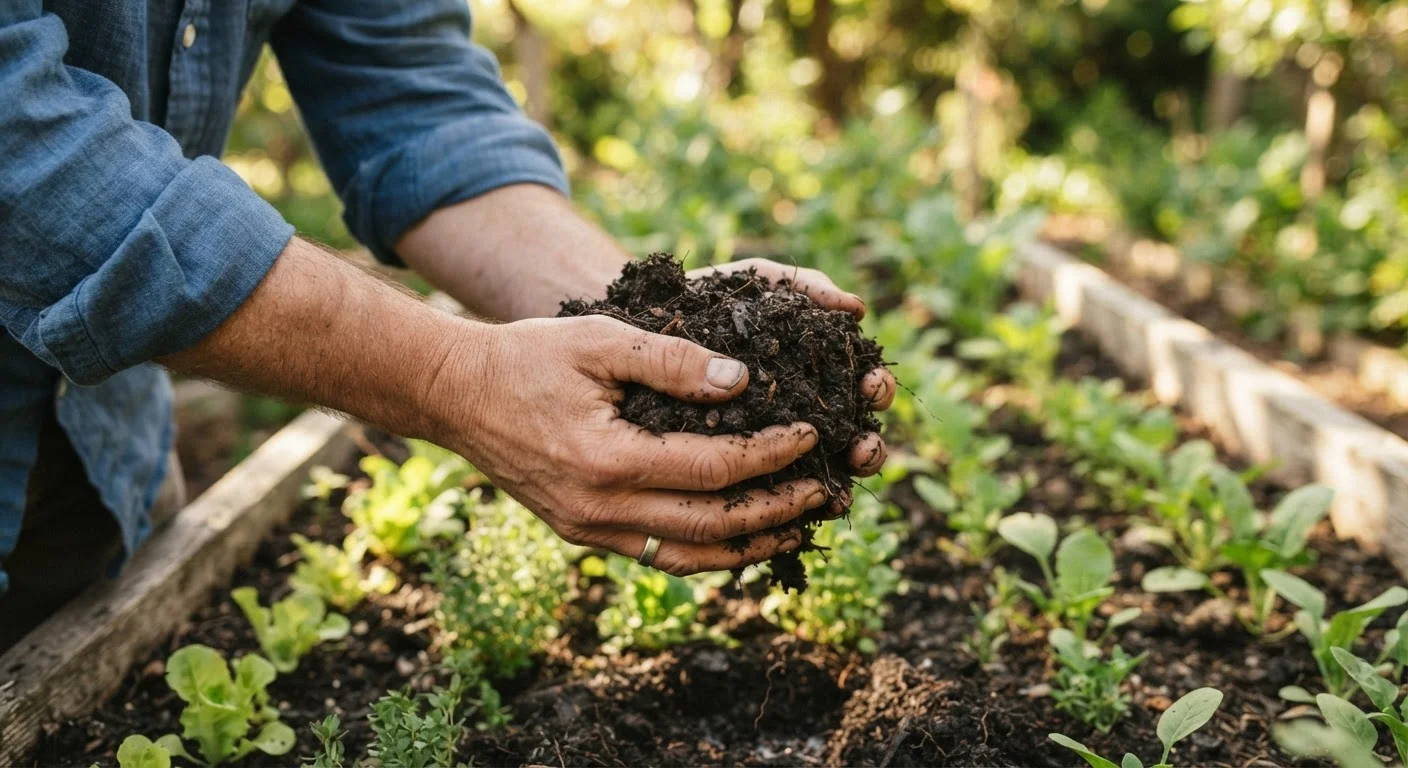
Loam is the sweet spot - a balanced mix of sand, silt, and clay that most plants love. It drains reasonably well, retains enough moisture and nutrients, and has a soft, crumbly texture that roots can penetrate easily. If your soil is already loamy, consider yourself lucky.
There's also silty soil, which feels smooth and almost powdery when dry. It's more fertile than sand but can compact under heavy rain and become poorly aerated over time.
How to Identify Your Soil Type at Home
You don't need a lab to get a working sense of your soil type. Two quick tests can give you useful information in minutes.
The Squeeze Test
- Grab a small handful of slightly moist (not dripping wet) soil.
- Squeeze it firmly in your fist.
- Open your hand and observe:
- Falls apart immediately - likely sandy.
- Holds its shape and stays firm - likely clay-heavy.
- Holds shape briefly, then crumbles when you poke it - likely loam.
The Jar Test
- Fill a clear jar about one-third with soil, then fill the rest with water.
- Shake vigorously, then let it settle undisturbed for 24-48 hours.
- The soil will separate into visible layers: sand settles first (bottom), silt in the middle, clay on top. The relative thickness of each layer tells you your soil's composition.
For a more precise picture - including pH and nutrient levels - a proper soil test is worth doing before you invest in amendments. Many local cooperative extension offices offer affordable testing. See the garden readiness checklist for more prep steps.
Start With a Soil Test Before Amending
It's tempting to add fertilizer or lime before you know what your soil actually needs - but this can do more harm than good. A basic soil test (available through many cooperative extension services or garden centers) tells you your pH and key nutrient levels, so you only add what's genuinely missing. It's a small upfront step that prevents expensive guesswork later.
Why Soil pH Matters as Much as Texture
Texture isn't the only thing that determines whether your soil works for your plants. pH - a measure of acidity or alkalinity - controls how well roots can access the nutrients already in your soil.
The pH scale runs from 0 to 14. Most vegetables and flowering plants prefer a slightly acidic to neutral range of about 6.0 to 7.0. Outside that window, certain nutrients become chemically locked up, meaning your plants can't absorb them even if they're present. Classic signs of a pH problem include yellowing leaves and slow, stunted growth despite regular watering and feeding.
Soil pH Varies Across Your Yard
pH isn't necessarily uniform across your entire garden. Areas near concrete foundations, downspouts, or older trees may have noticeably different pH levels than open lawn areas. If you're planting in multiple spots, it's worth testing each distinct area separately rather than assuming one result applies everywhere.
You can adjust pH gradually: ground limestone raises it (makes soil less acidic), while elemental sulfur lowers it (makes soil more acidic). However, these shifts take time and should be guided by an actual test result rather than guesswork.
How to Improve Almost Any Soil
The most universally effective soil amendment is compost. Worked into sandy soil, it improves water and nutrient retention. Added to clay soil, it opens up the structure, improves drainage, and makes the soil easier to dig. Spread into loam, it maintains the quality you already have.
Aim to add a 2-3 inch layer of compost and work it into the top 8-12 inches of soil before planting. This doesn't have to happen all at once - consistent additions each season build soil health over time.
Other useful amendments include:
- Aged manure - adds nitrogen and organic matter; should be well-composted before use to avoid burning plants.
- Peat moss - improves moisture retention, particularly in sandy soils; note that harvesting peat has environmental concerns, so coconut coir is a common alternative.
- Perlite or coarse grit - improves drainage in heavy clay or compacted soils.
If you're growing in containers or raised beds, the soil equation changes - see our guide on raised beds, containers, and ground planting for how soil choices shift by growing method.
Keep in mind that how you water is closely tied to soil type - sandy soils need more frequent, lighter watering, while clay soils need deeper, less frequent watering to avoid waterlogging.