

Key Takeaways
Companion Planting
Companion planting is the practice of growing certain plants close together because they benefit one another. The benefits can include repelling pests, attracting pollinators, improving soil nutrients, or simply making better use of space. It's a centuries-old gardening strategy that's easy to apply even in a small backyard plot or raised bed.
Some companion planting effects are well-documented through horticultural research (such as nitrogen fixation by legumes); others are based on longstanding gardening tradition and observational evidence rather than controlled studies.
Why Some Plants Make Better Neighbors Than Others
Plants don't grow in isolation in nature - they share soil, water, sunlight, and the insects that visit them. Companion planting takes advantage of these relationships deliberately. When you think carefully about which plants live side by side, you can set up a garden where each plant helps the others rather than competing with them.
The mechanisms behind companion planting fall into a few clear categories:
- Pest deterrence: Some plants release scents or compounds that confuse or repel insects that would otherwise damage your crops.
- Attracting beneficial insects: Flowering companions draw in pollinators and predatory insects that prey on common garden pests.
- Soil improvement: Certain plants, particularly legumes like beans and peas, host bacteria in their roots that convert atmospheric nitrogen into a form other plants can absorb.
- Physical support or shade: Taller plants can shelter sun-sensitive neighbors, and vining plants can use sturdy companions as natural trellises.
If you're still figuring out your overall garden layout, our guide to raised beds, containers, and ground planting can help you think through your space before you start placing plants.
Classic Companion Pairings Worth Knowing
You don't need to memorize every possible plant relationship to get started. A handful of well-tested pairings cover a lot of common garden situations:
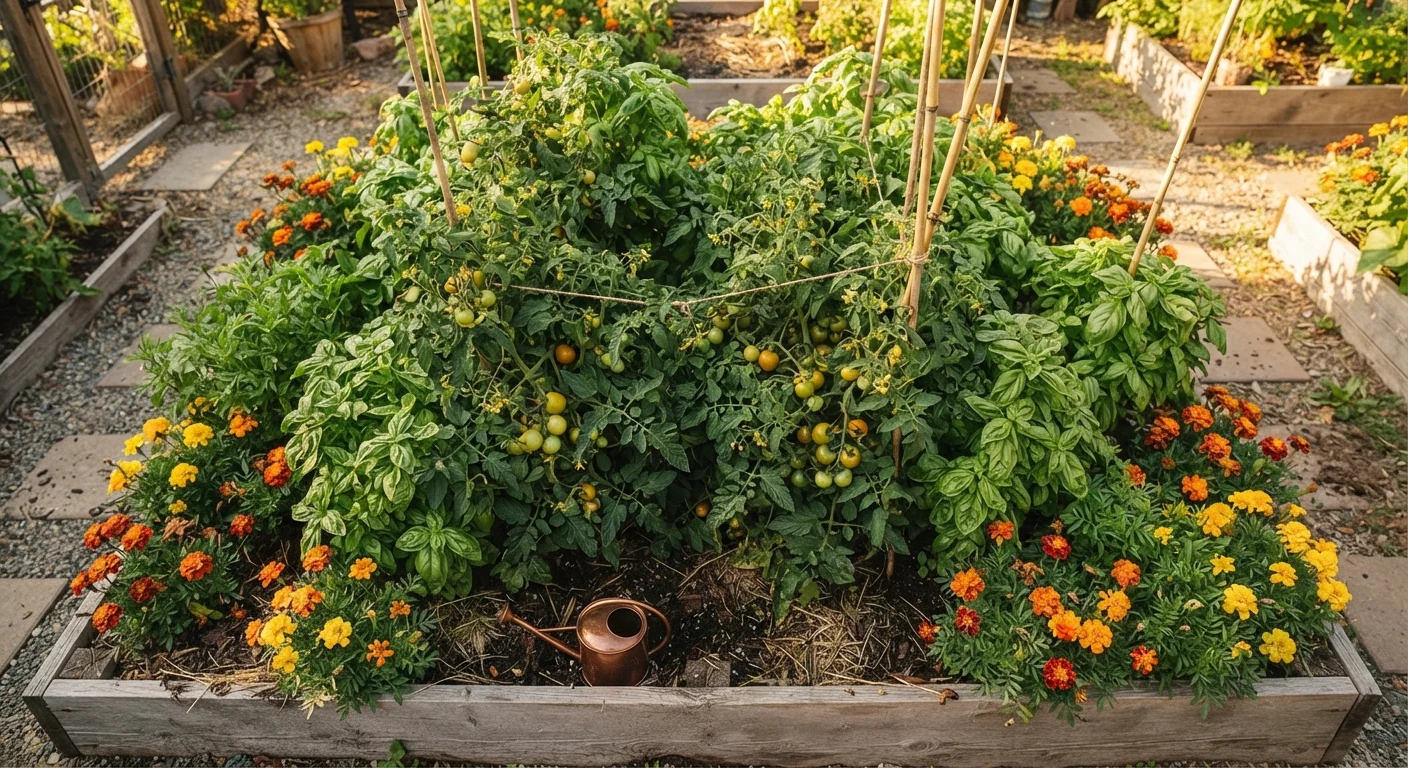
- Tomatoes and basil: One of the most popular combinations. Basil is widely believed to repel aphids and thrips, and many gardeners report that it improves tomato flavor - though the flavor claim is anecdotal rather than scientifically proven. What is clear is that the two share similar water and sun needs, making them easy to manage together.
- Marigolds with almost anything: French marigolds are an exception to the usual caution about overgeneralizing companions. Research supports that they deter nematodes in the soil and repel aphids and whiteflies. They're one of the most versatile companion plants available.
- Carrots and onions: Carrot flies and onion flies each dislike the scent of the other crop's plant. Interplanting them creates a natural confusion that can reduce damage from both pests.
- Beans and corn: Beans fix nitrogen that corn, a heavy feeder, benefits from. Corn stalks also provide a structure for bean vines to climb.
If you're growing any of these crops for the first time, our guide to beginner-friendly vegetables highlights which ones give new gardeners the best results overall.
The Three Sisters: A Time-Tested System
The most famous companion planting system comes from Indigenous agricultural traditions of North America. The Three Sisters - corn, beans, and squash - are grown together in a way that makes each plant stronger:
- Corn grows tall first, providing a vertical structure.
- Beans are planted around the corn stalks and climb upward while fixing nitrogen into the soil.
- Squash spreads low along the ground, its broad leaves shading out weeds and retaining soil moisture.
Each plant fills a different ecological niche - vertical space, soil nutrition, and ground cover - so they support rather than compete with each other. The Three Sisters system is well-documented and genuinely effective; it's a great starting point if you want to experience companion planting in action.
Start Simple With One or Two Pairings
You don't need to redesign your entire garden around companion planting. Pick one proven pairing - tomatoes and basil, or marigolds around a vegetable bed - and observe what happens over a season. Building confidence with small, low-risk combinations is the most practical way to learn what works in your specific garden conditions.
Plants That Harm Each Other - What to Keep Apart
Understanding what not to plant together is just as important as knowing good pairings. Some plants release chemicals that suppress the growth of nearby species - a process called allelopathy. Others simply compete aggressively for the same resources.
Common combinations to avoid include:
- Fennel and most vegetables: Fennel releases compounds that inhibit the germination and growth of many plants. It's best grown in its own isolated spot or in a container.
- Onions and beans or peas: Onions appear to stunt the growth of legumes when grown in close proximity.
- Tomatoes and brassicas: Brassicas (cabbage, broccoli, kale) and tomatoes tend to compete for similar nutrients and may suppress each other's growth.
- Potatoes and tomatoes: Beyond competition, these two belong to the same plant family and share several diseases. Keeping them apart reduces the risk of spreading blight and other issues.
As with all companion planting, these guidelines come from a mix of research and accumulated gardening experience. They're worth following as a general rule, but regional conditions and soil quality also play a role in how plants perform together.
For a broader foundation before you put anything in the ground, work through our garden readiness checklist to make sure your soil, sun, and tools are all in order first.