

Key Takeaways
Why Your First Crop Choices Matter
The vegetables you choose for your first edible plot can make the difference between a season of enthusiasm and one of frustration. Not all crops are equally forgiving - some sulk if conditions aren't exactly right, while others practically grow themselves. For beginners, picking plants that match your skill level and setup is a smarter strategy than aiming for the most impressive harvest on the block.
Before you plant, it's worth thinking through your growing method. Whether you're using containers on a patio, a raised bed, or an in-ground patch, each option suits different crops. Our guide on raised beds, containers, or ground planting can help you match setup to crop. And if you're still deciding whether to start seeds indoors or buy transplants, starting from seed versus buying seedlings lays out both paths clearly.
The vegetables below are widely recognized among gardening educators as reliably productive for first-time growers. Each one rewards basic care and gives you something real to harvest.
Radishes
Radishes are arguably the most beginner-friendly vegetable you can grow. They germinate in as few as three to five days and are typically ready to harvest in three to four weeks - making them ideal for impatient first-timers who want immediate proof that gardening works.
Sow seeds directly into the soil (they don't transplant well), about half an inch deep and one inch apart. Thin seedlings to two inches apart once they emerge. Radishes prefer cooler weather, so spring and fall are their best seasons. They also do well in containers with at least six inches of depth.
Radishes can go from seed to table in as little as three to four weeks.
Lettuce and salad greens
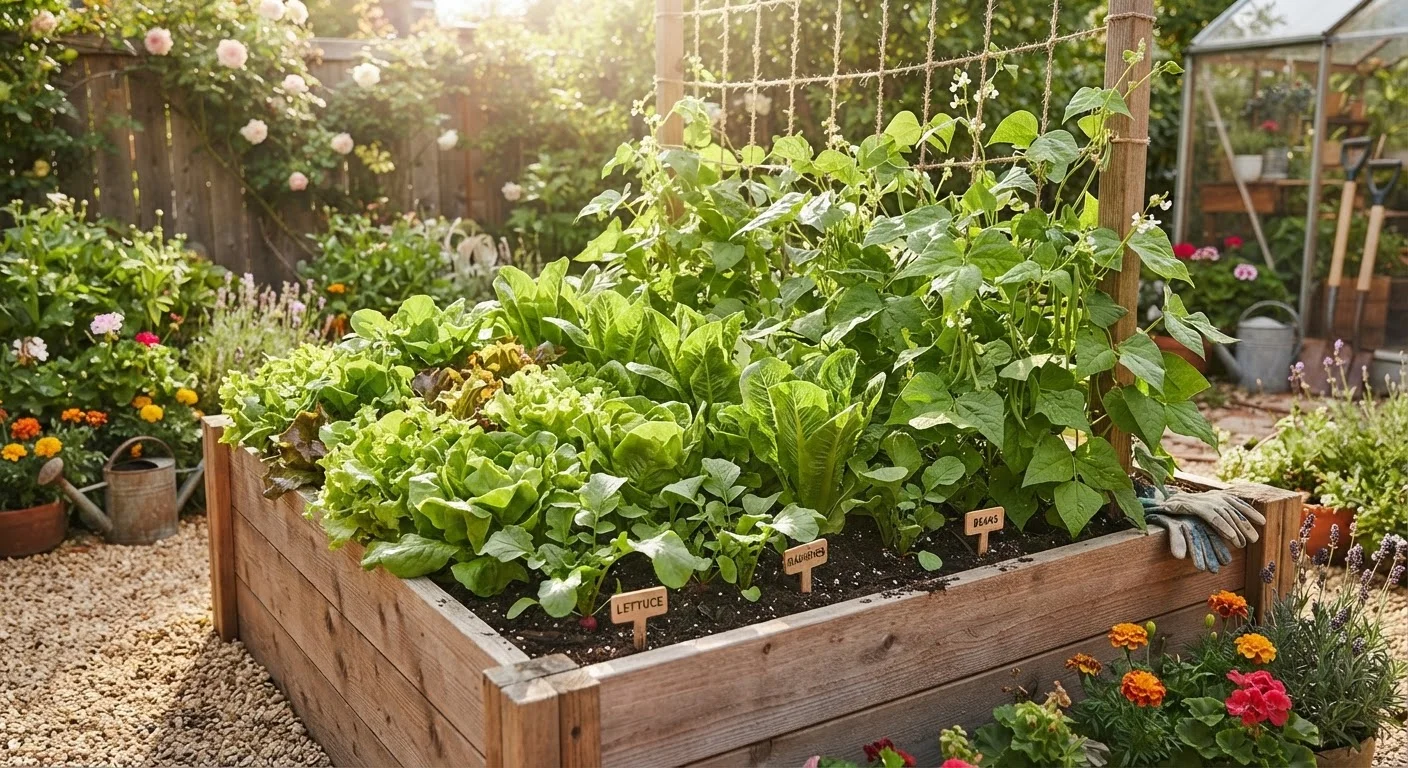
Loose-leaf lettuce varieties - such as 'Black Seeded Simpson' or 'Oakleaf' - are low-maintenance, fast-growing, and can be harvested over many weeks using a cut-and-come-again method: snip outer leaves, and the plant keeps producing. This makes them excellent value for the space they occupy.
Lettuce prefers mild temperatures and partial shade in summer; it bolts (goes to seed and turns bitter) in prolonged heat. Plant in early spring or late summer for best results. In containers, a window box of salad greens on a shaded patio is entirely viable. Water consistently but avoid waterlogging the soil.
Cut-and-come-again lettuce can produce fresh leaves for weeks from a single planting.
Green beans (bush type)
Bush beans are self-supporting - unlike pole beans, they don't require trellises or staking - which makes them especially straightforward for beginners. They grow quickly, produce abundantly, and don't need much fussing once established.
Direct sow seeds one inch deep after the last frost date in your area, spacing plants about three to four inches apart. Bush beans prefer full sun and moderate, consistent moisture. Most varieties produce a main harvest in about 50 to 60 days. Because they produce all at once, consider making two small successive plantings two weeks apart to extend your harvest window.
Bush beans need no staking, grow fast, and produce a generous harvest in around 50 to 60 days.
Zucchini (courgette)
Zucchini has a well-earned reputation for productivity. A single healthy plant can supply more than a household typically needs during peak season. It's tolerant of beginner-level soil conditions, grows quickly, and signals clearly when something is wrong (yellowing leaves usually point to overwatering or nitrogen deficiency).
Plant in full sun with generous spacing - at least two to three feet between plants - since zucchini spreads. Keep soil evenly moist and harvest fruits when they're six to eight inches long; leaving them too long reduces the plant's energy for further production. Note that zucchini requires pollination, so it benefits from a garden that attracts bees.
One zucchini plant can easily outproduce what a household needs at peak summer season.
Cherry tomatoes
Cherry tomatoes are more forgiving than large slicing varieties - they're less prone to cracking, blossom drop, and many of the frustrations that trip up beginners with full-sized tomatoes. Compact or dwarf varieties also work well in large containers on sunny decks or balconies.
Tomatoes need full sun (at least six to eight hours daily), warm soil, and consistent moisture to prevent problems like blossom end rot. Most gardeners start with seedlings rather than seeds for tomatoes, especially in regions with shorter growing seasons. For a complete walkthrough of setting up and planting your first vegetable plot, see Your First Vegetable Garden.
Cherry tomatoes tolerate beginner conditions better than large-fruited varieties and reward patient watering.
Kale
Kale is one of the hardiest vegetables you can grow. It tolerates frost, grows in poorer soils than most crops, and can be harvested continuously by removing lower leaves as they mature. It's also relatively resistant to drought once established, making it forgiving of inconsistent watering habits.
Direct sow in early spring or late summer; kale actually improves in flavor after a light frost. It grows well in raised beds and large containers. Baby kale leaves are mild and tender; letting the plant mature produces the heartier leaves often used in cooking. Kale is a solid choice for anyone who wants a low-drama, long-season crop.
Kale actually tastes better after a light frost and keeps producing through much of the cool season.
Setting Yourself Up for a Confident First Season
Once you've picked your crops, preparation makes all the difference. Loose, well-draining soil rich in organic matter gives every vegetable on this list a strong foundation. If you're building your soil quality over time, composting kitchen scraps into garden-ready compost is one of the most practical habits you can develop - it costs almost nothing and steadily improves your growing conditions.
Before anything goes in the ground, it also pays to work through a proper readiness check. Our garden readiness checklist walks you through soil testing, tracking sun hours, and gathering the right tools. And as your confidence grows, pairing crops strategically - something covered in our article on companion planting - can reduce pest pressure and improve yields without extra effort.
A first edible garden doesn't need to be large or complicated. A few smart choices, decent soil, consistent watering, and enough sunlight are genuinely enough to put fresh food on your table. Start small, stay curious, and let each harvest teach you something for next season.
Start With Just Two or Three Crops
Resist the temptation to plant a wide variety in your first season. Growing two or three crops well teaches you far more than struggling with ten at once. Once you've had success with reliable producers like radishes, beans, and lettuce, you'll have real experience to build on for more demanding plants next year.