

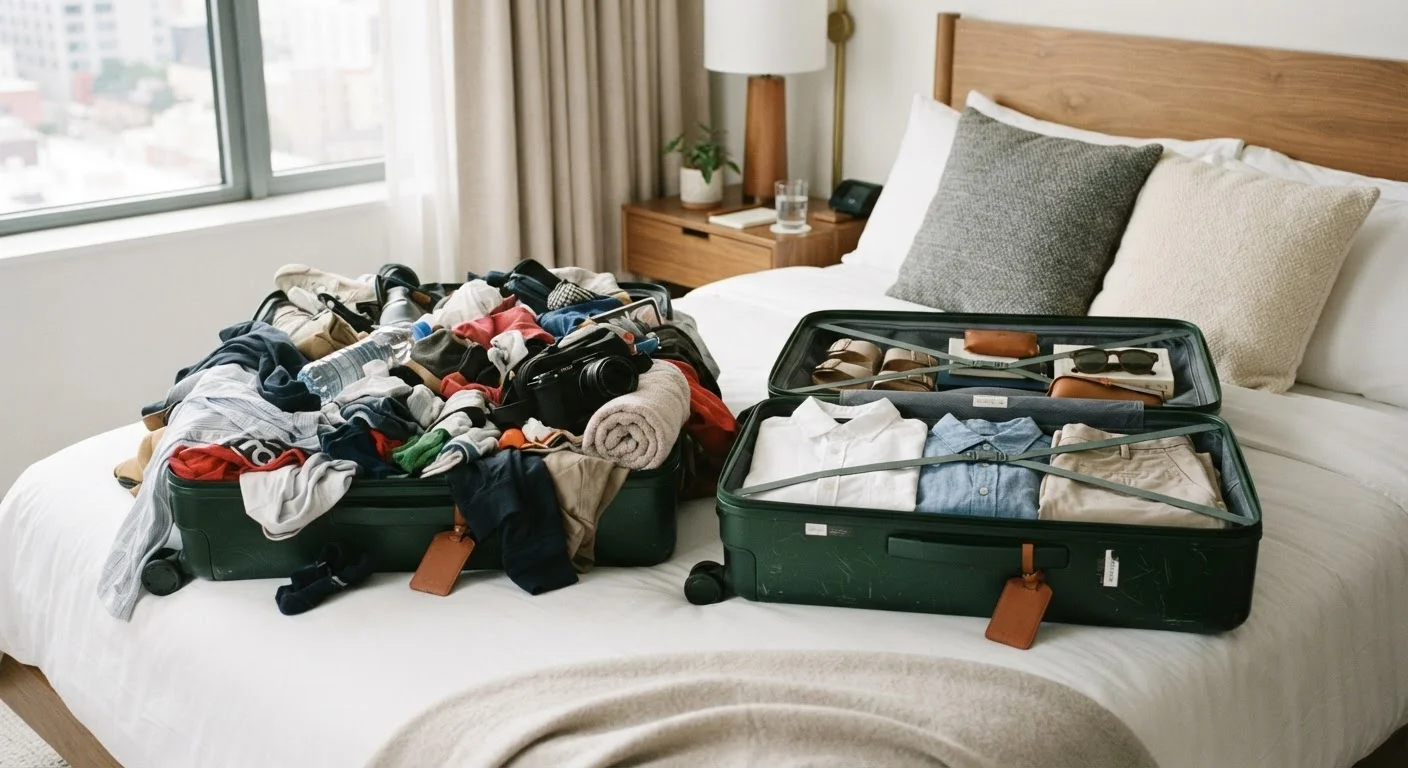
Key Takeaways
Prepared for unexpected weather or wardrobe needs
Packing extra clothing and supplies creates a buffer when plans change - a formal dinner, a sudden cold snap, or a spilled drink are less stressful with backup options available.
Less reliance on finding supplies at the destination
Remote destinations, international travel, or unfamiliar retail environments can make sourcing specific products difficult; a fuller bag removes that uncertainty.
Comfort for longer trips without laundry access
On extended journeys where laundry facilities are scarce or expensive, having enough clothing to rotate genuinely reduces a logistical headache.
Checked bag fees significantly increase travel costs
Many domestic and international carriers charge per checked bag, and overweight fees can stack quickly - costs that compound across a multi-leg itinerary.
Physical strain reduces enjoyment of the trip
Hauling heavy luggage through airports, up hotel stairs, and across uneven city streets drains energy that could go toward actually experiencing the destination.
Higher risk of lost or delayed luggage
Checked bags are subject to airline mishandling; the more bags you check, the higher the statistical exposure to delays that disrupt the start of a trip.
Creates decision fatigue around daily outfit choices
Paradoxically, packing more options often makes getting dressed harder - too many choices each morning adds low-level cognitive friction throughout the trip.
Our Verdict
Neither extreme serves you well. Overpacking weighs you down physically and financially, while underpacking creates stress and unplanned expenses mid-trip. The travelers who enjoy their journeys most tend to pack with intention - choosing versatile items for the specific activities and climate ahead, rather than packing out of habit or anxiety.
Anyone preparing for a trip who wants to move confidently without hauling too much - or arriving without too little.
Why Both Extremes Cost You
Most travelers land in one of two camps: those who drag a bag that could survive a six-month expedition for a long weekend, and those who stuff three days of essentials into a single tote. Both approaches create real problems on the road - they just create different problems.
Overpacking often stems from anxiety - the fear of being without something. Underpacking tends to come from overconfidence, or from optimizing for convenience at the departure gate without thinking through what the destination actually demands. Understanding the genuine trade-offs of each style helps you stop defaulting to either extreme and start packing with a clear head.
For a deeper look at what drives the overpacking habit specifically, see why overpacking happens and how to stop. And if you're weighing whether to check a bag at all, carry-on vs checked luggage walks through that decision in detail.
The Case For (and Against) Packing Heavy
There's a reason people overpack - it does offer some genuine comfort. Having every possible outfit option, a full toiletry kit, and backup gear means fewer moments of being caught unprepared. For very remote destinations where resupply is genuinely difficult, carrying more makes practical sense.
Prepared for unexpected weather or wardrobe needs
Packing extra clothing and supplies creates a buffer when plans change - a formal dinner, a sudden cold snap, or a spilled drink are less stressful with backup options available.
Less reliance on finding supplies at the destination
Remote destinations, international travel, or unfamiliar retail environments can make sourcing specific products difficult; a fuller bag removes that uncertainty.
Comfort for longer trips without laundry access
On extended journeys where laundry facilities are scarce or expensive, having enough clothing to rotate genuinely reduces a logistical headache.
But those benefits come at a steep cost. Checked bag fees add up fast, and hauling a heavy suitcase across cobblestones, up narrow staircases, or through a busy transit hub is exhausting. Research consistently shows that physical burden affects mood - and starting a vacation already fatigued is a poor trade-off for having five shirt options instead of three.
Checked bag fees significantly increase travel costs
Many domestic and international carriers charge per checked bag, and overweight fees can stack quickly - costs that compound across a multi-leg itinerary.
Physical strain reduces enjoyment of the trip
Hauling heavy luggage through airports, up hotel stairs, and across uneven city streets drains energy that could go toward actually experiencing the destination.
Higher risk of lost or delayed luggage
Checked bags are subject to airline mishandling; the more bags you check, the higher the statistical exposure to delays that disrupt the start of a trip.
Creates decision fatigue around daily outfit choices
Paradoxically, packing more options often makes getting dressed harder - too many choices each morning adds low-level cognitive friction throughout the trip.
There's also a subtler cost: decision fatigue. More items mean more choices each morning. Ironically, the traveler who packed everything often feels less organized than the one who packed smartly. If the weight of your luggage is starting to feel like the weight of everything else on your plate, that's worth reflecting on - signs your mental load is too heavy can show up in surprising places.
The Case For (and Against) Packing Light
Packing light is genuinely liberating. Skipping baggage claim, breezing through airports, and staying mobile throughout a trip are real advantages - especially for urban travel, multi-city itineraries, or any trip where you're moving frequently. Lighter bags also mean fewer things to lose, fewer customs declarations, and faster departures.
~50%
Clothing travelers pack but never wear
Travel behavior surveys consistently find that roughly half of packed clothing items go unused on typical leisure trips, suggesting most packing anxiety is unfounded.
$35-$75
Average one-way checked bag fee (domestic US)
Per-bag fees vary by carrier and route, but a round trip with one checked bag can add $70-$150 or more to a traveler's total trip cost.
The challenge is that underpacking often shifts costs rather than eliminates them. Forgetting a raincoat in a wet climate means buying one. Skipping the right shoes for an unplanned hike means sore feet or an expensive last-minute purchase. These aren't hypotheticals - they're experiences almost every under-packer has collected.
For guidance on how to pack light without creating these gaps, packing light without sacrificing what you need is a practical starting point covering clothing choices, toiletry rules, and gear that genuinely earns its place.
Finding the Middle Ground: Packing With Intention
The goal isn't a magic number of items - it's matching your bag to your actual trip. A week in a beach town with daily access to laundry is a fundamentally different packing problem than five days of winter hiking in a remote area. Neither overpacking nor underpacking serves both scenarios equally.
The Laundry Variable Changes Everything
Access to laundry - whether in-hotel, at a laundromat, or through a sink-wash routine - is one of the most powerful packing multipliers. A traveler who plans to do laundry mid-trip can comfortably pack half the clothing of someone who doesn't. Before finalizing your bag, check whether your accommodations or neighborhood offer this option. It's often the single decision that transforms an overstuffed suitcase into a manageable carry-on.
A few principles tend to separate intentional packers from both extremes:
- Build around activities, not anxiety. List what you'll actually do each day - not every possible thing that could happen - and pack accordingly.
- Apply the one-outfit-per-two-days rule as a starting point. Most travelers wear far fewer outfit combinations than they pack for.
- Think in layers, not in bulk. Versatile, mix-and-match clothing covers more ground with fewer pieces than single-use outfits.
- Trust the destination. The vast majority of travel destinations have pharmacies, laundromats, and stores. You are not provisioning for a remote expedition.
Road trippers face a slightly different version of this challenge - when a car is your transport, it's easy to treat the trunk like an extension of your closet. packing the car without chaos offers strategies specific to that format. More broadly, the Travel Essentials hub covers the logistics and preparation decisions that make the biggest difference before departure.