

Key Takeaways
The Real Reason You're Overpacking
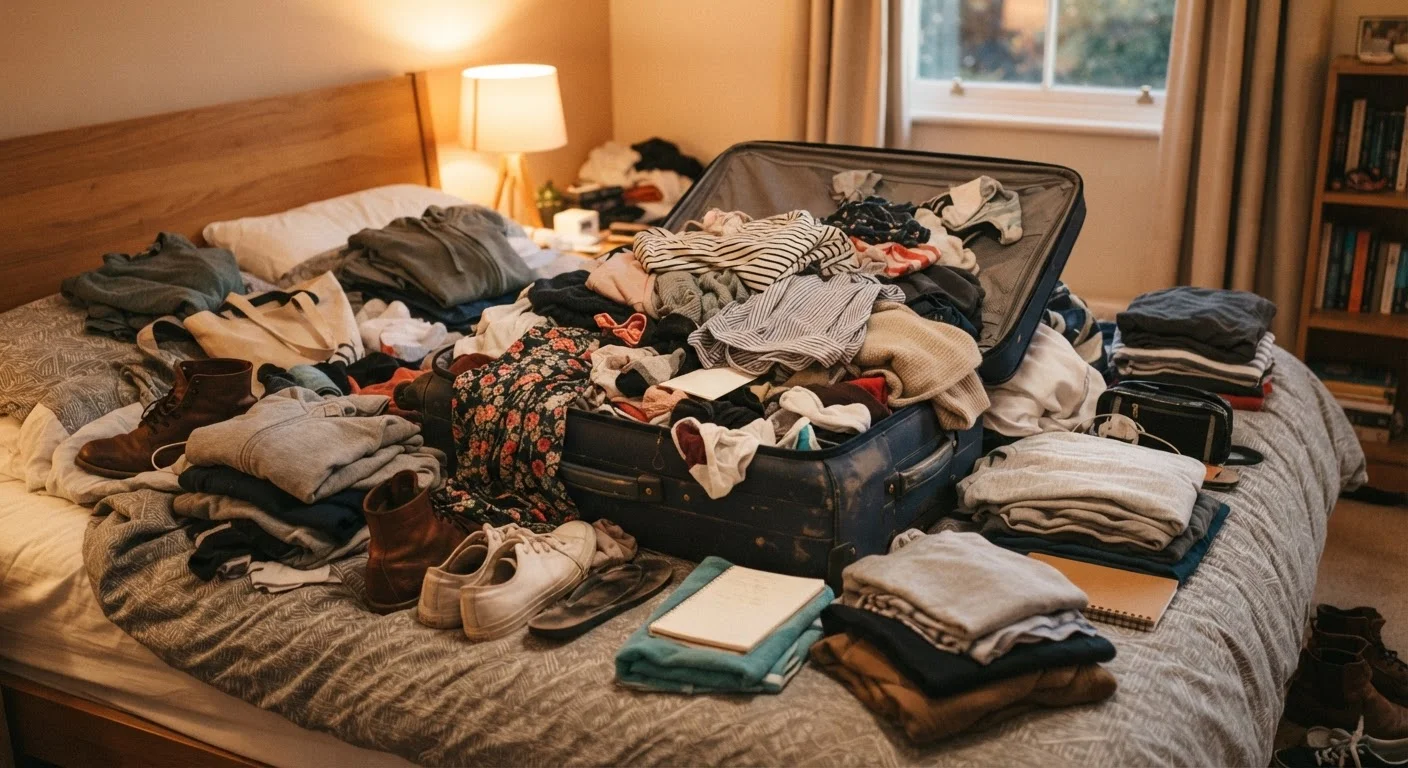
Overpacking isn't a logistics failure - it's an emotional one. Most first-time travelers pack from a place of fear: fear of being underprepared, fear of forgetting something important, fear of an unexpected situation they can't handle. That anxiety gets translated into stuff, and suddenly a four-day trip somehow fills a 29-inch suitcase.
There's also a planning vacuum at play. When travelers haven't thought concretely about what they'll be doing each day, they default to covering every scenario imaginable. Packing for a business dinner, a beach afternoon, two hikes, a night out, and three backup outfits for weather changes isn't preparation - it's insurance shopping disguised as packing.
The good news? Once you understand why it happens, overpacking becomes much easier to prevent. This is one of the most universal trip planning mistakes beginners make - and one of the most fixable.
Packing for hypothetical scenarios instead of your actual itinerary.
Why it happens: Without a clear day-by-day plan, travelers feel the need to cover every possible situation - formal dinners, unexpected rain, three different activity types.
Bringing full-size toiletries or duplicating items already available at your destination.
Why it happens: Familiar products feel safer, and travelers worry about finding their preferred brands abroad - especially first-timers.
Packing multiple 'just in case' outfit duplicates that never get worn.
Why it happens: Fear of running out of clean clothes - or having nothing suitable for an unexpected occasion - pushes travelers to over-index on clothing volume.
Using the largest bag you own as the default container.
Why it happens: Big bags feel like they offer flexibility, and travelers think extra space means extra comfort. In practice, empty space fills itself.
Leaving packing until the night before departure.
Why it happens: Procrastination leads to panic-packing: everything that looks possibly useful goes in the bag because there's no time to think critically.
What Overpacking Actually Costs You
It's tempting to think a heavy bag is just mildly inconvenient. In reality, overpacking has a cascade of real consequences that affect your trip from the moment you leave your front door.
$75-$200
Typical round-trip checked bag fees on domestic US flights
Most major US carriers charge per bag each way, meaning a single checked bag for a round trip can add $75 to over $200 in fees depending on the airline and fare class.
50%
Clothes packed that travelers report never wearing
Travel surveys and packing studies consistently find that roughly half the clothing packed on leisure trips goes unworn - pointing to systematic over-preparation.
Beyond fees, a bloated bag slows you down physically and mentally. Hauling a massive suitcase through cobblestone streets, cramped train corridors, or up a hostel's narrow staircase is genuinely exhausting. It limits your flexibility - spontaneous day trips become logistics problems when you're tethered to oversized luggage. And if you're driving, see our notes on road trip planning: trunk space is finite, and overpacked cars create safety and comfort issues too.
Then there's the hidden cost of shopping. Many overpacking travelers end up buying new items abroad anyway - souvenirs, local finds, a jacket they didn't know they'd need. With no room in the bag, those purchases become a problem. Packing light creates space for the things you actually discover on the road.
How to Actually Pack Smarter
The most effective shift is moving from item-based packing to outfit-based packing. Instead of throwing in eight shirts because you might want options, plan seven specific outfits for a seven-day trip - then cut two. This one change alone can reduce most travelers' clothing volume by 30-40%.
A few other practical resets worth building into your routine:
- Check laundry access first. Most hotels, Airbnbs, and hostels offer laundry. If you can wash clothes once mid-trip, you need roughly half as much clothing.
- Apply the 'worst case' test. For every item you're unsure about, ask: If I don't bring this and need it, what actually happens? Usually the answer is that you buy a cheap replacement locally or go without - neither is a disaster.
- Set a hard limit before you start. Choose your bag size first, then pack to fit it - not the other way around. Carry-on only is a worthy goal for most trips under two weeks.
- Lay it all out and cut by a third. Pack what you think you need, spread it on the bed, then remove roughly a third before anything goes in the bag.
For a deeper look at what actually earns its weight, explore our guide to packing light without sacrificing what you need. And if you're weighing just how minimal to go, overpacking vs. underpacking breaks down both extremes clearly.
One final note: overpacking often correlates with broader planning gaps. Travelers who don't have a day-by-day itinerary pack for every contingency because they haven't eliminated any. Concrete plans equal a lighter bag. If your budget is also feeling shaky, our piece on why travel budgets fall apart addresses the same root cause from a financial angle.