

Key Takeaways
Why Car Packing Deserves Its Own Strategy
Packing for a road trip is a genuinely different problem from packing for a flight. On a plane, your bag disappears into the hold and you won't see it again until baggage claim. In a car, every item you've brought is with you - accessible, shifting, and potentially in the way - for the entire journey. The same volume of luggage that causes no problems on a plane can turn a car into a cramped, disorganised obstacle course.
The challenges multiply when you add passengers. Space that looks generous in an empty car shrinks quickly once three or four people and their gear are involved. And unlike an airplane seat pocket, there's no fixed place in a car where your snacks, chargers, and documents naturally live - unless you create one deliberately. For trips involving children, that structure becomes even more important; see our guide to keeping kids comfortable on long drives for specific strategies.
Before you start loading anything, it also helps to understand your vehicle's realistic cargo limits. Sedans, SUVs, minivans, and hatchbacks all have genuinely different trunk volumes and rear-seat configurations. Working with your vehicle's actual geometry - rather than hoping everything will fit - is the foundation of every other step in this process. And if you want to think through the broader question of how much to bring, our overview of overpacking vs. underpacking trade-offs is a useful starting point.
Step-by-Step: How to Pack Your Car
The steps below work for most vehicle types and trip lengths. Follow them in order - the sequence matters, because earlier decisions shape how later ones play out.
What you will need
Soft-sided duffel bags
Conform to the irregular shape of a car trunk, filling gaps that rigid suitcases cannot.
Packing cubes
Compress clothing and keep categories of items separated within a single bag.
Collapsible cooler
Stores drinks and snacks accessibly without permanently occupying cargo space once emptied.
Cargo net or trunk organiser
Prevents bags from shifting during braking and cornering, keeping the load stable.
Small day bag or tote (the 'grab bag')
Holds all in-cabin essentials - snacks, chargers, documents - so nothing needs to be retrieved from the trunk.
Bungee cords or ratchet straps
Secure irregularly shaped items or roof-rack loads against movement.
Audit what you plan to bring
Lay every item you intend to pack on a flat surface - a bed or floor works well. Physically seeing everything together makes it far easier to spot redundancy. Ask of each item: does it earn its space? If you're travelling to a destination with laundry facilities, for example, the number of clothing changes you need drops significantly. If you find yourself justifying items with 'just in case,' read our guide on why overpacking happens before moving on.
Choose the right bags for car travel
Rigid suitcases with hard shells are designed for airline overhead bins and baggage belts - not car trunks. Opt for soft-sided duffels and bags instead. They compress, bend, and stack in ways that rigid cases simply cannot, helping you reclaim otherwise dead space. Packing cubes inside those bags add another layer of organisation without adding meaningful weight.
Designate an in-cabin 'grab bag'
Before anything goes in the trunk, assemble a single small bag that will live in the passenger cabin for the entire trip. This should contain every item you'll need without stopping: phone charger and cables, snacks, water bottles, any medications, toll cash, travel documents, sunglasses, and entertainment for passengers. Once the grab bag is loaded into the back seat, it should not need to be opened until a planned stop.
Load the trunk strategically
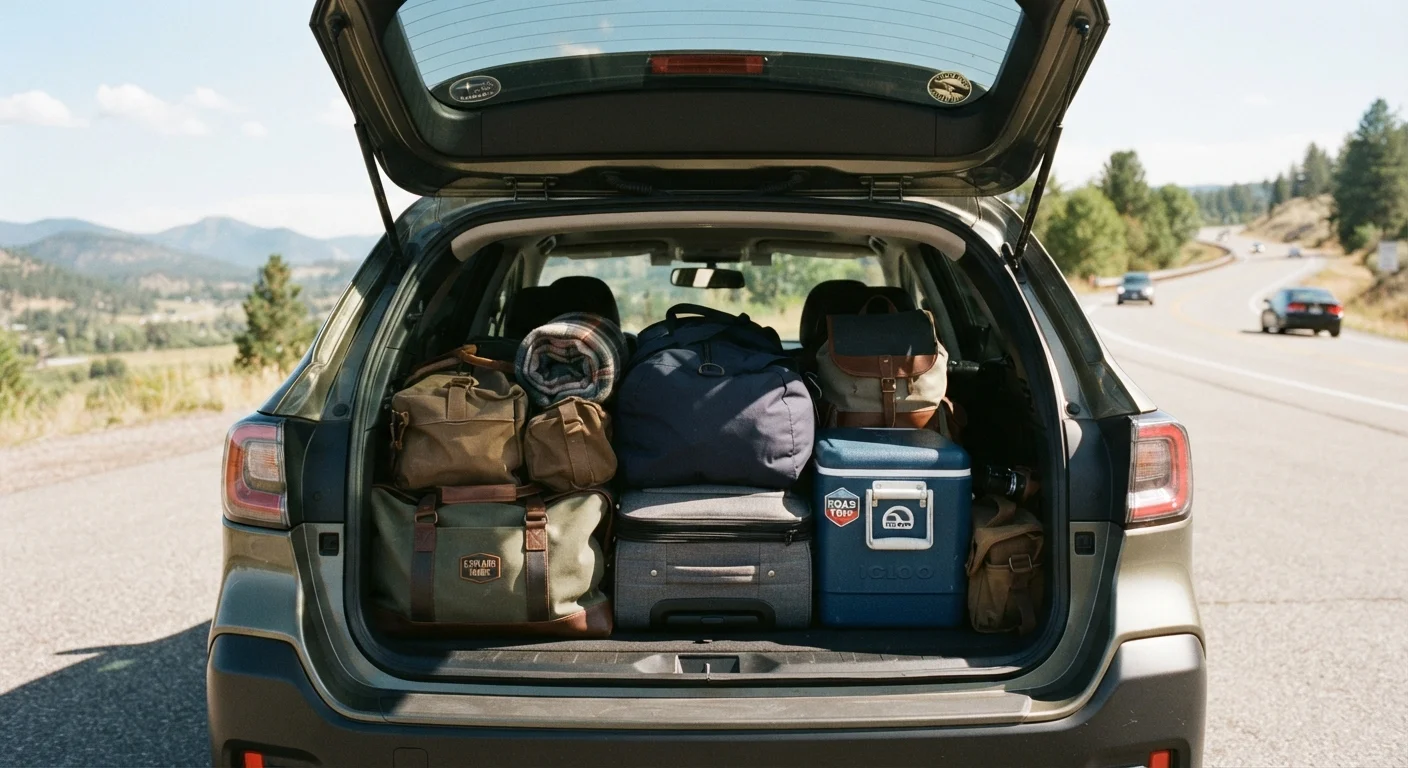
Follow a simple layering principle: heaviest items go in first, placed flat on the trunk floor and pushed as far forward (toward the rear seats) as possible. This keeps the weight low and centred over the rear axle. Medium-weight bags layer on top. Lightest and most fragile items sit on top of the stack or fill gaps at the sides. Distribute weight evenly from left to right - an unbalanced load can subtly affect steering feel, particularly on longer drives.
[important_callout]Secure the load and check sightlines
Use a cargo net, trunk organiser, or bungee cords to prevent bags from shifting. Then sit in the driver's seat and check your rearview mirror. If any luggage is visible above the rear seat headrests, it is too high. Rearrange until your full rearward sightline is clear. This is both a safety requirement and, in many US states, a legal one.
If using a roof rack, follow weight limits precisely
Roof-mounted cargo carriers offer meaningful extra space for bulky gear like camping equipment. However, they come with real trade-offs: higher fuel consumption, reduced aerodynamic stability, and - critically - a higher center of gravity. Check your owner's manual for the vehicle's stated roof load rating and treat that number as an absolute ceiling, not a guideline. Pack the roof with the lightest gear you have, and keep your heaviest items inside the cabin.
[warning_callout]Pack the Night Before, Not the Morning Of
Loading the car the evening before your departure lets you make calm, deliberate decisions about what fits and what stays behind. Morning-of packing is rushed and almost always leads to either forgotten items or a chaotic, overstuffed trunk. Lay everything out the night before, review it once, then load with purpose.
For broader packing philosophy that complements these vehicle-specific steps, our guide to packing light without sacrificing essentials covers clothing choices and toiletry decisions that reduce total volume before you ever open the trunk. And if you want to make sure the rest of your trip prep is equally solid, common road trip planning mistakes outlines the other areas where preparation tends to slip.