

Key Takeaways
Why Packing Light Actually Makes You a Better Traveler
Dragging a 50-pound suitcase through cobblestone streets or sprinting through an airport with an overstuffed bag doesn't just hurt your back - it drains your energy and narrows your choices. When you pack light, you move faster, stress less, and stay flexible. Missed your connection? You can rebook and walk to the gate without checking a new bag. Spontaneous overnight detour? Your bag comes with you.
The good news is that packing light doesn't mean arriving unprepared. It means packing smarter - making deliberate decisions about what earns a spot in your bag versus what you're throwing in "just in case." For a deeper look at how trip style shapes what you pack, see our guide to finding the luggage middle ground.
The Clothing Formula That Works Every Time
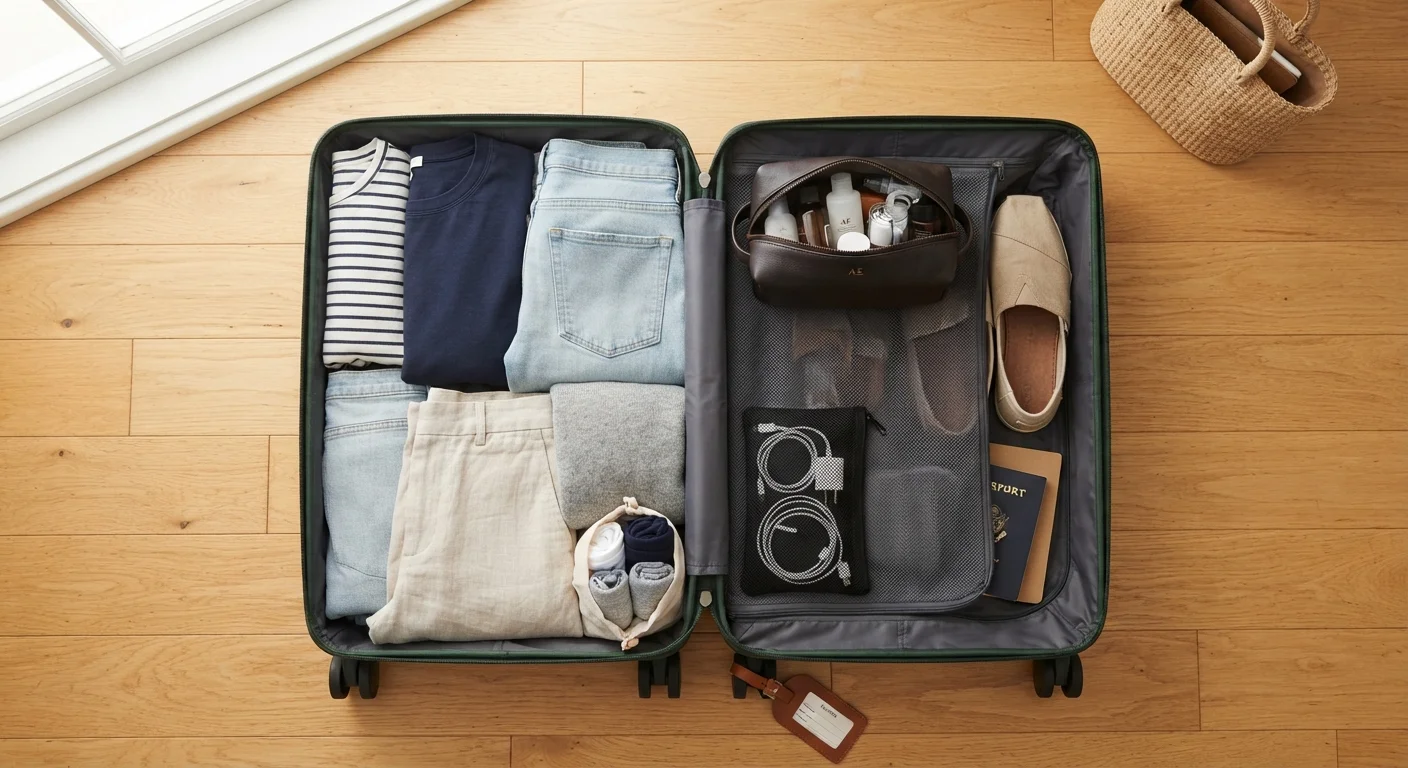
Clothing is almost always the biggest culprit in an overpacked bag. The fix isn't packing fewer outfits - it's packing smarter pieces. Stick to a tight color palette (think navy, black, white, and one accent color) so everything mixes and matches. A single pair of dark pants can work for a casual hike and a nice dinner with the right top swap.
Apply the "three-layer rule" for temperature flexibility: a base layer, a mid layer like a light fleece or cardigan, and one packable outer shell. These three items handle most climates between 40°F and 80°F. Plan on wearing items more than once - most travelers over-rotate through clothes far more than necessary.
For footwear, limit yourself to two pairs: one for walking and one that dresses up or down. Shoes are heavy and bulky; they rarely justify extra pairs. Wear your bulkiest shoes on travel days to save bag space entirely.
The Toiletry Rule: Small, Solid, or Skip It
Toiletries have a way of multiplying. Before a trip, many travelers fill a full-size bag with products they barely use at home - let alone on the road. The guiding principle here is simple: small, solid, or skip it.
Solid shampoo bars, conditioner bars, and solid sunscreen travel without the liquid weight and never violate TSA's 3-1-1 carry-on rule (3.4 oz or less per liquid, in one quart-sized bag). For everything else, use travel-size containers filled from your home supply, and commit to buying basics like shaving cream or conditioner locally if you're staying more than a few days. Most destinations have pharmacies or convenience stores near tourist areas.
The TSA 3-1-1 Rule at a Glance
Each liquid or gel in your carry-on must be 3.4 ounces (100ml) or less, all containers must fit in one quart-sized clear zip-top bag, and you're allowed one bag per traveler. Solid toiletries bypass this rule entirely, making them a practical upgrade for anyone who wants to skip the liquids bag altogether. Always verify current TSA guidelines at tsa.gov before your trip, as rules can change.
Deciding between carry-on and checked luggage is closely tied to your toiletry strategy. Our carry-on vs. checked luggage breakdown walks through exactly when each approach pays off.
Gear That Earns Its Weight - and Gear That Doesn't
Beyond clothes and toiletries, there's a whole category of "just in case" gear that fills bags without ever being used. Before packing any item in this category, ask one question: Will I use this at least three times on this trip? If the answer isn't a clear yes, leave it behind.
Gear that genuinely earns its weight tends to share a few traits: it's lightweight, solves multiple problems, and is hard to replace locally. A compact first-aid kit, a universal power adapter, a lightweight dry bag for water activities, and a quality packing cube set all qualify. Packing cubes in particular are underrated - they compress clothing, separate categories, and make unpacking at your destination almost effortless.
On the flip side, full-size umbrellas, multiple books, bulky camera equipment "just in case," and redundant chargers rarely justify their space. If you're driving rather than flying, the calculus shifts slightly - check out our road trip packing strategies for car-specific approaches.
Building Your Packing List Before You Pack
The single highest-impact habit for light packers isn't what they buy - it's how they plan. Build your packing list from your itinerary outward, not from memory or habit. Write down every planned activity, check the forecast, and assign clothing to specific days before anything goes into the bag. This forces you to confront redundancy: do you really need that fourth top, or are you already covered?
A written list also reveals what you might genuinely be forgetting - prescription medication, a travel-size first-aid item, or a document folder for passports and confirmations. These are the things that matter. For broader pre-trip planning context, our trip planning hub covers the full picture from booking to departure day.
Start with your list two to three days before departure so you have time to edit. Pull everything out, lay it on the bed, then remove one item. Then remove another. You'll almost certainly find the trip goes just as well - or better.