

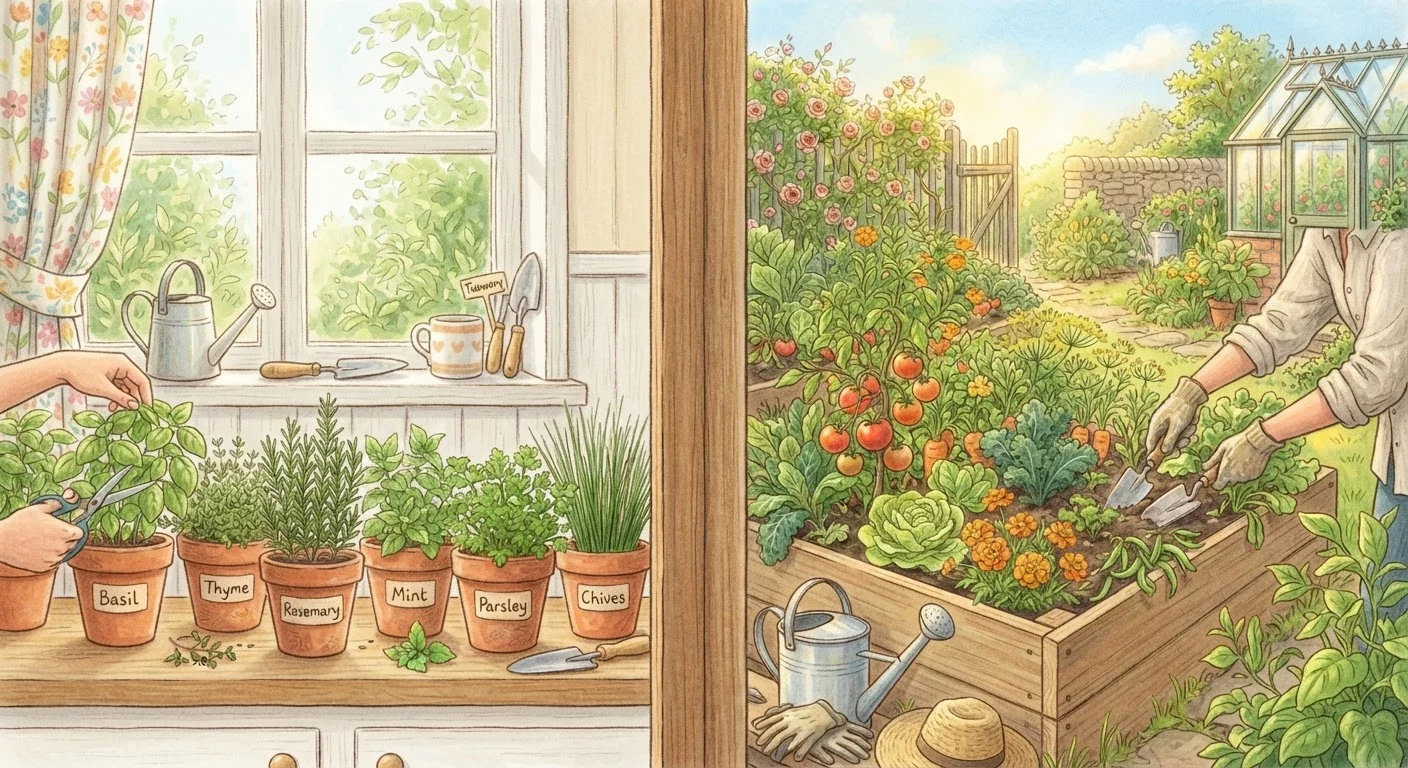
Key Takeaways
Option A
Indoor Gardening
The controlled, year-round growing environment.
Best for: Best for gardeners with limited outdoor space, or those who want to grow herbs, microgreens, and houseplants regardless of season or climate.
Option B
Outdoor Gardening
The natural, space-rich growing environment.
Best for: Best for gardeners with access to a yard or patio who want to grow vegetables, flowers, or fruit with natural sunlight and rain.
If you live in an apartment or have no yard access
Indoor Gardening
Containers, grow lights, and good airflow let you cultivate herbs, leafy greens, and even small fruiting plants entirely indoors without outdoor space.
If you want to grow a wide variety of vegetables and fruits
Outdoor Gardening
Outdoor beds offer the space, natural light intensity, and pollinator access that most fruiting crops need to thrive at a productive scale.
If you want to garden year-round in a cold climate
Indoor Gardening
Indoor growing bypasses frost seasons entirely, letting you maintain continuous harvests of herbs and greens even through winter.
If you're a beginner who wants the lowest-cost entry point
Outdoor Gardening
Sunlight and rain are free - outdoor gardening generally requires less equipment investment up front compared to setting up indoor grow lights and climate controls.
Light: The Single Biggest Difference
Light is where indoor and outdoor growing diverge most sharply. Outdoors, even a partly shaded garden bed receives far more total light energy per day than the average windowsill. A south-facing window in the US might deliver four to six hours of usable light on a clear day - far below the eight-plus hours many vegetables and herbs prefer.
Indoor gardeners who want to grow edibles reliably almost always need to supplement with grow lights (full-spectrum LED fixtures are a common choice). Without them, plants tend to become leggy - stretched and weak as they reach for inadequate light. Outdoor growers, by contrast, manage light by choosing the right garden location and tracking sun hours before planting. Tracking sun hours before you plant is one of the most useful habits a new gardener can build.
Shade-tolerant plants like ferns, pothos, and some lettuces are realistic candidates for window growing. Tomatoes, peppers, and squash need the kind of light intensity that's difficult to replicate indoors affordably.
Watering, Humidity, and Airflow
Outdoors, rainfall does a significant portion of the watering work, and natural air circulation helps dry out foliage - reducing fungal disease risk. Indoors, the gardener controls every drop of water, which means both overwatering and underwatering are common mistakes for beginners. Containers dry out at different rates depending on pot size, soil type, and room temperature, so there's no single watering schedule that fits all plants.
Humidity matters more indoors than many beginners expect. Central heating in winter dries indoor air significantly, which stresses tropical houseplants and can cause leaf tip browning. Grouping plants together or using a small humidifier near them can help. Outdoors, natural humidity levels generally track local climate and are harder to control - though this also means less active management is needed.
Poor airflow indoors encourages mold and weakens stems. A small fan running on low for a few hours daily can meaningfully improve indoor plant health by strengthening stems through gentle movement and reducing fungal conditions.
| Criterion | Indoor Gardening | Outdoor Gardening |
|---|---|---|
| Light source | Windows + grow lights usually needed | Natural sunlight, often abundant |
| Watering | Fully manual, easy to over- or under-water | Supplemented by rainfall |
| Humidity control | May need humidifier in winter | Follows local climate naturally |
| Common pests | Fungus gnats, spider mites, mealybugs | Aphids, slugs, caterpillars, whiteflies |
| Natural pest control | Absent - must intervene manually | Predatory insects and birds help |
| Season dependency | Year-round growing possible | Limited by frost and local climate |
| Scale potential | Limited by indoor space | Scales with available land |
| Best crops for beginners | Herbs, microgreens, lettuce | Tomatoes, beans, root vegetables |
Pests and Disease: Different Threats in Each Environment
Outdoor gardens face a broader cast of potential pests - aphids, caterpillars, slugs, whiteflies, and soil-dwelling grubs among them. The upside is that outdoor gardens also host natural predators: ladybugs, ground beetles, parasitic wasps, and birds all help regulate pest populations. Identifying common outdoor pests early gives you a significant advantage in keeping infestations manageable.
Indoor gardens face a narrower but still serious set of pests. Fungus gnats - small flies whose larvae damage roots - thrive in consistently moist soil. Spider mites flourish in dry, warm indoor air. Mealybugs and scale insects can spread quickly from plant to plant when pots are close together. Because indoor environments lack natural predators, infestations can escalate faster.
Disease pressure also differs. Outdoors, rain splash can spread soil-borne pathogens to leaves, and overcrowded beds trap moisture. Indoors, poor air circulation combined with overwatering is the most common trigger for root rot and mold. New gardeners starting seeds indoors should be aware of damping off - a fungal condition that collapses seedlings at the soil line. Understanding why seedlings fail after germination can help you prevent it before it starts.
Seasons, Space, and What You Can Realistically Grow
One of the clearest advantages of indoor gardening is freedom from seasonal limits. You can start seeds in January, harvest herbs in December, and keep tropical plants alive through a hard frost - none of which is possible outdoors without a greenhouse. However, indoor space is almost always the limiting factor. Most indoor gardeners work with windowsills, shelving units, or a small grow-light setup, which suits compact crops: herbs, microgreens, lettuces, and small chili plants.
Outdoor gardens scale more naturally. A modest raised bed can support a meaningful harvest of tomatoes, beans, cucumbers, or root vegetables. Choosing between raised beds, containers, and ground planting is a useful next step once you've decided to garden outside. Outdoor growing also benefits from pollinators - bees and other insects that are essential for fruiting crops but absent indoors unless you hand-pollinate.
For beginners unsure where to start, one practical approach is to begin seeds indoors for a head start on the season, then transplant outdoors once conditions allow. Weighing seeds against seedlings is a decision that affects both indoor and outdoor gardeners alike.
Neither Environment Is 'Better' - Context Is Everything
Many gardeners eventually do both: growing herbs and seedlings indoors while maintaining an outdoor bed or container garden through the warmer months. The most important step is matching your plant choices to the actual conditions you can provide, rather than the conditions you wish you had. Honest self-assessment about your available light, space, and time is more valuable than any single piece of equipment or technique.