

Key Takeaways
Why Textiles Are the Easiest Way to Add Depth
Paint and furniture establish a room's bones, but textiles are what make it feel lived-in and layered. A sofa covered in a single fabric reads as flat; drape a linen throw across one arm and add two cushions in different weaves and the same sofa suddenly looks considered. Textiles work because they introduce variation in surface - the way light catches a velvet cushion versus a cotton canvas pillow creates visual interest without requiring you to buy new furniture or repaint a wall.
The challenge is knowing when to stop. Too many competing patterns or too wide a color spread tips a room from layered into cluttered. The practices below give you a framework for making confident choices - whether you're starting from scratch or adjusting a room that already feels slightly off. If you're earlier in the process, identifying your personal style first will help you shop with more focus.
Best Practices for Mixing Textiles
Apply these principles one at a time. Each one builds on the last, so you can stop at any point and still have a cohesive result.
Anchor the room with one dominant pattern, then use solids and subtle textures to support it.
A single bold pattern - a geometric rug, a printed cushion cover, patterned curtains - gives the eye a focal point. When everything else is quieter, the anchor piece reads as deliberate rather than accidental. This prevents the visual competition that makes a room feel busy.
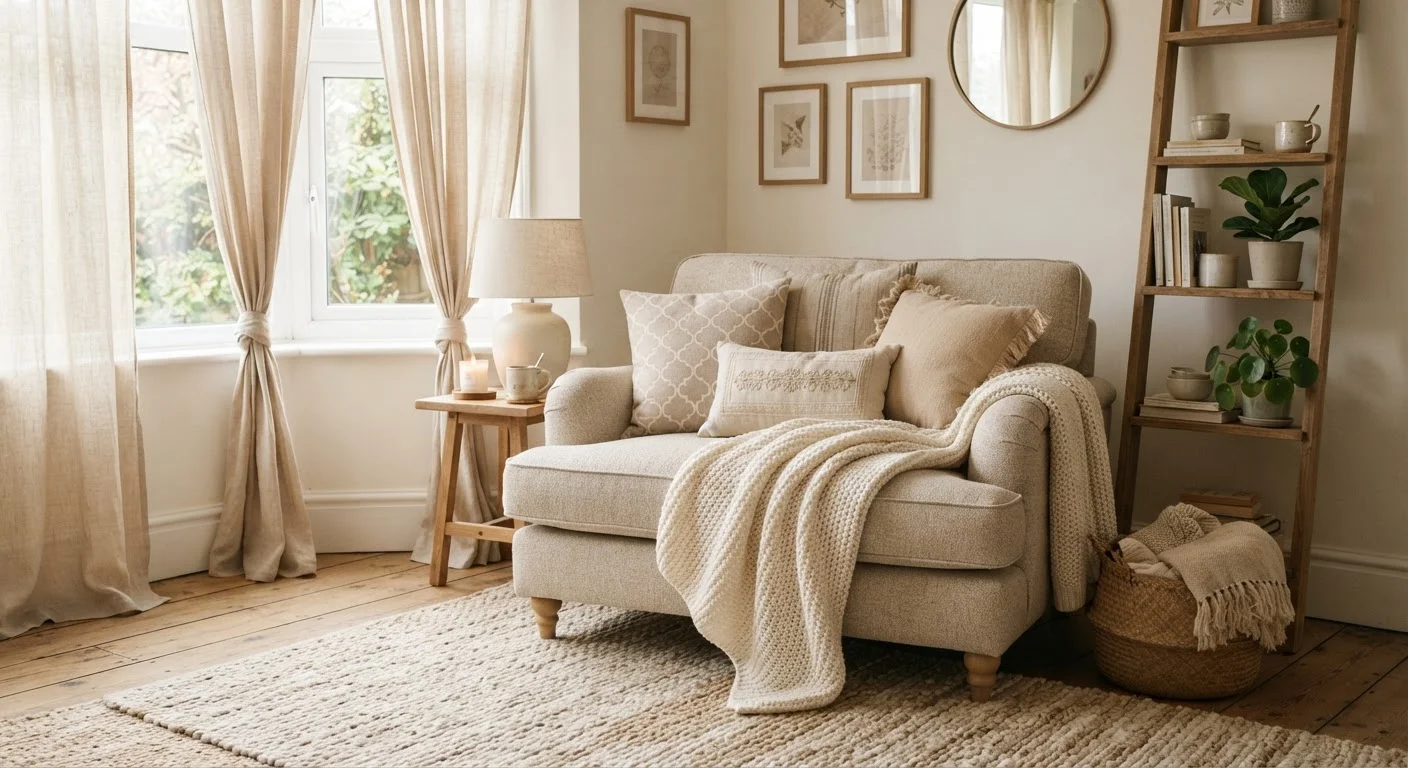
Mix at least three different fabric weights or weaves in any single seating area.
Texture variation is what creates depth - smooth against nubby, sheer against heavy. Without it, even a well-coordinated color scheme can feel two-dimensional. Varying weight also adds tactile interest, which is part of what makes a room feel genuinely inviting.
Repeat a color, material, or motif in at least two separate locations in the room.
Repetition is what separates intentional layering from a collection of unrelated pieces. When a rust-colored cushion appears on the sofa and the same rust is picked up in a smaller detail on the rug, the room reads as cohesive even if the individual pieces are quite different.
Work within a two- or three-color palette, varying tone and saturation rather than adding new hues.
A tight color range forces you to create variety through texture and pattern instead of color, which is where most beginners reach first. The result tends to feel calmer and more deliberate - rooms that look expensive often rely on this restraint.
Use odd numbers when arranging cushions and layered throws.
Symmetrical arrangements can look formal or staged. Groups of three or five have an asymmetry that the eye reads as more natural and relaxed - which is usually the quality homeowners are aiming for in lived-in spaces.
Getting Started Today
You don't need to rethink an entire room at once. Small, targeted swaps using the principles above can shift how a space feels within an afternoon. The quick wins below focus on changes that cost little but deliver noticeable results.
Textiles also interact closely with how a room is lit - a shiny fabric will read very differently under warm lamplight than under cool overhead lighting. For a deeper look at that relationship, see our guide on layering ambient and accent lighting.
Common Pitfalls to Avoid
Even with good intentions, a few habits consistently undermine textile layering. Matching everything too precisely - the cushions to the curtains to the throw - makes a room feel like a showroom rather than a home. Conversely, treating every piece as an opportunity to introduce something new leads to visual noise with no clear throughline.
Another common mistake is neglecting scale. If every pattern in the room is the same size - say, all small florals or all medium stripes - nothing has room to stand out and the effect becomes monotonous. Pairing a large-scale geometric rug with a small-scale printed cushion and a solid-colored throw gives each piece its own visual territory. For rug-specific sizing guidance, learn the placement principles that designers rely on. And if you want a broader view of how textiles fit within the overall design of any room, this complete overview for everyday homeowners covers the full picture.