

Key Takeaways
Layered Lighting
Layered lighting is the practice of combining multiple types of light sources in a single room rather than relying on one overhead fixture. The goal is to give a space flexibility - brighter illumination when you need it, softer atmosphere when you don't. Three distinct layers are typically involved: ambient (general), task (functional), and accent (decorative).
Interior designers often refer to 'color temperature' (measured in Kelvins) when layering light - warmer bulbs (2700-3000K) feel cozy, while cooler bulbs (4000K+) aid focus. Mixing temperatures intentionally across layers adds depth.
Why One Overhead Light Isn't Enough
Walk into most rental apartments or builder-grade homes and you'll find the same setup: a single ceiling fixture - often a flush-mounted globe - positioned dead center in the room. It fills the space with light, technically. But it also creates flat, shadow-free illumination that tends to look institutional rather than inviting.
The problem isn't the fixture itself. It's that one light source can only do one job at one intensity. It can't both illuminate your reading chair and create a relaxed atmosphere for watching a movie. It can't highlight a piece of art and wash the whole ceiling at the same time.
If you've ever felt that a room looked fine in photos but felt cold or somehow unfinished in person, lighting is frequently the culprit. As explored in diagnosing what makes a room feel off, invisible factors like light distribution often matter more than furniture choices.
The Three Layers and What They Each Do
Layered lighting is built on three distinct types of illumination, each with a defined role:
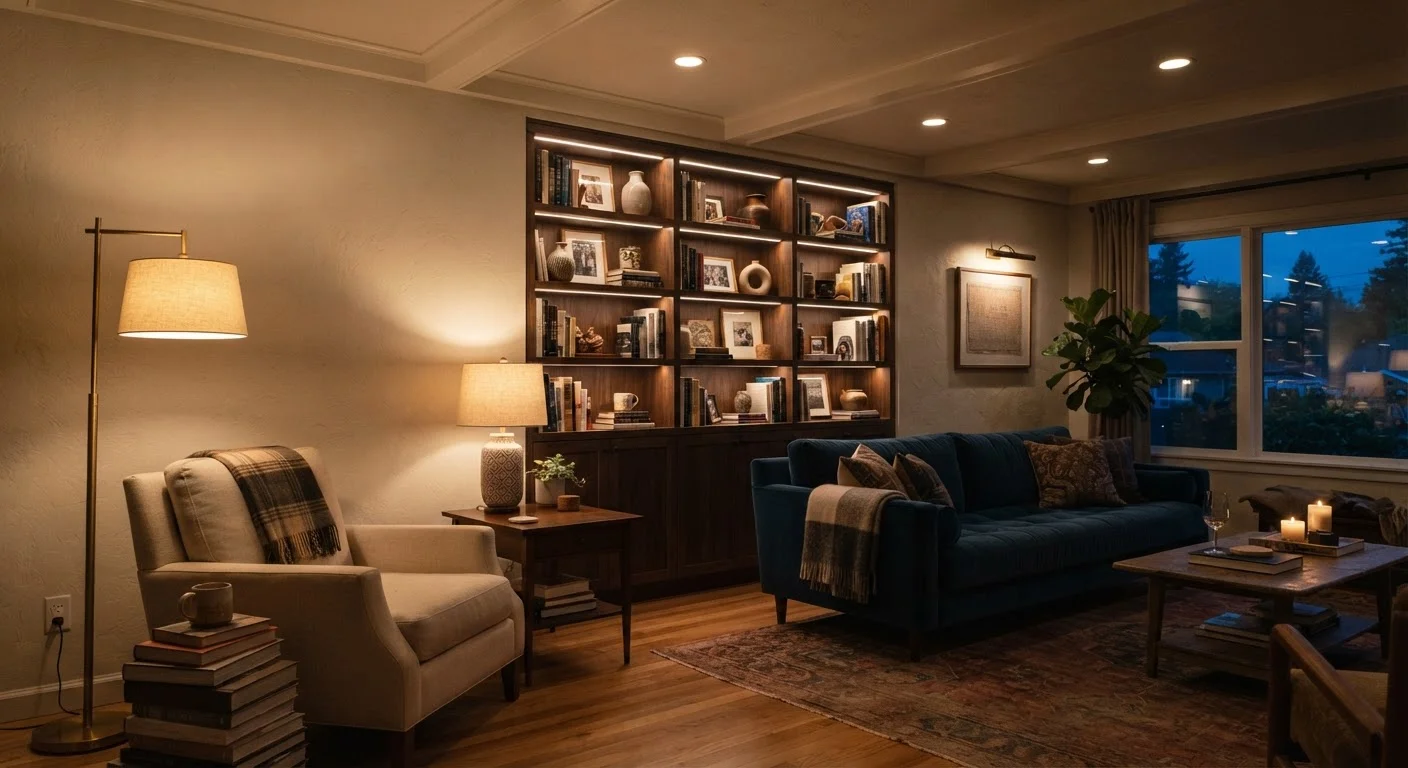
- Ambient light is the base layer - general illumination that makes a room navigable and sets its overall brightness. Ceiling fixtures, recessed downlights, and large pendants typically serve this role.
- Task light is focused and functional. It goes where work happens: a reading chair, a kitchen counter, a desk. A table lamp beside a sofa, under-cabinet lights in a kitchen, or a swing-arm wall lamp beside a bed are all task light sources.
- Accent light is directional and decorative. It draws attention to something specific - a piece of art, a textured wall, a plant, a bookshelf. Track lighting, picture lights, and small directional spotlights fall into this category.
None of these layers is optional if you want a room that feels considered. Together, they give a space dimension. The language of interior design covers many of these terms in broader context if you want to deepen your vocabulary before planning.
Start With a Dimmer Switch
If you can only make one upgrade, adding a dimmer to your existing overhead fixture is the highest-leverage move. It costs relatively little, requires a single switch swap (consult an electrician if you're unsure), and instantly gives your ambient light two modes. Even a fully layered room benefits from a dimmable ceiling source as the anchor.
How to Layer Light in Any Room, Starting Today
You don't need to rewire anything or hire an electrician to begin. Most layering improvements come down to adding portable sources - plug-in lamps, battery-powered puck lights, and clip-on reading lamps - that work alongside whatever's already in the ceiling.
Start by identifying what's missing. Stand in the center of the room at night and ask: Is there a reading spot without enough focused light? Is anything on the walls or shelves being highlighted? Does the room have one mode, or can you adjust it?
A practical starting checklist for a living room:
- Keep your ceiling fixture but put it on a dimmer if possible - this softens ambient light on demand.
- Add a floor lamp to a corner or beside a seating area. Upward-facing torchieres bounce light off the ceiling for gentle fill; downward-facing shades create a warmer pool of light.
- Place a table lamp on a side table or console to bring light down to eye level.
- Use a clip-on spotlight, a small picture light, or directional puck lights to graze a wall, shelf, or artwork with accent light.
This approach applies across rooms. Bedrooms benefit from bedside task lamps and warmer ambient sources. Kitchens often need under-cabinet task lighting even when overhead fixtures are bright.
Before making permanent decisions, it's worth consulting a pre-redecorating planning checklist to confirm your natural light conditions and room dimensions first.
Light, Texture, and the Room as a Whole
Layered lighting doesn't just affect visibility - it interacts with everything else in the room. Light at an angle reveals texture in walls, fabrics, and surfaces that flat overhead light completely erases. A lamp placed near a linen curtain or a woven throw will catch the weave in a way that adds visual richness without adding any new objects.
This is why lighting decisions work best when made alongside textile and color choices. A room with thoughtfully combined textiles will look significantly richer once those materials are lit from multiple angles rather than washed out from above.
Color on walls also changes dramatically depending on light source placement. Warm ambient light amplifies warm paint tones; cool task light can neutralize them. If a paint color looked different in your home than it did on the sample chip, your lighting mix may be the reason.
Layering light is ultimately about flexibility and intention - giving a room the ability to shift between functional and atmospheric, without requiring you to live in either extreme. That's a significant design upgrade, and most of it is achievable with a few well-placed lamps.
This article is for general informational and educational purposes. Always consult a licensed electrician before making any modifications to fixed wiring, fixtures, or electrical panels in your home.