

Key Takeaways
Start here
Why Style Comes Before Shopping
Next
How to Discover What You Actually Like
Then
Building a Simple Style Reference
Apply it
Translating Taste Into a Decorating Direction
Before you buy
Common Mistakes to Sidestep Early
Why Style Comes Before Shopping
Most decorating regrets share a common origin: buying things before having a clear sense of direction. A sofa purchased impulsively, a rug grabbed because it was on sale, wall art picked to fill empty space - individually each might seem fine, but together they produce a room that feels like it belongs to no one in particular.
Establishing a personal style before you spend anything is the single most budget-protecting move you can make. It doesn't require a designer or a large investment of time. What it requires is a little honest self-observation. For a grounding introduction to the vocabulary you'll encounter as you plan, see our guide to interior design terms - understanding words like 'scale,' 'contrast,' and 'visual weight' will make every step of this process easier.
Style clarity also matters whether you own your home or rent. The constraints differ - landlord rules shape what's reversible - but the underlying principle is the same: know what you want before you commit resources to it. Our overview of how tenure shapes decorating decisions explores those differences in detail.
How to Discover What You Actually Like
The most reliable way to uncover your aesthetic preferences is to gather evidence rather than guess. Spend a week or two saving images of interiors that appeal to you - from shelter magazines, design blogs, or anywhere you encounter rooms that make you stop and look. Don't filter by practicality yet. Just collect what draws you.
Once you have a collection of 20 or more images, look across them for patterns:
- Colour: Are most spaces light and neutral, or do bold and saturated colours appear often?
- Materials: Do you keep gravitating toward natural wood, metal, fabric, glass, or stone?
- Clutter level: Are the rooms you like spare and minimal, or layered with objects and textiles?
- Mood: Do the spaces feel calm and quiet, energetic, warm and lived-in, or sleek and polished?
These recurring answers are more useful than any style quiz. They reflect what genuinely appeals to you, not what a trend algorithm thinks matches your demographic.
Look at What You Already Own
Your current belongings hold useful style clues. Look at the clothes you wear most often, the objects you've kept through multiple moves, and the gifts you've given others. Recurring colours, materials, and levels of ornamentation in the things you've already chosen without pressure often point directly at your genuine aesthetic preferences.
Building a Simple Style Reference
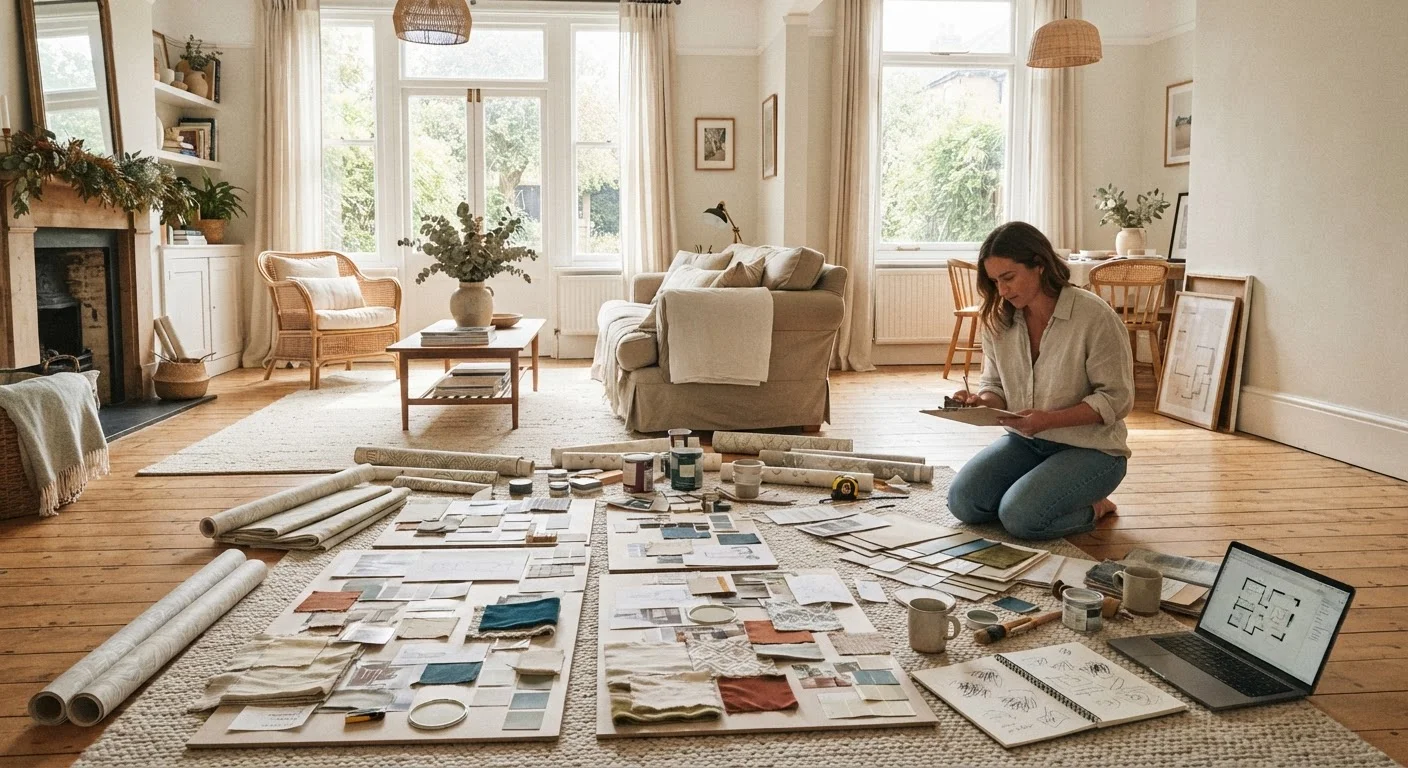
Once patterns emerge from your image collection, organise them into a simple mood board. This doesn't need to be a physical board - a folder of saved images, a shared album, or a free digital collage tool all work equally well. The goal is to create a single visual reference you can return to while planning.
Alongside your images, note the three to five words that best describe how those spaces make you feel. 'Calm,' 'grounded,' 'layered,' 'bright,' 'warm' - these emotional descriptors become your internal filter. When you encounter a piece of furniture or an accessory later, asking 'Does this fit my words?' is often more useful than asking 'Do I like this?'
Mood board
A curated collection of images, colours, and textures assembled to capture the overall feeling you want a space to have. It functions as a visual reference throughout the decorating process.
Design aesthetic
The overall visual character of a space - the general feeling created by the combination of colours, materials, furniture shapes, and the level of ornamentation present.
Primary palette
The two or three main colours chosen to dominate a room. These appear most frequently across walls, large furniture, and textiles, giving the space visual coherence.
Visual weight
How heavy or substantial an object appears to the eye, regardless of its actual mass. Dark colours, large size, and dense texture all increase an object's visual weight.
Transitional style
A design approach that blends elements of traditional and contemporary styles. It tends to feature clean lines paired with warm materials and neutral colour palettes.
Scale
The size of an object or furniture piece in relation to the room and to the other items around it. Poor scale - items that are too large or too small for the space - is one of the most common decorating problems.
At this stage you may start recognising named design styles in your collection - Scandinavian, mid-century modern, transitional, maximalist, coastal, or others. Most people find their taste spans at least two. That's completely normal and actually makes for more interesting, liveable rooms than strictly following a single aesthetic label.
Translating Taste Into a Decorating Direction
With a mood board and a set of guiding words, you can begin translating preference into a practical decorating direction. This means choosing a primary palette (the two or three colours that will do most of the work in a room), a dominant material (the texture or finish that appears most often), and a general furniture silhouette (curved and soft, angular and structured, or relaxed and low-profile).
These three choices - palette, material, silhouette - function as a filter for every purchase decision that follows. They don't lock you in; they protect you from expensive detours. For a broader look at how these elements come together across an entire home, our complete room-by-room design overview provides a useful framework.
It's also worth thinking about how your values show up in your space. The same self-awareness behind understanding your personal values applies here: spaces that reflect who you actually are - not a curated version of someone else - tend to feel more comfortable over time.
Common Mistakes to Sidestep Early
Even with a clear style direction, a few missteps are common enough to be worth flagging before you start buying anything.
- Decorating for guests rather than yourself. A room that impresses visitors but doesn't reflect how you actually live will feel like a showroom, not a home. Comfort and authenticity matter more than external approval.
- Treating trends as anchors. Trends work well for inexpensive, easy-to-swap elements. Using them to guide major furniture purchases often leads to spaces that feel dated within a few years.
- Ignoring the existing room. Fixed elements - flooring, trim colour, window size, ceiling height - aren't negotiable without significant work. Your style direction needs to work with these elements, not against them.
- Buying too fast. Filling empty space quickly is one of the most common and costly instincts in decorating. Living in a room for a few weeks before committing to large pieces almost always produces better decisions.
For a fuller look at the kinds of choices that seem harmless initially but create friction later, see our article on decorating choices that reveal problems over time. And when you're ready to move from style clarity to room-level planning, our pre-decorating checklist covers the practical steps that come next.