
Tyre Pressure, Tread Depth, and Rotation: The Three Habits That Extend Tyre Life

Key Takeaways
Why These Three Habits Matter More Than Most Drivers Realise
Tyres are the only part of your vehicle that actually touch the road. That contact patch - roughly the size of your hand for each tyre - is responsible for steering, braking, and keeping your car stable. Yet tyre care is one of the most commonly overlooked aspects of routine vehicle upkeep.
The good news: staying on top of tyre health doesn't require mechanical expertise or special equipment. Three habits - monitoring pressure, checking tread depth, and rotating regularly - cover the vast majority of what everyday drivers need. Neglecting any one of them quietly adds cost and risk. Keeping up with all three is straightforward once you understand what to look for and why it matters.
For a broader view of routine vehicle upkeep, see the complete owner's maintenance roadmap, which covers tyres alongside every other key system on your car.
Tyre Pressure: The Habit That Pays Off Immediately
Tyre pressure is measured in PSI and refers to how much air is inside each tyre. The correct figure for your vehicle is printed on a sticker inside the driver's door jamb - not on the tyre sidewall, which shows the maximum pressure the tyre can hold, not the recommended operating pressure.
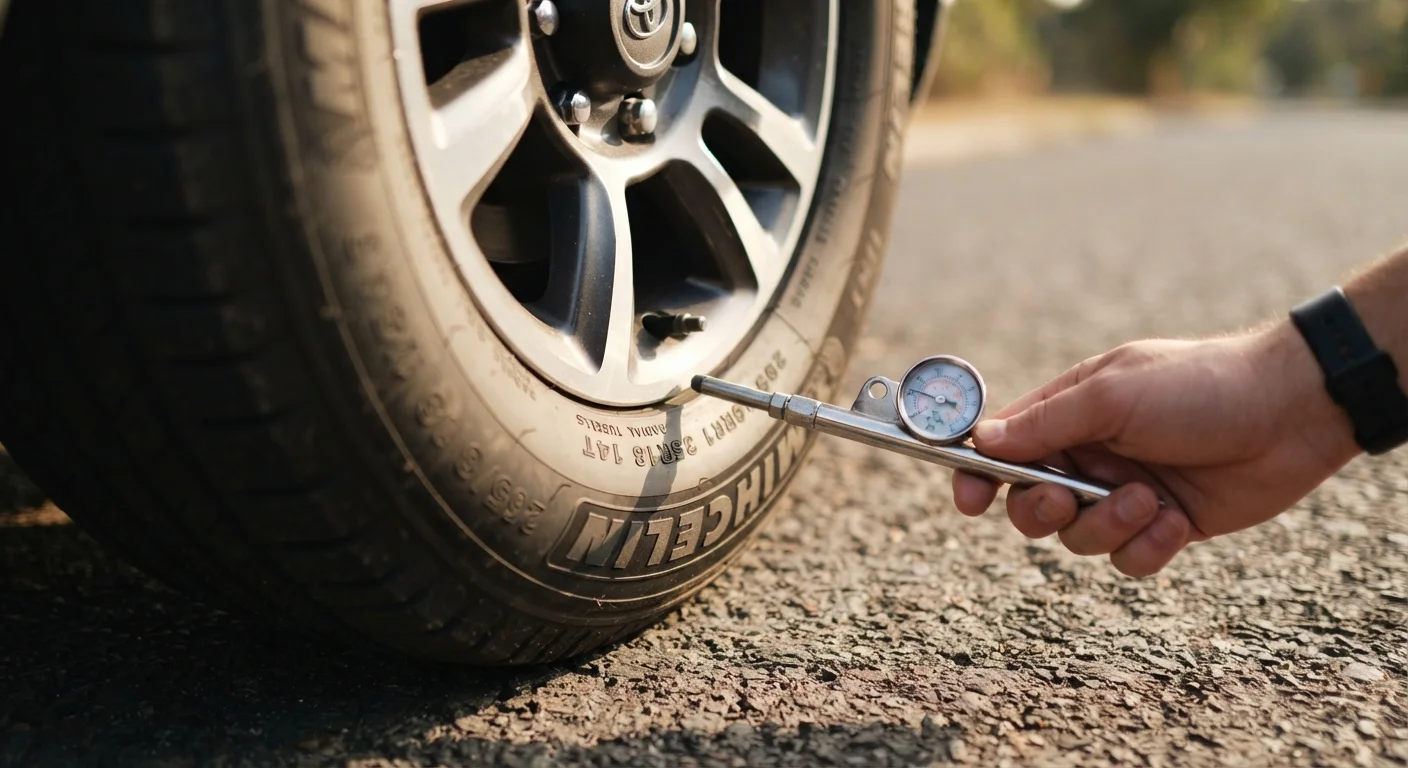
Check pressure when the tyres are cold (the car has been parked for at least three hours), because driving heats the air inside and temporarily raises the reading. A simple handheld gauge costs only a few dollars and takes less than two minutes to use.
Check tyre pressure monthly and before every long trip using a reliable gauge.
Pressure naturally drops over time and fluctuates with temperature changes. Regular checks catch drops before they cause tyre damage or affect handling. A consistent routine prevents the slow bleed of underinflation going unnoticed.
Always use the recommended PSI from your door jamb sticker, not the number on the tyre sidewall.
The sidewall figure is the maximum safe pressure the tyre can contain, not the optimum operating pressure for your specific vehicle. Using the wrong figure can lead to overinflation, a harsher ride, and reduced contact with the road.
Test tread depth with a penny or quarter every few months, and replace tyres before they reach the legal minimum.
Waiting until the legal minimum of 2/32 of an inch means your tyres are already providing significantly less wet-weather grip. Replacing at 4/32 of an inch gives you a meaningful safety margin, especially in rain. Early awareness also lets you plan financially rather than face an urgent replacement.
Rotate tyres every 5,000-7,500 miles, or per your vehicle owner's manual.
Different tyre positions bear different loads and stresses. Without rotation, the hardest-working tyres wear out much sooner, forcing premature replacement of just one or two tyres rather than the full set at a natural end of life. Consistent rotation stretches the life of all four.
Investigate uneven tread wear promptly rather than dismissing it.
Uneven wear patterns are often symptoms of underlying issues - misalignment, suspension problems, or chronic incorrect inflation. Addressing the root cause early prevents further tyre damage and avoids more expensive repairs later.
Underinflation is the more common problem. When a tyre is low, more of the tyre's surface drags along the road, generating excess heat and causing faster, uneven wear along the outer edges. It also reduces fuel economy - the US Department of Energy has noted that underinflated tyres can lower gas mileage measurably. Overinflation causes the centre of the tread to wear down faster and makes the ride harsher.
Temperature swings affect pressure significantly - tyres typically lose or gain about 1 PSI for every 10°F change in ambient temperature. That's why a monthly check, and a check before any long trip, is the recommended minimum.
Tread Depth: Knowing When Your Tyres Are Running Out of Grip
Tread is the grooved rubber surface of the tyre that channels water away and grips the road. As it wears down, your tyre's ability to stop quickly - especially on wet roads - degrades significantly. Research consistently shows that stopping distances increase sharply as tread depth decreases below safe thresholds.
In most US states, the legal minimum tread depth is 2/32 of an inch. Many safety organisations recommend considering replacement at 4/32 of an inch, particularly if you drive in wet conditions. To put that in perspective: a new tyre typically has 10/32 to 11/32 of an inch of tread.
The penny test: Insert a penny into a tread groove with Lincoln's head pointing down. If you can see the top of Lincoln's head, the tread is at or below 2/32 of an inch - time to replace. For the 4/32 benchmark, use a quarter: if Washington's head is fully visible, the tyre is getting close to the point where wet-weather grip is noticeably compromised.
Also look for uneven wear patterns. Wear concentrated in the centre suggests overinflation; wear on both outer edges points to chronic underinflation; wear on one edge can indicate an alignment problem. Uneven wear is a signal to investigate further - your vehicle's alignment or suspension may need attention from a qualified mechanic.
For context on how tread depth ties into safe driving in poor conditions, our guide on driving in rain, fog, and low light explains how grip changes when road surfaces are wet.
Rotation: The Simple Step That Makes All Four Tyres Last Longer
Tyres don't wear at the same rate. On front-wheel-drive vehicles (where the engine drives the front wheels), the front tyres handle both steering and power delivery, so they wear faster. On rear-wheel-drive cars, the rear tyres carry the load. Even on all-wheel-drive vehicles, weight distribution and braking forces cause uneven wear across the four positions.
Rotation moves each tyre to a different position on the vehicle - front to back, side to side, or a cross pattern - so that wear is spread more evenly across all four tyres over time. The result: you get more total miles out of your tyre set before any individual tyre wears out.
A general guideline is to rotate every 5,000 to 7,500 miles, though your owner's manual will have the specific recommendation for your vehicle. Many drivers find it convenient to rotate with every oil change if their service interval aligns with that range.
Rotation is typically inexpensive when done at a tyre shop or during a routine service visit, and some shops include it free with a tyre purchase. It takes roughly 30-45 minutes and requires no special preparation from you beyond showing up.
For a seasonal approach to tyre care alongside other maintenance items, the seasonal car maintenance checklist is a useful reference to keep in your glovebox.
Putting It Together: A Realistic Routine
None of these habits demands significant time or expertise. The key is making them regular rather than reactive - checking pressure and tread when you notice a problem is useful, but by then some damage may already be done.
A simple approach: set a monthly reminder to check tyre pressure and do a quick visual inspection. Use the penny or quarter test on your tread every few months, or whenever you notice the car pulling to one side or handling differently. Schedule rotation with your oil changes so it becomes automatic.
If you're new to all of this, the first-time driver's introduction to tyres covers the fundamentals in more depth, from reading tyre sidewall markings to understanding load ratings.
Well-maintained tyres don't just save money - they give you more confidence behind the wheel, because you know your vehicle is ready to respond when it needs to. That's a straightforward payoff for three habits that together take only minutes a month.