

Key Takeaways
Why Poor Conditions Change the Rules
Most driving habits are built around dry, well-lit roads. When conditions shift - rain starts falling, fog rolls in, or daylight fades - the rules your instincts rely on no longer fully apply. Visibility drops, tyre grip decreases, and your vehicle needs longer distances to stop safely.
Understanding how each condition changes the driving environment is the first step to responding appropriately. This isn't about fear - it's about adjusting your technique the way a skilled driver does, methodically and without panic. For a broader look at building this kind of situational awareness, see our full guide for beginners and anxious drivers.
Driving in Rain: Grip, Speed, and Spray
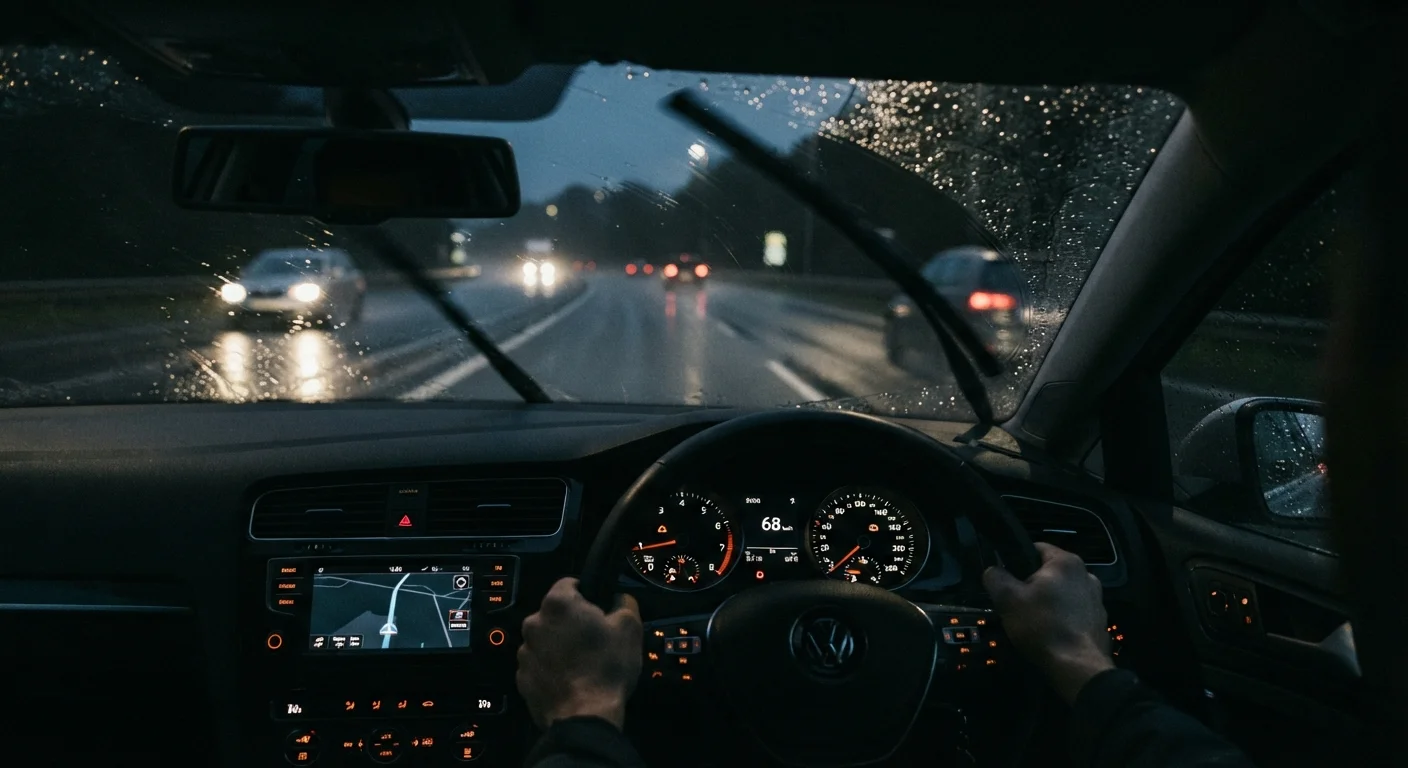
Rain creates two separate problems: reduced grip between your tyres and the road, and reduced visibility caused by spray, smeared windscreens, and other vehicles' water plumes. Both require a response.
Tyre condition matters enormously here. Worn tread can't channel water away from the contact patch effectively, dramatically increasing your risk of aquaplaning - when a layer of water builds up between your tyres and the road surface, causing a temporary loss of steering and braking control. Check your tread regularly; the tyre pressure, tread depth, and rotation guide explains exactly what to look for.
If you feel the steering go light suddenly, ease off the accelerator gently and hold the wheel straight - don't brake sharply. This allows the tyres to regain contact with the road. For a full breakdown of what to do when traction fails, see our guide on handling a skid or sudden vehicle failure.
Driving in Fog: Light, Speed, and Following Distance
Fog is deceptive. It creates a false sense that speeds are lower than they are, and it compresses your visual field so hazards appear with much less warning. A common and dangerous mistake is using high-beam headlights in fog - the light bounces back off the water droplets and actually reduces how far you can see. Use low beams and, if your vehicle has them, dedicated fog lights.
Fog Lights: Use Them Right
Rear fog lights make you dramatically more visible in dense fog - but leave them on in clear conditions and you'll dazzle drivers behind you. Switch them off as soon as fog clears. Front fog lights, where fitted, should be used in combination with low-beam headlights, never as a replacement for them.
The critical rule in fog: if you can't stop within the distance you can see clearly, you're going too fast. Reduce your speed until that equation balances. Increase your following distance significantly - other drivers may brake without much warning.
Fog also changes how rural and urban roads behave differently. Urban vs rural road hazards are worth understanding, since fog on country roads can hide bends, animals, and unlit vehicles far more suddenly than city streets.
Low Light and Dusk: The Overlooked Danger Window
Dusk and dawn are statistically among the most hazardous periods to drive. Glare from a low sun can render road markings, traffic signals, and pedestrians nearly invisible. Meanwhile, some drivers haven't yet switched their headlights on, making them hard to spot. The answer is simple: turn your headlights on earlier than you think you need to - not just to see, but to be seen.
Low light also reduces your depth perception and reaction time in ways that aren't immediately obvious. Our article on how darkness affects reaction time and depth perception covers the science behind this and the habits that help. Keep your windscreen clean inside and out - interior smears cause significant glare from oncoming headlights.
Habits Worth Building Before the Weather Turns
The best time to prepare for poor conditions is before you encounter them. A vehicle with clean lights, good wipers, adequate tyre tread, and properly inflated tyres gives you far more margin when things get difficult. Visit the car maintenance hub for practical upkeep guides that directly affect your safety in bad weather.
Be honest about habits you may have already formed. Over-confidence in familiar routes, following too closely, or neglecting to use lights in marginal conditions are the kinds of errors that feel low-risk until they aren't. See confidence killers new drivers develop for a candid look at what to watch for in your own driving.
This article provides general driving education and guidance. Always follow the traffic laws applicable in your state or jurisdiction, and consult a qualified driving instructor for personalised advice.