Seasonal checks catch small problems before they become expensive repairs.
Tires, fluids, brakes, and lights are the four pillars of year-round vehicle safety.
Most checks on this list can be done at home in under an hour with no special tools.
Always consult a qualified mechanic when a problem is outside your comfort level.
Recording each check in a service log helps you spot patterns and stay on schedule.
30–60 min
Summary
24 items · 30-60 minutes per seasonal review
Why a Seasonal Approach Makes Sense
Your car faces very different demands in January than it does in July. Cold temperatures thicken engine oil and stress batteries; summer heat accelerates tyre wear and strains cooling systems. A single annual inspection is better than nothing, but a brief seasonal review - four times a year, roughly aligned with the seasons - means you're always driving a vehicle that's prepared for current conditions rather than the last time you visited a shop.
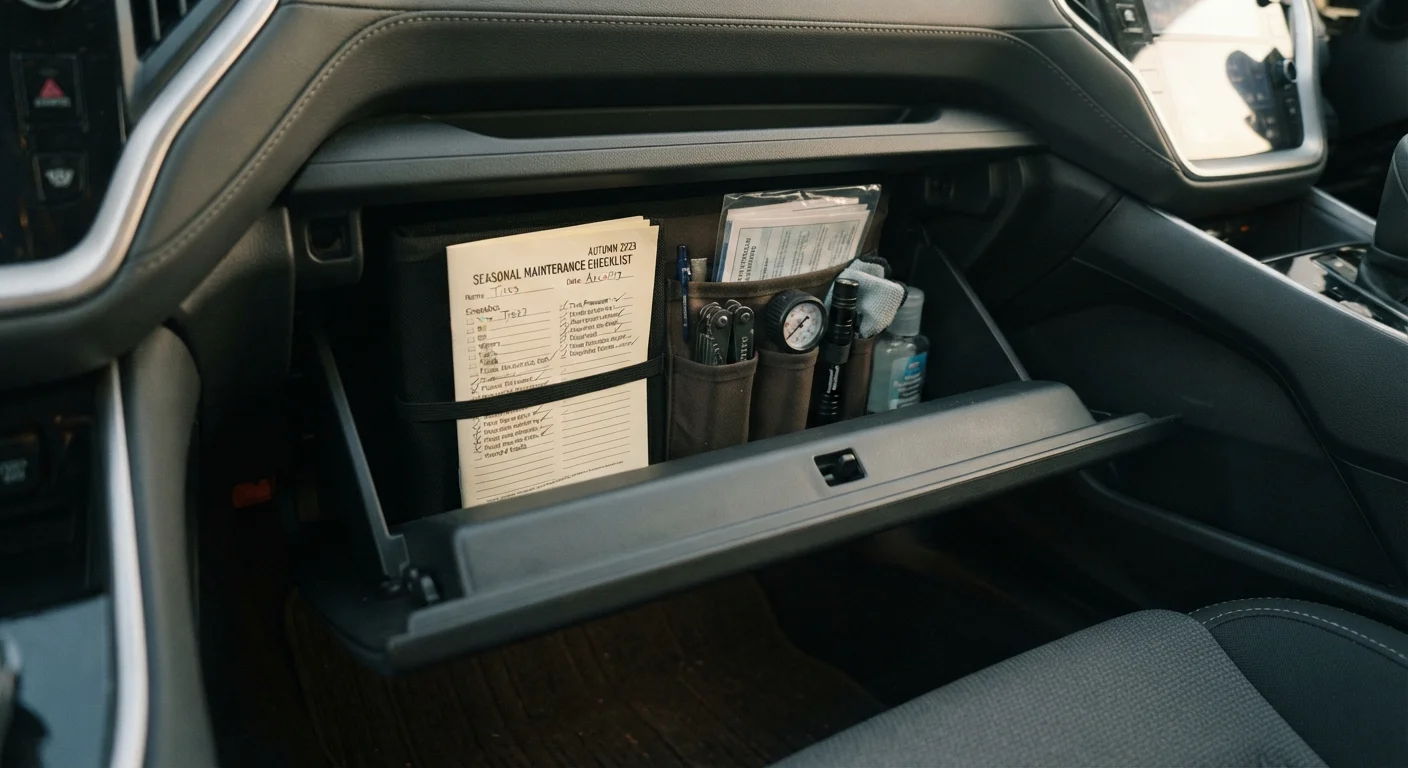
This checklist is designed to be printed, folded, and kept in the glovebox. Work through each group at the start of every season, tick off what's in good shape, and flag anything that needs attention. If you find a problem outside your skill set, take the vehicle to a qualified mechanic rather than driving on it. The complete owner's maintenance roadmap puts these seasonal checks into the wider context of long-term vehicle upkeep.
Know Your Limits - and When to Call a Pro
This checklist focuses on visual inspections and fluid top-ups that most drivers can handle safely. Any check that reveals a problem - low brake fluid, worn tyre tread below safe limits, a cracked belt, or a dashboard warning light - should be evaluated by a qualified mechanic before you drive further. Never ignore brake or tyre concerns; they are directly related to your ability to control the vehicle in an emergency.
After completing your checks, note the date and any findings in a service log. As explained in our guide to keeping a vehicle service log, a consistent record protects both reliability and resale value.
How to Use This Checklist
Work through the groups below in order. You'll need about 30-60 minutes and good lighting - a bright garage or daylight works best. Have your owner's manual handy: it lists the exact fluid specifications and tyre pressures recommended for your specific vehicle, which vary by make and model.
Priority labels tell you how urgent each item is. Must items are non-negotiable safety checks. Should items are strongly recommended and often prevent costly repairs down the road. Nice-to-have items improve comfort and longevity but won't leave you stranded if skipped for a season.
Tyres
Check tyre pressure on all four tyres (plus the spare) using a gauge, and inflate to the pressure listed in your owner's manual or the sticker inside the driver's door jamb.Must
Inspect tread depth by placing a quarter upside-down in a tread groove - if you can see the top of Washington's head, the tread is too worn and tyres should be replaced.Must
Look for uneven wear patterns, sidewall cracks, or bulges, any of which can signal alignment, inflation, or structural problems.Must
Rotate tyres every 5,000-7,500 miles (check your owner's manual) to promote even wear across all four tyres.Should
Swap to winter or all-season tyres before the first freeze if you live in a region with regular snow or ice.Nice to have
Fluids
Check engine oil level with the dipstick when the engine is cold; top up or schedule an oil change if the level is low or the oil appears dark and gritty.Must
Inspect the coolant (antifreeze) reservoir level and condition; coolant that appears rusty or oily should be flushed and replaced by a mechanic.Must
Verify brake fluid level in the reservoir under the hood; a consistently low level can indicate a leak or worn brake pads and warrants a mechanic's inspection.Must
Check windshield washer fluid and fill with a solution rated for the lowest expected temperature in your area.Should
Inspect power steering fluid level if your vehicle has a traditional hydraulic system (not electric power steering).Should
Brakes & Battery
Listen for squealing, grinding, or pulsing when braking - these are common indicators that brake pads or rotors need professional attention.Must
Have the battery tested at the start of winter and summer, when extreme temperatures put the most strain on battery performance.Must
Inspect battery terminals for white or blue corrosion buildup and clean them with a proper battery terminal brush if needed, wearing eye protection.Should
Check that the parking brake engages and releases smoothly, with firm resistance and no slipping.Should
Lights & Visibility
Walk around the car with a helper or use reflections to confirm all headlights, taillights, brake lights, turn signals, and reverse lights are working.Must
Test windshield wipers at multiple speeds and replace blades that streak, skip, or leave large dry patches - typically every 6-12 months.Must
Clean all exterior lights and the windshield inside and out to maximize visibility, especially before winter driving.Should
Check that headlights are aimed correctly - misaligned beams reduce your vision and can blind oncoming drivers. A mechanic can adjust them if needed.Nice to have
Under the Hood & Belts
Visually inspect the serpentine belt for cracks, fraying, or glazing; a snapped belt can disable power steering and charging, leaving you stranded.Must
Check the air filter by holding it up to light - a heavily clogged filter reduces engine efficiency and should be replaced per your owner's manual interval.Should
Inspect all visible hoses for soft spots, cracks, or loose clamps, particularly the upper and lower radiator hoses.Should
Emergency Kit & Documents
Verify your emergency kit contains a working flashlight, jumper cables or a jump-start pack, a reflective triangle or flares, and a basic first-aid kit.Must
Confirm your registration, proof of insurance, and roadside assistance contact information are current and stored in the glovebox.Must
Add seasonal items to the trunk as needed: an ice scraper and small shovel in winter, extra water in summer.Nice to have
Cars & Driving Editorial Team is the collective byline for our editorial team and contributor network. Articles published under this byline or an editorial pen name are researched, written, and reviewed according to our editorial standards for clarity, consistency, and independence before publication.
Disclaimer: The content on this site is for informational purposes only and is not a substitute for professional advice. Always consult a qualified professional for guidance specific to your situation.