

Key Takeaways
Start here
Why Tyres Matter More Than You Think
Next
Reading a Tyre: What the Numbers Mean
Then
Tread Depth: Your Safety Margin
Build on it
Tyre Pressure Explained
When you're ready
When to Rotate, Repair, or Replace
Why Tyres Matter More Than You Think
Your car's tyres are its only physical connection to the road. Every time you brake, accelerate, or steer, all of that force passes through four patches of rubber - each roughly the size of a hand. That's why tyre condition has such a direct impact on your safety, particularly in wet or emergency situations.
For first-time drivers, tyres can feel like a background concern compared to fuel levels or dashboard warning lights. But a tyre blowout at speed or a car that won't stop in time on a rainy road are preventable situations. Understanding the basics puts you firmly in control. This guide is part of a broader complete car maintenance roadmap - start here, and you'll have a strong foundation.
Reading a Tyre: What the Numbers Mean
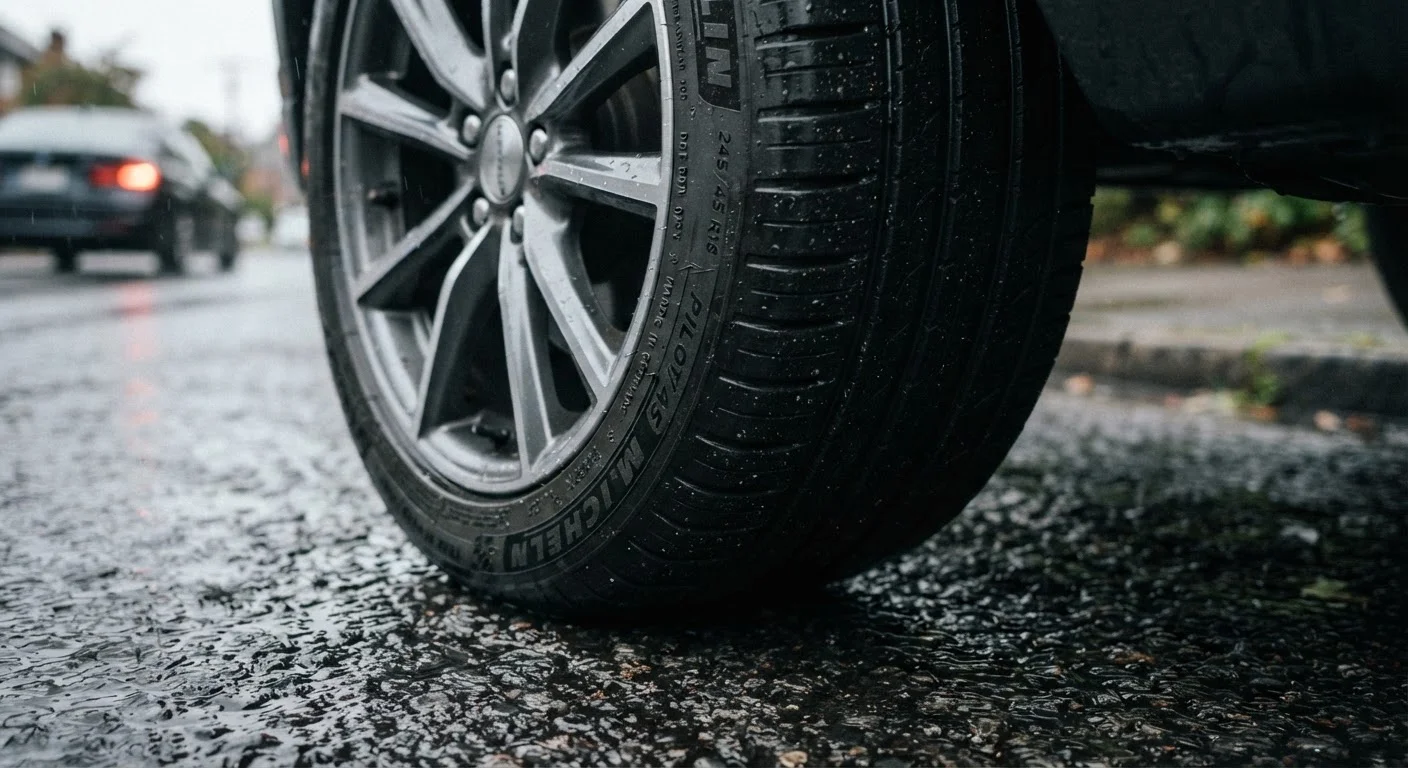
Look at your tyre's sidewall and you'll see a string of numbers and letters - for example, 205/55R16 91V. This isn't random. Each part tells you something specific:
- 205 - Tyre width in millimeters
- 55 - Aspect ratio: the sidewall height is 55% of the width
- R - Radial construction (the standard for passenger cars)
- 16 - Wheel diameter in inches
- 91 - Load index, indicating the maximum weight the tyre can support
- V - Speed rating, showing the maximum sustained speed the tyre is designed for
You don't need to memorize these, but knowing where to find them helps when buying replacements or checking that the correct tyre is fitted. Your owner's manual lists the exact size recommended for your vehicle.
Tread depth
The measurement of the grooves on a tyre's surface that channel water away and provide grip. Shallower grooves mean less traction, especially in wet conditions.
Tyre pressure (PSI)
The amount of air inside a tyre, measured in pounds per square inch. Correct pressure keeps the tyre's shape stable and ensures proper contact with the road.
Aspect ratio
The sidewall height of a tyre expressed as a percentage of its width. A lower number means a shorter, stiffer sidewall.
Load index
A number on the tyre sidewall representing the maximum weight the tyre can safely carry when properly inflated.
Tyre rotation
Moving tyres between different positions on the car (front-to-back, side-to-side) on a regular schedule so they wear evenly and last longer.
Wear indicator bars
Small raised rubber bars molded into the tread grooves of a tyre. When the tread surface is level with these bars, the tyre has worn to its legal limit.
Tread Depth: Your Safety Margin
Tread depth is the measurement of the grooves cut into the surface of your tyre. These grooves channel water away from the contact patch, allowing the rubber to grip the road. As tread wears down, this ability decreases - particularly on wet roads.
In most US states, the legal minimum tread depth is 2/32 of an inch. However, many safety experts recommend replacing tyres at 4/32 inch to maintain adequate wet-weather performance. A simple way to check: insert a quarter into the tread groove with Washington's head pointing down. If you can see the top of his head, you're below 4/32 inch.
Most modern tyres also have built-in wear indicator bars - small rubber bars molded into the tread grooves. When the tread surface is level with these bars, the tyre has reached the legal wear limit and must be replaced. For a more detailed look at tracking tread depth over time, see our guide on the three habits that extend tyre life.
Tyre Pressure Explained
Tyre pressure is measured in PSI. Running at the wrong pressure - too high or too low - affects how your car handles, how quickly your tyres wear, and even your fuel economy.
- Under-inflation causes the tyre to flex excessively, generating heat and increasing wear on the outer edges of the tread.
- Over-inflation creates a smaller contact patch, reducing grip and causing faster wear in the center of the tread.
To find the correct pressure for your vehicle, look at the sticker on the inside of your driver's door jamb - not the maximum pressure printed on the tyre itself, which is an engineering limit, not a recommendation. Check pressure when your tyres are cold (before driving or after the car has sat for at least three hours). Most gas stations have air pumps, and a basic tyre pressure gauge costs just a few dollars and fits in your glovebox.
Make tyre pressure part of your pre-drive habit. Before your first solo journey, our pre-drive preparation guide walks through exactly what to check.
Build a 60-Second Tyre Check Habit
Before getting in the car, do a quick visual walk-around. Look for any tyre that appears noticeably lower than the others, any visible objects embedded in the tread, or cracks on the sidewall. This takes under a minute and can catch a slow leak before it becomes a flat tyre on the road.
When to Rotate, Repair, or Replace
Tyres don't wear evenly across all four positions. Front tyres typically wear faster because they handle steering and, on front-wheel-drive cars, also transmit engine power. Rotating your tyres - moving them between positions in a set pattern - helps even out this wear and extend their overall lifespan. Most manufacturers recommend rotating every 5,000-7,500 miles; check your owner's manual for the exact interval.
Repairing a tyre is sometimes possible if you pick up a nail or screw in the central tread area. A plug or patch applied by a professional can restore the tyre safely - but only if the puncture is smaller than 1/4 inch and not in the sidewall or shoulder. Sidewall damage always means replacement, not repair.
Replacing is necessary when tread is worn to the legal minimum, when you see cracking or bulging on the sidewall, or when a tyre is more than six years old regardless of apparent condition (rubber degrades over time even if visually intact). When replacing, try to match the same size and type across an axle. A qualified mechanic or tyre specialist can advise on the right approach for your vehicle.
Keeping tyres in good condition also pays dividends across seasons. Our seasonal car maintenance checklist includes tyre checks in every quarter of the year. And as you build broader driving skills, building driving confidence covers how vehicle knowledge feeds directly into safer, calmer driving.