

Key Takeaways
Why Routine Maintenance Pays Off
A car is typically one of the largest purchases a household makes, yet many owners skip the upkeep that protects that investment. Routine maintenance is not about being mechanically gifted - it's about developing consistent habits that catch small problems before they become expensive ones.
Neglected maintenance is a leading contributor to roadside breakdowns and premature component failure. A low coolant level, for example, can quietly escalate into engine overheating; worn brake pads can damage rotors that cost several times more to replace. Staying proactive keeps repair bills manageable and your vehicle dependable. It also supports safer driving habits by ensuring your car responds predictably when you need it most.
The First 30 Days: Getting Acquainted With Your Vehicle
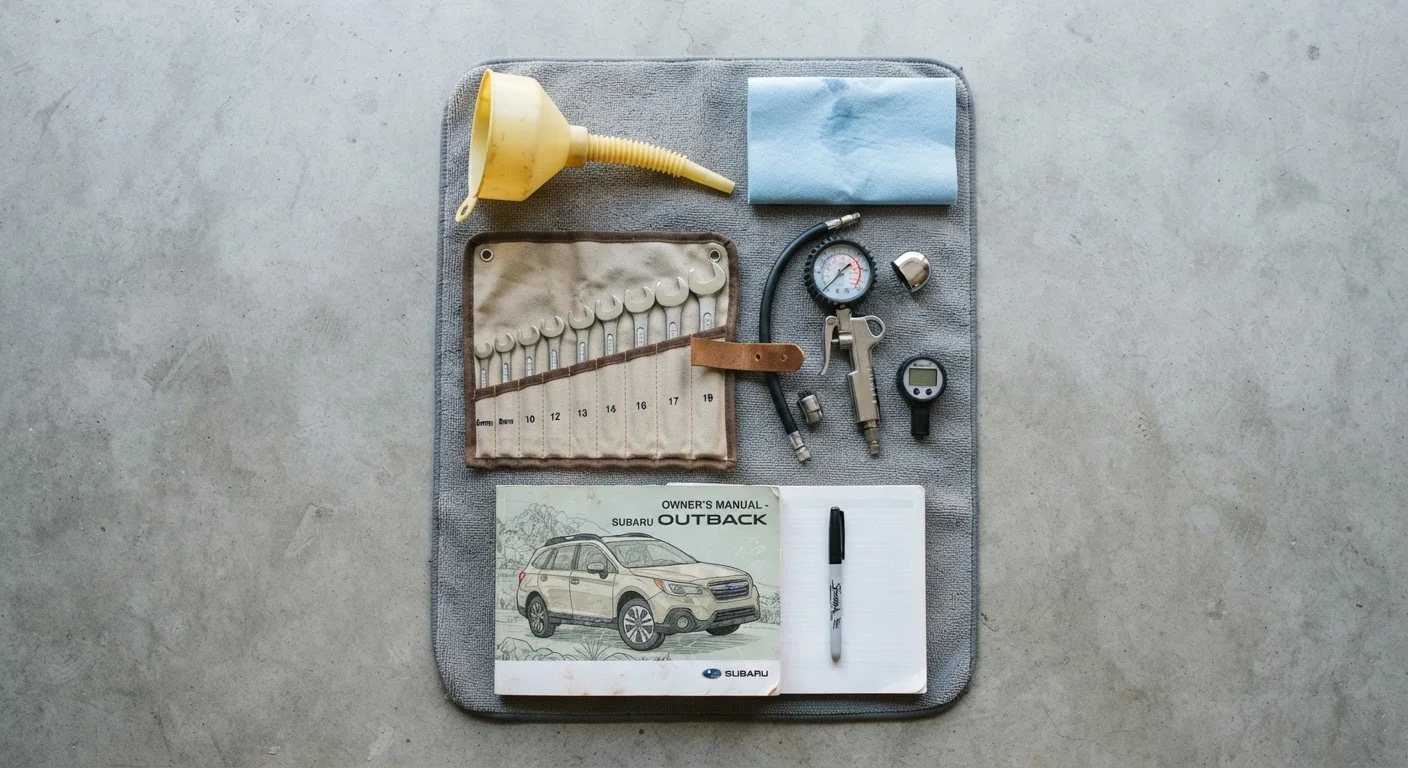
Whether your car is brand new or new to you, the first month sets the tone for how well you'll care for it long term. Start with one straightforward step: read the owner's manual.
The manual tells you what fluids your specific engine requires, when the manufacturer recommends service intervals, and which warning lights mean stop-now versus schedule-soon. No online article - including this one - can replace that vehicle-specific information.
- Locate key components under the hood: engine oil dipstick, coolant reservoir, brake fluid reservoir, and windshield washer fluid tank. Knowing where they are before you need them removes hesitation later.
- Note the current mileage and compare it against the maintenance schedule in the manual to identify anything overdue.
- Check tire pressure on all four tires (and the spare) using an inexpensive gauge. The correct pressure is on the sticker inside your driver's door jamb - not the number printed on the tire sidewall.
Also take a few minutes to learn how your dashboard warning lights work. The oil pressure light, battery light, and check-engine light each signal different urgency levels.
Monthly Checks Every Driver Can Do
A quick once-a-month walk-around keeps you ahead of most common issues. None of these tasks require lifting the car or any mechanical expertise.
Do your monthly fluid and tire checks at the same time each month - many drivers tie it to the first fill-up of the month so it becomes automatic rather than easy to forget.
Habit stacking - pairing a new behavior with an existing routine - is one of the most reliable ways to build consistency, which is the real foundation of good vehicle care.
Save your service receipts digitally by photographing them immediately after each visit. A folder in your email or cloud storage creates an instant, searchable record without any special app.
Paper receipts fade and get lost; a digital archive takes seconds to create and can meaningfully support resale value by showing a documented maintenance history.
- Engine oil level: With the engine off and cooled, pull the oil dipstick, wipe it clean, reinsert it fully, and pull it again. The oil should fall between the two marks at the tip.
- Coolant level: Check the translucent reservoir when the engine is cold. It should sit between the min and max markings.
- Brake and power steering fluid: Both have similar reservoir-style checks. Low brake fluid can indicate either normal pad wear or a leak - either warrants attention.
- Tire pressure: Tires lose roughly 1 PSI (pound per square inch) per month naturally, and more in cold weather. A few seconds with a gauge can prevent uneven wear and reduced fuel economy.
- Lights: Walk around the car with hazard lights on to verify all bulbs are working. Ask someone to confirm brake lights while you press the pedal.
- Windshield wipers: Streaking or skipping blades reduce visibility in rain. Most wiper blades last 6-12 months depending on climate.
Oil Changes and Fluid Maintenance
Engine oil lubricates moving parts, reduces heat, and carries away contaminants. When it degrades, internal engine wear accelerates. The old rule of changing oil every 3,000 miles applied to older vehicles and conventional oil - many modern engines using full-synthetic oil can go 7,500 to 10,000 miles or more between changes. Your owner's manual gives the accurate interval for your specific engine.
Beyond engine oil, several other fluids require periodic attention:
- Transmission fluid: Keeps the gearbox shifting smoothly. Intervals vary widely - some manufacturers recommend changes every 30,000-60,000 miles; others specify longer. Consult your manual.
- Coolant (antifreeze): Prevents overheating in summer and freezing in winter. Most vehicles call for a full coolant flush every two to five years.
- Brake fluid: Absorbs moisture over time, which lowers its boiling point and reduces braking performance. A flush every two to three years is a common general guideline.
- Power steering fluid: If your car uses hydraulic power steering (not electric), check and replace as the manual specifies.
If you're unsure whether your vehicle's fluids are current, a qualified mechanic can perform a multi-point inspection. Don't hesitate to ask for written results so you have a starting record. See our guide on common car maintenance myths for facts versus fiction on fluid change intervals.
Tires: Pressure, Rotation, and Tread
Tires are the only part of your car in contact with the road, making their condition directly relevant to your safety. Three habits cover the essentials.
Pressure: Check monthly and before any long drive. Under-inflated tires wear faster on the outer edges, reduce fuel efficiency, and can overheat at highway speeds. Over-inflated tires wear faster in the center and reduce grip.
Rotation: Front and rear tires wear differently depending on drivetrain and driving style. Rotating them - swapping front to rear and vice versa - promotes even wear across all four and typically extends tire life. Most manufacturers recommend rotating every 5,000-7,500 miles, which conveniently aligns with many oil change intervals.
Tread depth: The legal minimum tread depth in most U.S. states is 2/32 of an inch, but many safety experts suggest replacing tires at 4/32 for better wet-weather performance. A quick test: insert a quarter into a tread groove with Washington's head facing down. If you can see the top of his head, the tread is at or below 4/32 of an inch - time to plan for replacements.
Before any extended drive, a well-maintained vehicle is essential. Our road trip planning guide walks through a full pre-departure checklist.
Annual Safety Checks and Scheduled Services
Some maintenance items don't need monthly attention but are critical on a yearly or mileage-based schedule:
- Brake inspection: Have a mechanic visually check pad thickness, rotor condition, and brake lines at least once a year - or anytime you hear grinding, squealing, or feel pulsing when braking.
- Air filter (engine): A clogged air filter reduces engine efficiency. Many manufacturers recommend inspection every 15,000-30,000 miles; dusty driving environments may shorten that.
- Cabin air filter: Affects the air quality inside your car and the performance of your heating and A/C system. Typically replaced every 15,000-25,000 miles.
- Battery: Most car batteries last three to five years. Have the charging system tested annually after the three-year mark, particularly before winter.
- Belts and hoses: Serpentine belts (which drive alternators, power steering pumps, and A/C compressors) and coolant hoses should be inspected for cracking or fraying. A broken serpentine belt can leave you stranded.
- Spark plugs: Worn plugs cause rough idling and reduced fuel economy. Conventional plugs may need replacement every 30,000 miles; iridium plugs often last 60,000-100,000 miles.
If your state requires a periodic safety or emissions inspection, treat that appointment as a floor, not a ceiling - it checks minimum legal standards, not comprehensive vehicle health.
Tracking Your Maintenance History
Knowing what has been done - and when - is as important as the maintenance itself. A service log helps you stay on schedule, avoid duplicate work, and demonstrate to future buyers that the vehicle was cared for. A simple notebook in your glove compartment works; so does a note-taking app on your phone. Record the date, mileage, and what was done each time.
For a deeper look at what to record and why it matters for both reliability and resale value, see our guide on keeping a vehicle service log.
Consistency is the goal. A car that receives regular, documented attention is more predictable, more reliable, and ultimately less expensive to own than one that sees a mechanic only in a crisis. Start with the basics covered here, follow your owner's manual, and build from there - one check at a time.
This article is for general informational purposes. Always consult a qualified mechanic for diagnosis and repair of your specific vehicle, and follow the maintenance guidelines in your owner's manual.