

| Red light response | Stop driving as soon as safely possible |
| Amber light response | Schedule a mechanic visit within days |
| Check engine light causes | Ranges from loose gas cap to engine misfire |
| TPMS trigger threshold | Typically 25% below recommended tire pressure (U.S. NHTSA TPMS standard) |
| Owner's manual | Always the definitive reference for your specific vehicle |
| OBD port location | Usually under the dashboard on the driver's side |
Why Warning Lights Exist - and Why You Shouldn't Ignore Them
Your car's dashboard is essentially its way of talking to you. Warning lights are signals from your vehicle's onboard diagnostic system - a network of sensors that monitors everything from engine pressure to your seatbelt. When something falls outside acceptable parameters, a light illuminates to alert you.
The challenge for most drivers is knowing which lights demand immediate action and which ones simply require a scheduled visit to a mechanic. Getting that distinction wrong can mean the difference between a minor repair and a major breakdown. This reference guide breaks down the most common warning lights, what each one means, and how urgently you should respond.
For a broader look at keeping your vehicle in shape year-round, see our seasonal car maintenance checklist - a practical companion to this guide.
Onboard Diagnostic System (OBD)
A built-in computer system in modern vehicles that monitors engine performance, emissions, and other systems. When a sensor detects a problem, it logs an error code and may trigger a dashboard warning light.
TPMS
Tire Pressure Monitoring System - a sensor-based system that alerts you when one or more tires drops significantly below the recommended inflation level.
Coolant
A liquid (also called antifreeze) that circulates through the engine to regulate its temperature, preventing both overheating and freezing in cold climates.
Oil Pressure
The force with which engine oil is circulated through the engine's moving parts. Adequate oil pressure is essential to prevent metal-on-metal contact and engine damage.
Traction Control
An active safety system that detects wheel spin during acceleration and automatically reduces engine power or applies braking to restore grip.
Diagnostic Scanner
A tool that connects to a vehicle's OBD port and reads stored error codes, helping mechanics or drivers identify the specific cause of a warning light.
Red Lights: Stop and Act Now
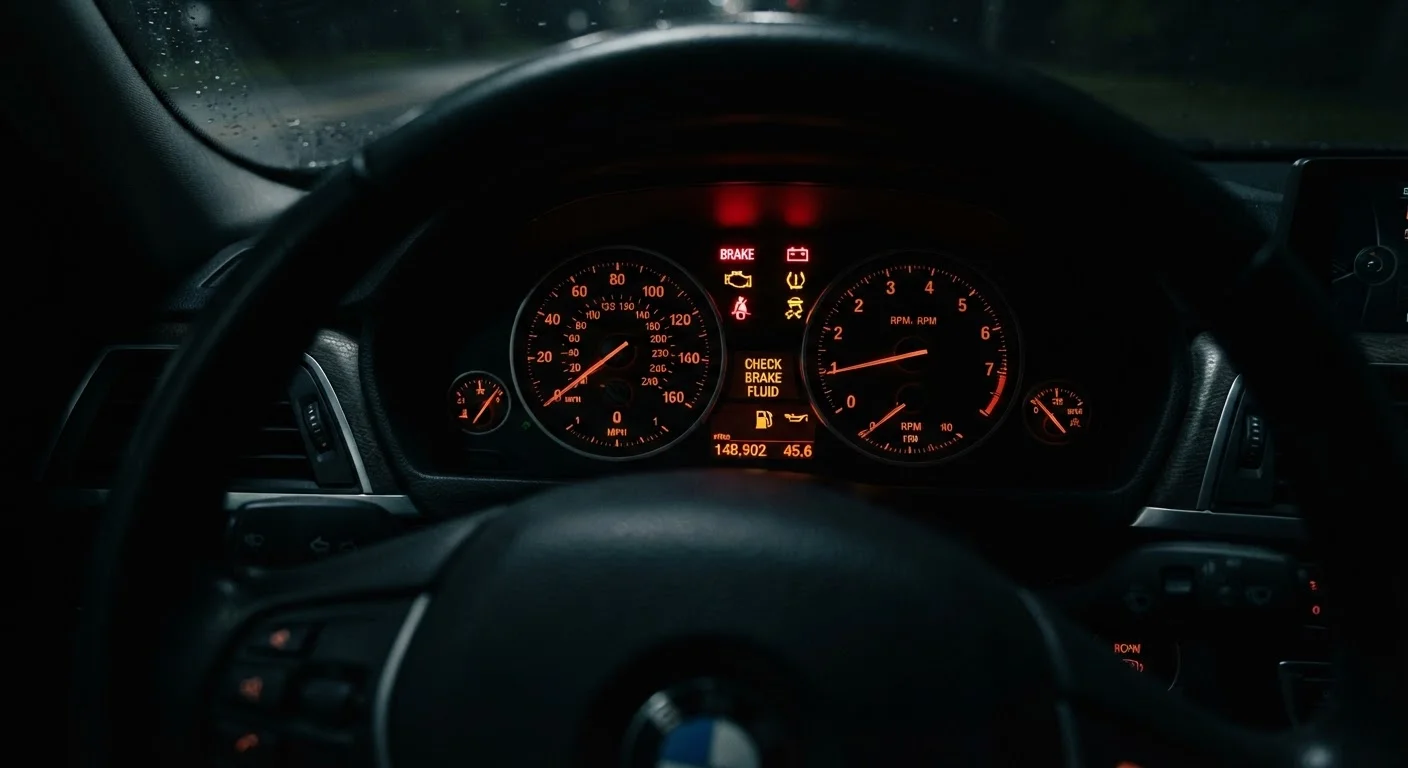
Red warning lights are your car's most urgent communication. If one appears while you're driving, treat it seriously. Here are the most important ones:
- Oil Pressure Warning (oil can icon): This means your engine may not have enough oil pressure to lubricate its moving parts. Pull over safely as soon as possible and turn off the engine. Driving with low oil pressure can cause severe - and expensive - engine damage within minutes.
- Engine Temperature Warning (thermometer in water icon): Your engine is overheating. Stop driving, let the engine cool, and check the coolant level once it's safe to do so. Never open a hot radiator cap. Our guide to engine fluids and when to check them explains coolant in detail.
- Battery Warning (battery icon): The electrical charging system isn't working correctly. Your car may be running on battery reserve only. Limit electrical use and get to a mechanic promptly - the vehicle could stall without warning.
- Brake Warning Light (exclamation mark in circle): If your parking brake is off but this light is on, it could indicate low brake fluid or a brake system fault. Do not ignore this - brakes are a safety-critical system. See our article on brake symptoms and when to act for more context.
Amber Lights: Pay Attention Soon
Amber or yellow warning lights indicate a condition that needs attention, but not necessarily right this moment. You typically have some time to schedule a professional inspection.
| Red light response | Stop driving as soon as safely possible |
| Amber light response | Schedule a mechanic visit within days |
| Check engine light causes | Ranges from loose gas cap to engine misfire |
| TPMS trigger threshold | Typically 25% below recommended tire pressure (U.S. NHTSA TPMS standard) |
| Owner's manual | Always the definitive reference for your specific vehicle |
| OBD port location | Usually under the dashboard on the driver's side |
- Check Engine Light (engine outline icon): One of the most common and least understood lights. It can signal anything from a loose gas cap to a misfiring engine. An auto parts store or mechanic can read the error code with a diagnostic scanner to pinpoint the problem.
- Tire Pressure Monitoring System - TPMS (exclamation mark inside a tire): One or more tires are significantly under-inflated. Check pressures as soon as possible - driving on underinflated tires affects handling, fuel economy, and tire life. This is especially important before long trips; our road trip readiness guide covers pre-trip tire checks.
- Traction Control / Stability Control (car with wavy lines icon): If this flashes briefly, your car is actively managing wheel slip - normal in slippery conditions. If it stays on, the system may have a fault. Driving in poor conditions becomes more demanding when this system isn't functioning.
- Transmission Temperature Warning: The transmission fluid is overheating - often from towing, hilly driving, or stop-and-go traffic. Ease off and let the drivetrain cool down.
Green and Blue Lights: Information Only
Not all dashboard lights signal a problem. Green and blue indicators simply tell you something is active or switched on.
- High Beams (blue beam icon): Your high beams are on. Remember to switch to low beams when another vehicle approaches.
- Turn Signals (green arrows): Your indicator is operating. If it flashes unusually fast, a bulb may be burnt out.
- Cruise Control (green car with speedometer): Cruise control is engaged and active.
These lights require no action beyond awareness - they're simply confirming a feature is in use.
Note: Warning light colors, icons, and meanings can vary between vehicle makes and models. Always consult your owner's manual for the exact definitions applicable to your car. This article provides general educational guidance and is not a substitute for manufacturer specifications or professional mechanical advice.