

Key Takeaways
Mechanic's Quote (Workshop Estimate)
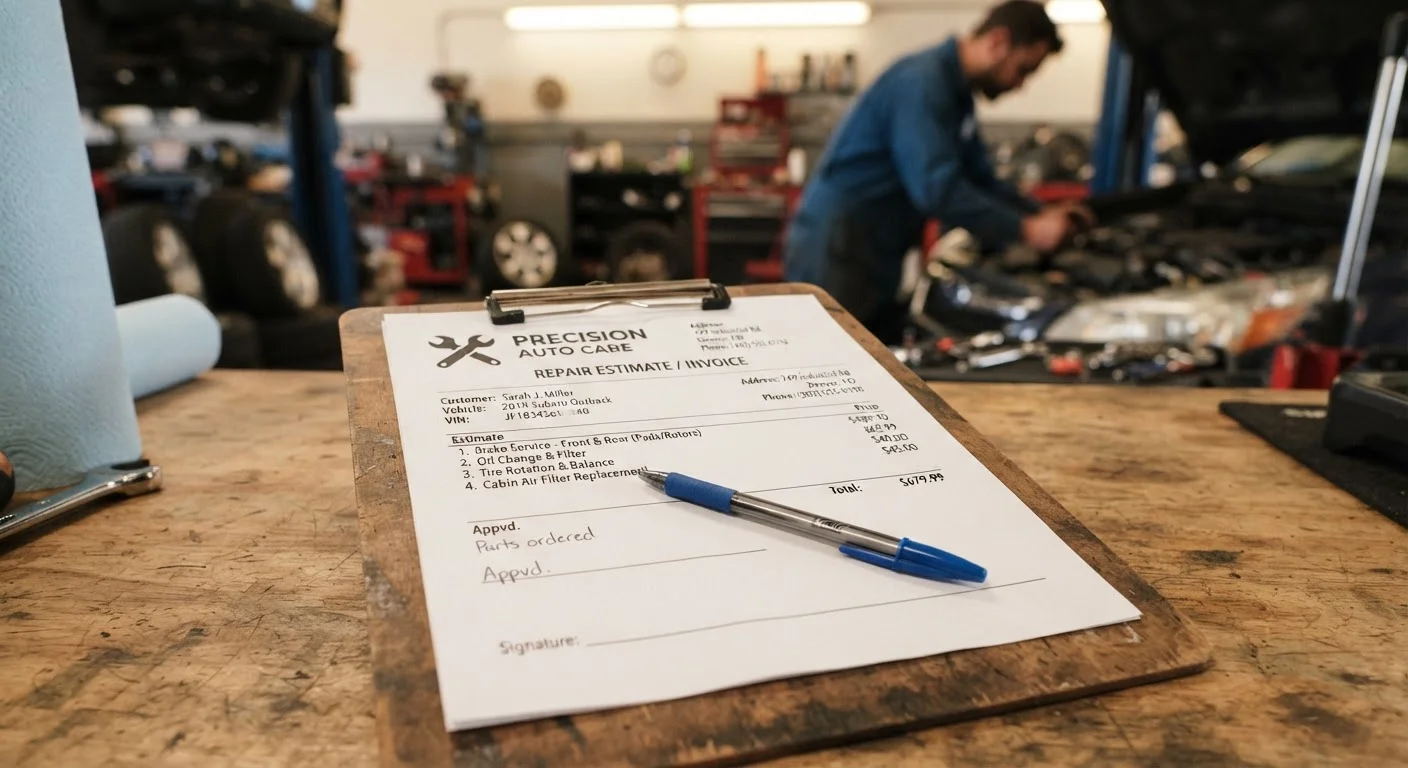
A mechanic's quote - sometimes called a workshop estimate or repair order - is a written breakdown of the projected cost to diagnose, repair, or service your vehicle. It typically separates charges into labour, parts, and fees so you can see exactly where your money goes. Reviewing it carefully before authorising any work gives you the opportunity to ask questions, compare prices, and avoid unexpected charges.
In many US states, repair shops are legally required to provide a written estimate and obtain your authorisation before work begins if the total cost exceeds a set threshold - often $100 or more. Requirements vary by state, so check your local consumer protection rules.
The Anatomy of a Repair Estimate
A mechanic's estimate is not a single lump sum - it is a structured document with distinct sections. Understanding each one prevents you from signing off on charges you do not recognise. Most estimates break down into four areas: labour, parts, shop supplies, and fees.
Labour is usually the largest line item. Shops calculate it by multiplying their labour rate (a dollar-per-hour figure set by the shop) by the flat-rate hours assigned to the task. That flat-rate figure comes from an industry guide, not a stopwatch. A brake pad replacement might be listed as 1.2 hours even if a skilled mechanic finishes it in 50 minutes.
Parts are listed separately, often with a part number and whether the component is OEM or aftermarket. Shop supplies - a small charge for consumables like rags, lubricants, and disposal fees - appear as a flat percentage or fixed line. Fees may include a diagnostic charge, environmental disposal fees for old fluids or tires, or a shop overhead surcharge.
For a broader look at how routine maintenance fits together, see the complete owner's maintenance roadmap.
Labour Rates and Flat-Rate Hours Explained
Labour rates vary significantly - a dealership service department typically charges more per hour than an independent garage, reflecting overhead costs and technician certification requirements. Neither is automatically better value; context matters.
Always Ask for a Written Estimate First
Before a shop begins any work, request a written estimate that itemises labour, parts, and fees separately. Verbal quotes are difficult to dispute if the final bill differs. A written document also gives you a clear reference point if you decide to get a second opinion from another shop.
Flat-rate hours are the mechanic's world equivalent of a fixed-price menu. When a shop quotes 2.5 labour hours for a timing belt service, that number was determined by an industry guide long before your car arrived. If the mechanic encounters a stripped bolt and takes three hours, you generally still pay for 2.5 - though some shops adjust for genuine complications. Always ask whether the quoted hours are firm or subject to change.
If you are weighing whether to use a dealership or an independent shop, our guide to dealership vs independent garage servicing walks through the cost and warranty implications in detail.
OEM vs Aftermarket Parts: What the Labels Mean
OEM stands for Original Equipment Manufacturer. An OEM part is produced to the exact specification your vehicle was built with - sometimes by the same supplier your automaker uses on the assembly line. OEM parts typically cost more but carry a known quality standard.
Aftermarket parts are made by independent manufacturers. Quality varies enormously: some aftermarket suppliers meet or exceed OEM specifications; others do not. Look for aftermarket parts certified by recognised industry bodies, and ask your mechanic to explain their supplier choice.
~68%
Drivers who feel confused by repair estimates
A survey by the Car Care Council found that a majority of vehicle owners are uncertain about what their repair bills cover, contributing to distrust of the repair industry.
$400-$500
Average unexpected car repair bill for US drivers
Industry research consistently shows that unplanned vehicle repairs in this range catch many households off guard, underlining the value of understanding estimates before authorising work.
A third category you may see is remanufactured (or rebuilt) parts - used components that have been restored to factory specifications. These can offer cost savings, particularly for components like alternators and brake calipers, and reputable remanufacturers back them with warranties.
Understanding parts quality matters especially because deferring a repair due to cost can backfire. Our article on why skipping small repairs leads to bigger bills shows how one overlooked part failure can cascade into a much larger expense.
Diagnostic Fees and Other Common Charges
A diagnostic fee covers the technician's time to identify what is wrong with your vehicle - connecting a scan tool, performing test drives, or physically inspecting components. It is charged because diagnosis is skilled work, not a freebie that comes before the real job.
Ask upfront: Is the diagnostic fee deducted from the repair total if I proceed? Many shops credit it; some do not. Knowing this before you authorise the diagnostic prevents a surprise on the final bill.
Other charges to watch for:
- Environmental or hazmat fees - for disposing of used oil, coolant, or tires in compliance with regulations.
- Shop supply fees - typically 5-10% of the labour charge, covering consumables the shop uses during the repair.
- Sublet charges - if the shop sends a component to a specialist (e.g., a machine shop for a cylinder head), that third-party cost may appear as a separate line.
None of these charges are inherently unreasonable, but each one should have a clear explanation. A reputable shop will not hesitate to walk you through the estimate line by line. If you are unsure whether a repair is genuinely necessary, our guide on DIY vs professional repairs can help you ask better questions before you commit.
This article is for general informational purposes only. Repair costs, regulatory requirements, and parts standards vary by location and vehicle. Always verify specifics with a qualified mechanic and consult your state's consumer protection authority for rules governing repair estimates in your area.