

Key Takeaways
Brand-specific technician training and expertise
Dealership technicians receive ongoing training directly from the manufacturer, meaning they're familiar with known issues, technical service bulletins, and model-specific quirks for your exact vehicle.
OEM parts used as standard
Original Equipment Manufacturer parts are built to the same specification as factory components, reducing the uncertainty that can come with sourcing aftermarket alternatives.
Warranty and recall work handled in one place
Dealerships are the only shops authorized to perform warranty repairs and manufacturer recalls, and those services are typically covered at no cost to the owner.
Proprietary diagnostic tools available
Modern vehicles, especially those with advanced driver-assistance systems or hybrid powertrains, often require manufacturer-specific software to diagnose faults accurately - tools that dealerships hold.
Documented service history from an authorized source
A dealership-stamped service record can carry weight at resale, particularly for buyers who view franchise authorization as a quality signal.
Higher labor rates than most independent shops
Dealership overhead - branded facilities, manufacturer franchise fees, service advisor staffing - typically results in higher hourly labor rates, which can make routine maintenance noticeably more expensive.
Can feel impersonal and transactional
At larger dealership service centers, customers often interact with service advisors rather than the technician, making it harder to build the direct, trust-based relationship many drivers value.
Longer wait times at busy service centers
High-volume dealership service departments may have booking lead times of a week or more, and same-day drop-in service is often unavailable.
May push additional services aggressively
Some dealership service centers have sales targets that can translate into recommendations for services your vehicle may not yet need - always cross-reference with your owner's manual.
Our Verdict
Dealership servicing makes the most sense for new or near-new vehicles still under manufacturer warranty, or for complex, brand-specific repairs requiring specialized diagnostic tools. Independent garages offer genuine value for older vehicles, routine maintenance, and drivers who want a more personal relationship with their mechanic at a lower cost. Both can deliver quality service - the key is verifying credentials, asking questions, and keeping complete records.
Drivers with newer vehicles or complex brand-specific issues will lean toward dealerships, while budget-conscious owners of older cars will often be better served by a trusted independent garage.
Understanding Your Two Main Options
When your car needs a service, an oil change, or a repair, you generally face a fork in the road: take it to a franchised dealership authorized by the manufacturer, or visit an independent garage - a privately owned workshop not tied to any brand. Both employ qualified technicians, both can handle the majority of maintenance tasks, and both carry legal obligations around the quality of their work.
The differences come down to specialization, cost structure, parts sourcing, and the kind of service experience you're likely to have. Understanding those differences puts you in control of the decision rather than defaulting to habit. This article walks through the honest pros and cons of each so you can weigh them against your own situation. For a broader view of how servicing fits into long-term ownership, see the complete owner's maintenance roadmap.
Dealership Servicing: Pros and Cons
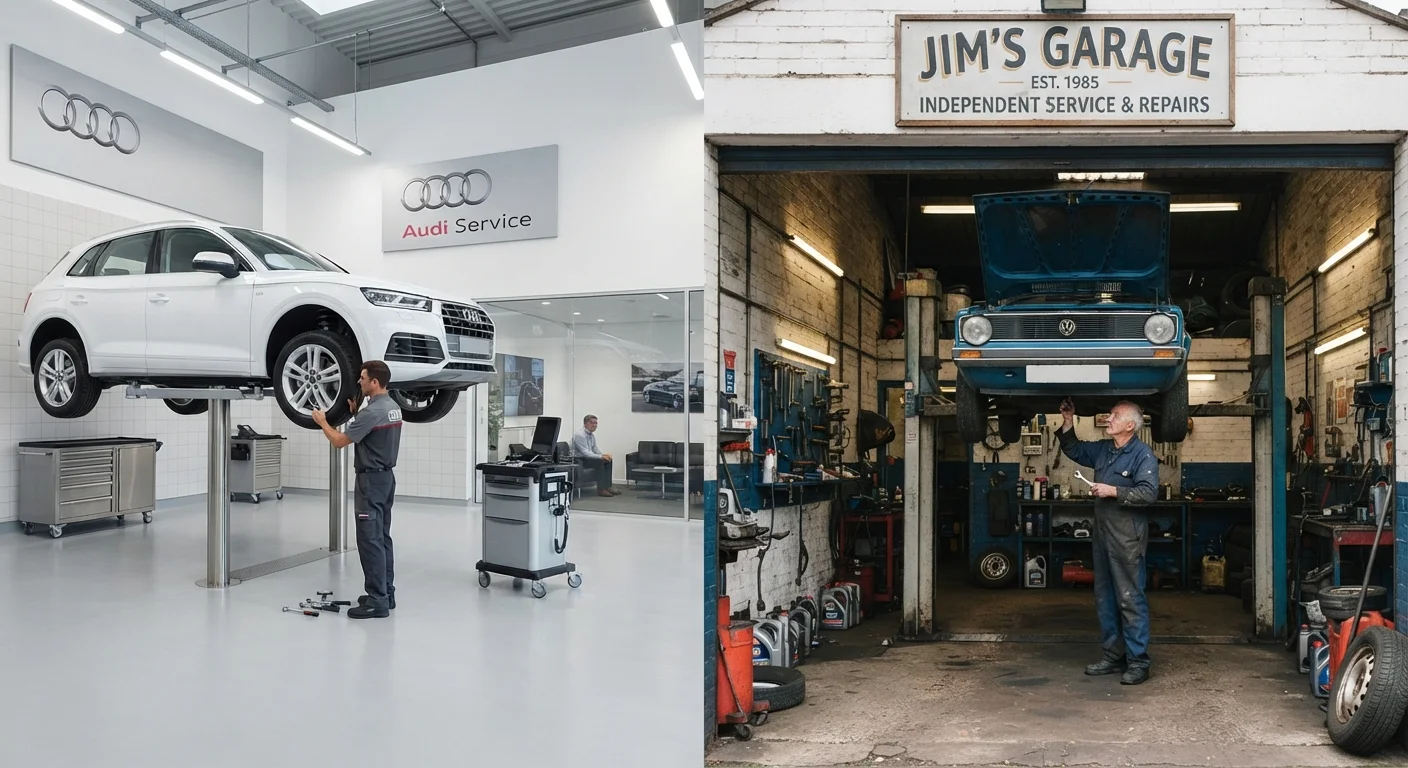
Dealerships are authorized by the vehicle's manufacturer to perform warranty work and recalls. Their technicians receive brand-specific training, and the facility is stocked with OEM parts - components made to the same specification as those installed when the car was built.
Brand-specific technician training and expertise
Dealership technicians receive ongoing training directly from the manufacturer, meaning they're familiar with known issues, technical service bulletins, and model-specific quirks for your exact vehicle.
OEM parts used as standard
Original Equipment Manufacturer parts are built to the same specification as factory components, reducing the uncertainty that can come with sourcing aftermarket alternatives.
Warranty and recall work handled in one place
Dealerships are the only shops authorized to perform warranty repairs and manufacturer recalls, and those services are typically covered at no cost to the owner.
Proprietary diagnostic tools available
Modern vehicles, especially those with advanced driver-assistance systems or hybrid powertrains, often require manufacturer-specific software to diagnose faults accurately - tools that dealerships hold.
Documented service history from an authorized source
A dealership-stamped service record can carry weight at resale, particularly for buyers who view franchise authorization as a quality signal.
The trade-offs are real, though. Dealership labor rates are typically higher than independent shops, partly because of the overhead involved in running a large franchised facility. Wait times can also be longer, especially at busy service centers, and the experience can sometimes feel impersonal - you may deal with a service advisor rather than the technician actually working on your car.
Higher labor rates than most independent shops
Dealership overhead - branded facilities, manufacturer franchise fees, service advisor staffing - typically results in higher hourly labor rates, which can make routine maintenance noticeably more expensive.
Can feel impersonal and transactional
At larger dealership service centers, customers often interact with service advisors rather than the technician, making it harder to build the direct, trust-based relationship many drivers value.
Longer wait times at busy service centers
High-volume dealership service departments may have booking lead times of a week or more, and same-day drop-in service is often unavailable.
May push additional services aggressively
Some dealership service centers have sales targets that can translate into recommendations for services your vehicle may not yet need - always cross-reference with your owner's manual.
One important legal note: under the Magnuson-Moss Warranty Act, a manufacturer generally cannot void your warranty simply because you had routine maintenance performed at an independent garage, provided the correct parts and fluids were used. Always keep receipts and records to substantiate this. If you receive a quote from any shop, our guide on reading a mechanic's estimate explains what each line item actually means.
Independent Garages: What to Expect
Independent garages vary enormously in quality, from highly experienced specialists to general-purpose shops. Many employ ASE-certified (Automotive Service Excellence) technicians - a nationally recognized credential worth looking for. A good independent shop will handle most routine and mid-complexity repairs competently and often at meaningfully lower cost.
How to Vet an Independent Garage
Look for ASE-certified technicians, which indicates that individual mechanics have passed standardized competency tests. Checking reviews on platforms like Google or the Better Business Bureau can surface patterns of complaints or consistent praise. It's also reasonable to ask a shop directly what diagnostic equipment they use for your vehicle's make - a confident, specific answer is a good sign. If you're uncertain whether a job is within any shop's scope, our guide on knowing when to go to a mechanic can help you frame the right questions.
The potential downsides are worth acknowledging. Some independent shops may lack the proprietary diagnostic software needed for newer vehicles with complex electronic systems - software that dealerships access through the manufacturer. Parts quality can also vary; ask whether OEM, OEM-equivalent, or aftermarket parts are being used, and what the warranty on parts and labor is. For any shop you use, maintaining a consistent service log is valuable. Our article on keeping a vehicle service log covers exactly what to record and why it protects resale value.
~30%
Typical labor rate difference vs. dealerships
Industry estimates suggest independent garages often charge roughly 20-30% less per labor hour than franchised dealerships, though this varies significantly by region and shop.
~70%
Car owners who switch to independents post-warranty
Consumer research consistently shows that a large majority of drivers shift away from dealership servicing once their manufacturer warranty expires, citing cost as the primary reason.
Making the Right Call for Your Vehicle
A few practical factors help narrow the decision. If your car is under its original manufacturer's warranty and you want maximum peace of mind, a dealership keeps everything tidy and documented. For a recall or a brand-specific technical issue, a dealership is almost always the appropriate choice - they're the only ones with access to manufacturer repair procedures and reimbursement programs.
For a vehicle that's a few years old and out of warranty, a reputable independent garage often delivers equivalent work at lower cost. Routine services - oil changes, brake pad replacement, tire rotations, filter swaps - are well within the capabilities of any competent independent shop. Skipping or delaying those services, regardless of where you get them done, is where costs can spiral. See why deferred maintenance becomes expensive for a detailed breakdown of that risk.
Whichever route you take, ask about technician credentials, request an itemized estimate before authorizing work, and keep every service receipt. Those habits serve you well at a dealership or an independent garage alike.