

Key Takeaways
Our Verdict
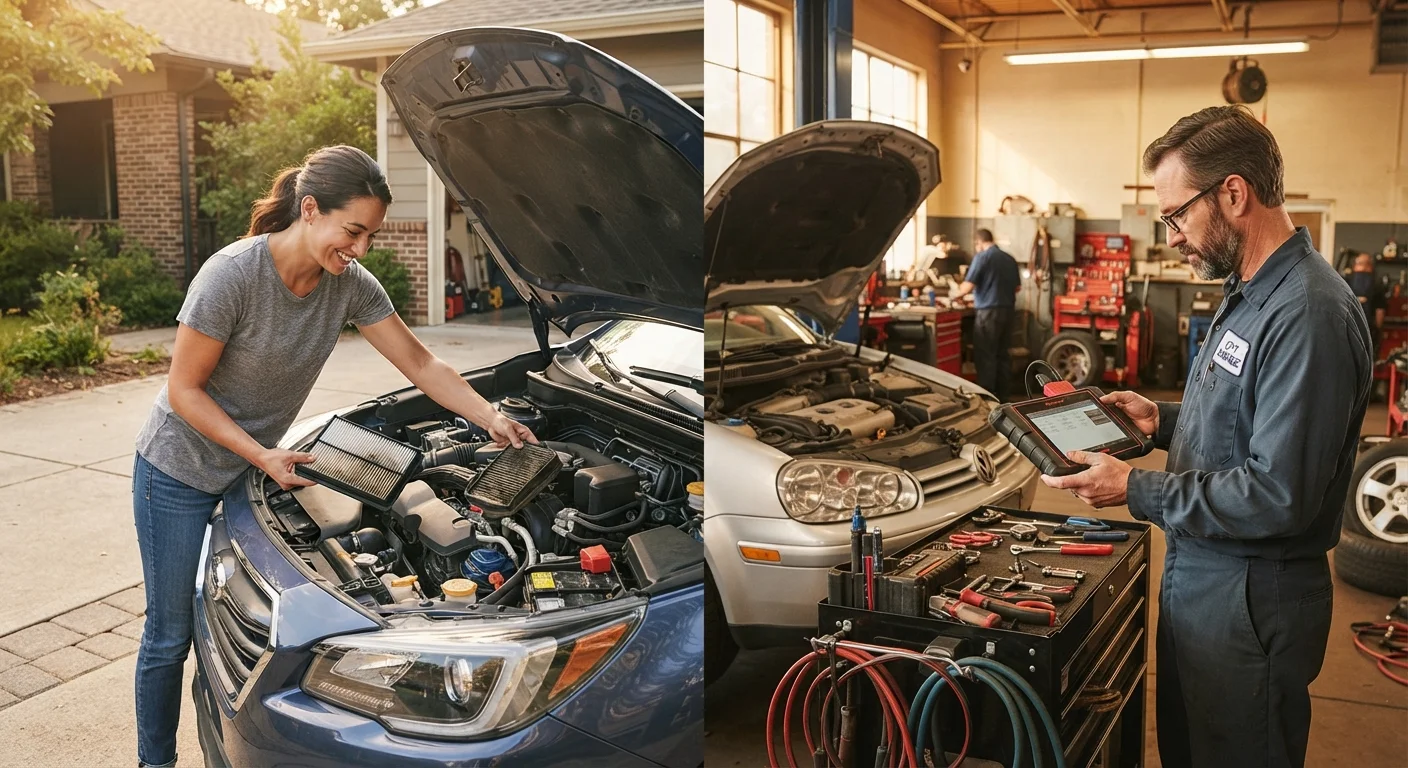
DIY maintenance works well for straightforward, low-risk tasks that require basic tools and no specialized knowledge. However, anything touching your vehicle's safety systems, drivetrain, or onboard electronics belongs in the hands of a qualified mechanic. Knowing where that line sits protects both your wallet and your safety.
| Best for | Recommended |
|---|---|
| Drivers comfortable with basic tools who want to save on routine upkeep | DIY Maintenance |
| Safety-critical repairs, complex diagnostics, and warranty-sensitive work | Professional Mechanic |
| Newer vehicles with advanced driver-assistance systems or hybrid powertrains | Professional Mechanic |
| First-time car owners learning vehicle upkeep fundamentals | DIY Maintenance (low-risk tasks only) |
Why the DIY-vs-Mechanic Decision Matters
Every car owner eventually faces a moment of choice: roll up your sleeves, or pick up the phone and book an appointment? The answer isn't always obvious - and getting it wrong in either direction has real consequences. Doing too little yourself can mean unnecessary repair bills; attempting too much can create safety risks or even damage your car further.
The goal isn't to become a home mechanic. It's to know which tasks are genuinely low-risk and manageable, and which ones demand professional expertise. As our guide to how deferred maintenance escalates explains, the cost of inaction can quickly outweigh the cost of a shop visit. Getting the balance right from the start keeps both your vehicle and your budget in better shape.
Tasks That Are Genuinely DIY-Friendly
Several routine maintenance jobs require only basic tools, no specialized training, and carry minimal risk if done carefully. These are reasonable starting points for drivers new to hands-on car care:
- Engine air filter replacement: Usually involves opening a plastic housing and swapping the filter. Your owner's manual shows the exact location and filter type needed.
- Cabin air filter replacement: Typically accessible behind the glove box. Replacement takes minutes and improves in-car air quality noticeably.
- Wiper blade replacement: Blades click or pin onto the wiper arm - no tools required in most cases. Instructions come on the packaging.
- Checking and topping off fluids: Windshield washer fluid, coolant (only when the engine is cold), and power steering fluid are straightforward to inspect and refill. Note: Never open the radiator cap on a hot engine - pressurized coolant can cause serious burns.
- Replacing interior bulbs: Many dome lights and some marker lights are accessible without tools. Exterior headlights and taillights vary widely by vehicle - check your manual before attempting.
For a broader look at routine upkeep, the complete owner's maintenance roadmap walks through every stage of vehicle care in plain language.
| DIY Maintenance | Professional Mechanic | |
|---|---|---|
| Typical cost | Parts cost only | Parts plus labor charges |
| Tools required | Basic hand tools | Specialized diagnostic and shop equipment |
| Safety risk if done incorrectly | Low (for appropriate tasks) | Managed by trained professional |
| Suitable task examples | Air filters, wipers, fluid top-offs | Brakes, suspension, airbags, transmission |
| Warranty implications | May affect warranty if done incorrectly | Typically warranty-safe with documented service |
| Learning curve | Moderate for simple tasks | None required from the owner |
| Time investment | Variable; may take longer without experience | Usually scheduled and efficient |
Jobs That Belong With a Qualified Mechanic
Some repairs look approachable on a video tutorial but carry serious risks when performed without the right training, tools, or workspace. These should go straight to a professional:
- Brake system work: Pad replacement may appear simple, but brake hydraulics, rotor condition, and caliper function all interact. An error here directly affects your ability to stop safely.
- Suspension and steering components: Worn ball joints, tie rods, or struts require alignment afterward and involve load-bearing parts. Incorrect installation can cause loss of vehicle control.
- Airbag systems: These involve explosive charges called pyrotechnic devices. Handling them without proper training risks accidental deployment, which can cause serious injury.
- Transmission service or repair: Modern automatic transmissions are complex assemblies requiring specialized equipment and precise fluid specifications.
- Check-engine light diagnosis: The light indicates a stored fault code, but reading that code is only the first step. Proper diagnosis requires understanding what triggered it - a task that goes well beyond a basic code reader.
- High-voltage systems in hybrids and EVs: These systems operate at voltages that can be fatal. Always use a certified technician trained for the specific vehicle type.
Before agreeing to any shop work, it helps to understand what you're being charged for. Our guide to reading a mechanic's quote explains what each line item on an estimate actually means.
How to Make the Call on Borderline Tasks
Some jobs sit in a grey zone - oil changes, spark plug replacement, and battery swaps, for example. Whether they're appropriate for DIY depends on your comfort level, your vehicle's design, and whether the job touches anything safety-critical.
Ask yourself three questions before starting any borderline task:
- Does my owner's manual describe this as user-serviceable? If the manufacturer provides guidance, that's a reasonable green light for basic tasks.
- Do I have the right tools? Improvising with the wrong wrench size or skipping a torque specification can cause more damage than the original problem.
- What happens if I get it wrong? A poorly seated air filter is a minor nuisance. An incorrectly torqued lug nut is a road hazard. Weigh the consequence honestly.
It's also worth understanding that some common assumptions about car care aren't accurate. Our piece on car maintenance myths covers several widely repeated beliefs - like the 3,000-mile oil change rule - that can lead drivers to over-service or under-service their vehicles.
If you're weighing where to take a job once you've decided to use a professional, dealership versus independent garage servicing is worth reading before you book.