

Key Takeaways
Our Verdict
No single paint finish works perfectly in every room. Matte and eggshell suit low-traffic spaces with imperfect walls, while satin handles the demands of busy family areas. Gloss is best reserved for trim, doors, and surfaces that need to withstand heavy use or humidity.
| Best for | Recommended |
|---|---|
| Ceilings and formal living rooms with textured or patched walls | Matte |
| Bedrooms, dining rooms, and adult living spaces | Eggshell |
| Kitchens, bathrooms, hallways, and kids' rooms | Satin |
| Trim, doors, baseboards, and cabinet surfaces | Gloss |
What Paint Sheen Actually Means
Paint sheen refers to how much light a dried paint surface reflects. The higher the sheen, the more light bounces off the wall - and the more durable and washable the finish tends to be. Lower-sheen paints absorb light, which helps disguise bumps, patches, and imperfections in the wall surface.
Sheen is determined by the ratio of pigment to binder in the paint formula. More binder means a harder, shinier surface. Understanding this trade-off - between hiding flaws and resisting them - is the key to making a smart choice for each room. For a broader grounding in design terminology, see our interior design glossary.
Matte, Eggshell, Satin, and Gloss: How They Compare
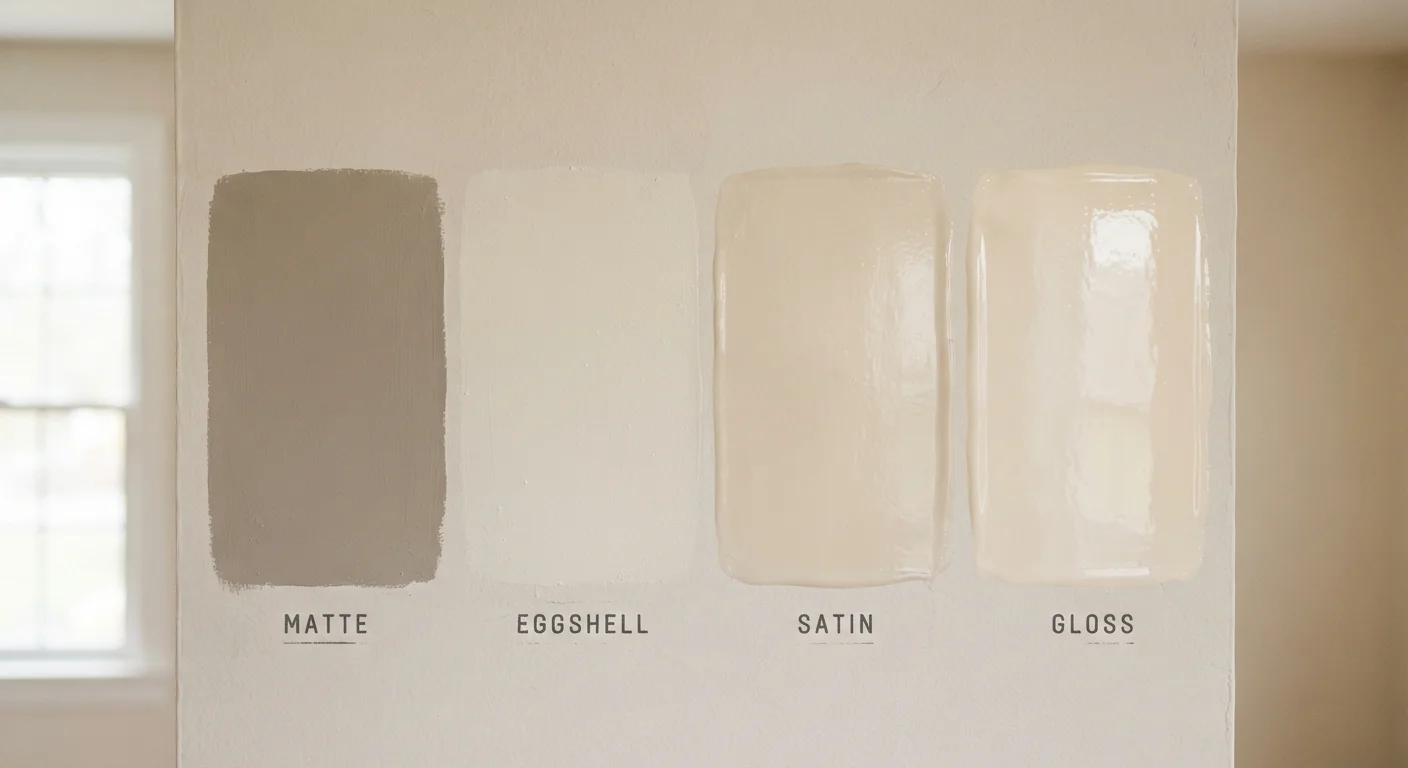
Each finish occupies a different point on the sheen spectrum, with distinct visual and practical characteristics.
| Matte | Eggshell | Satin | Gloss | |
|---|---|---|---|---|
| Sheen level | None / flat | Very low | Medium | High |
| Light reflection | Absorbs light | Subtle soft glow | Gentle sheen | Strong reflection |
| Hides wall imperfections | Excellent | Good | Fair | Poor |
| Washability | Low - marks easily | Moderate | Good | Excellent |
| Moisture resistance | Poor | Low to moderate | Good | Excellent |
| Best rooms | Ceilings, formal rooms | Bedrooms, dining rooms | Kitchens, hallways | Trim, doors, cabinets |
| Typical durability | Lower | Moderate | High | Highest |
As the table shows, the right choice often comes down to two competing needs: concealing wall flaws versus tolerating daily wear. Most rooms require a balance of both.
Room-by-Room Guidance
Living Rooms and Bedrooms
These lower-traffic spaces are ideal for matte or eggshell finishes. Matte paint absorbs light beautifully and creates a soft, sophisticated look - particularly useful on walls that have been patched or that have visible texture. Eggshell adds just a touch of sheen, making it slightly more washable while still looking relaxed and warm.
Kitchens and Bathrooms
Moisture, grease, and frequent cleaning make these rooms demanding environments. Satin is the standard recommendation here - it repels humidity, wipes down without damage, and holds up to repeated scrubbing. For very wet areas like the inside of a shower enclosure, a semi-gloss or gloss finish on tile and trim is appropriate. If you're planning a full kitchen or bathroom repaint, our room painting walkthrough covers prep and application technique in detail.
Hallways and High-Traffic Areas
Hallways collect scuffs, handprints, and marks from furniture brushing past. Satin handles this well. Some homeowners prefer a semi-gloss (one step above satin) on hallway walls for maximum wipeability, though it will emphasize any surface imperfections more strongly.
Trim, Doors, and Baseboards
Woodwork and trim are almost universally painted in semi-gloss or high-gloss. The harder surface resists nicks and chips, and the visual contrast between flat walls and shiny trim is a classic interior design technique that defines architectural detail.
Common Mistakes to Avoid
Always Test Before You Commit
Paint a large swatch - at least 12 by 12 inches - directly on the wall and observe it at different times of day. Natural morning light and artificial evening light can make the same finish look completely different. Live with the sample for 48 hours before buying full quantities.
One of the most frequent errors is using flat or matte paint in a bathroom or kitchen to avoid a shiny look. The result is walls that absorb moisture, grow mildew, and can't be cleaned without the paint coming off.
Another pitfall is applying a high-gloss finish to poorly prepared walls. Gloss amplifies every bump, crack, and trowel mark. If your walls are rough or have been patched in multiple spots, a lower sheen will deliver a far more polished-looking result - not despite hiding defects, but because of it.
Finally, keep in mind that the same color in two different sheens can look noticeably different. A deep navy in matte reads richer and more velvety; in satin it gains brightness and vibrancy. Test samples on the actual wall in your lighting conditions before committing to a full room. This is especially relevant when planning accent walls, where finish choice can dramatically affect the impact of the color.
For a deeper look at how these finishes fit into a broader decorating plan, the complete room-by-room design overview is a useful next step.