

| Most versatile beginner power tool | Cordless drill/driver |
| Typical stud spacing in US homes | 16 inches on center |
| Recommended hammer weight for general use | 16 oz claw hammer |
| Minimum PPE for power tool use | Safety glasses + hearing protection |
| Rule for accurate cuts | Measure twice, cut once |
Why Knowing Your Tools Matters Before You Start
Picking up a tool you don't recognize - or using the wrong one for a job - is one of the most common reasons beginner DIY projects stall or go sideways. Understanding what each tool actually does, before you need it, saves time, prevents damage, and keeps you safe. This reference guide gives you plain, clear explanations of the core tools you'll encounter most often in home improvement work.
If you're just starting out, this beginner's project guide covers planning, budgeting, and safety basics alongside tool selection - a useful companion to what you'll find here. For a broader look at the full scope of home improvement knowledge, see Home Improvement from the Ground Up.
Torque
The rotational force a drill or driver applies to a fastener. On a cordless drill, the clutch controls torque to prevent screws from being driven too deep or snapping off.
Stud
A vertical wooden framing member inside a wall, typically spaced 16 inches apart. Anchoring screws or bolts into studs provides much stronger support than drywall alone.
Plumb
Perfectly vertical - straight up and down. A surface or line that is plumb forms a true right angle with a level (horizontal) surface.
Fastener
Any hardware used to join materials together, including nails, screws, bolts, and anchors. Choosing the right fastener type and size for the material matters for both strength and finish.
Kerf
The narrow slot or groove that a saw blade removes as it cuts through material. Understanding kerf width helps you account for the small amount of material lost with each cut.
Core Hand Tools and What They Do
Hand tools require no electricity and are the backbone of almost every project. Here's what you actually need to know about each one:
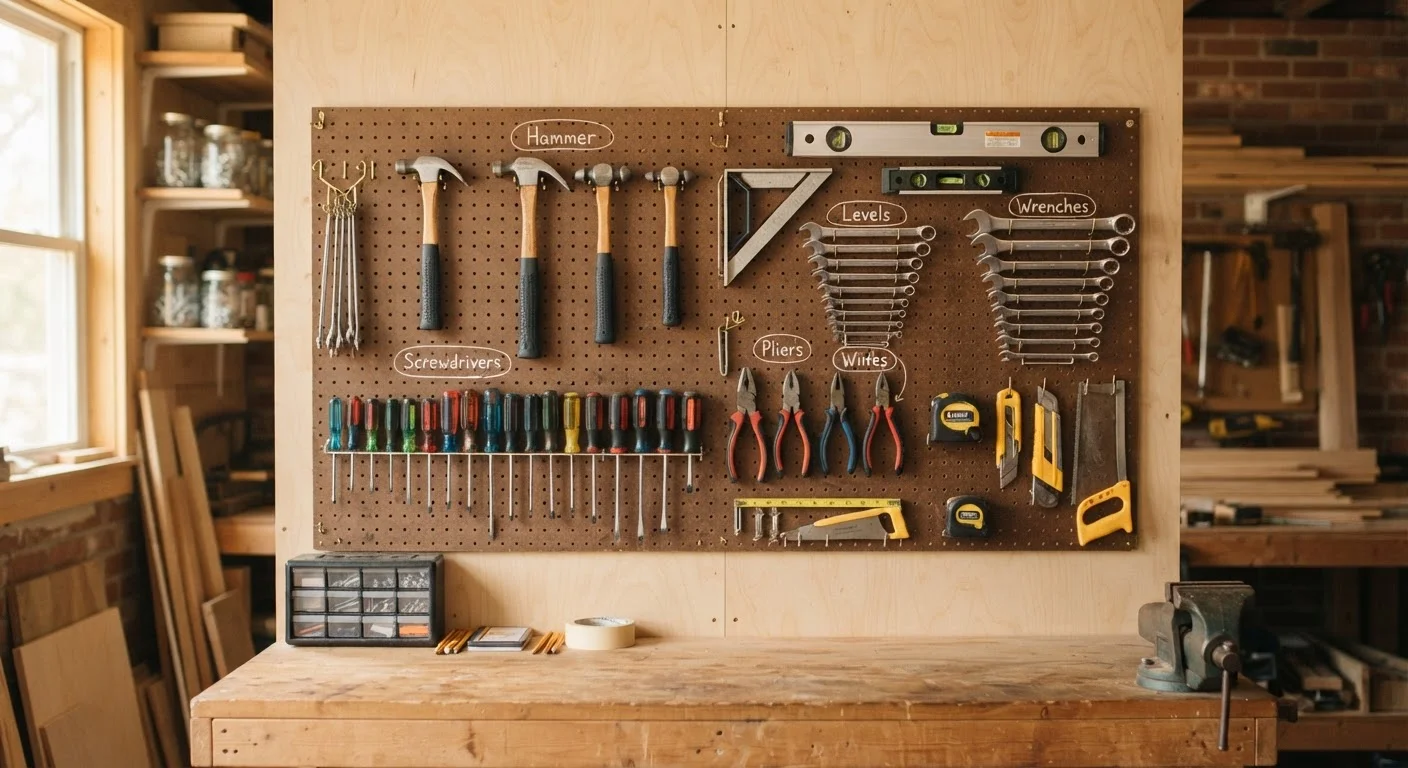
- Claw hammer: Drives nails in with the flat face; the curved claw on the back pulls them out. A 16-oz hammer is the most versatile weight for general use.
- Flathead and Phillips screwdrivers: Flathead tips fit slotted screw heads; Phillips tips fit the cross-shaped recess common on most modern screws. Having several sizes of each prevents stripping.
- Tape measure: The single most-used tool in home improvement. Lock the blade before reading; always measure twice before cutting once.
- Torpedo level: A short, handheld level with bubble vials that shows whether a surface is perfectly horizontal (level) or vertical (plumb). Essential for hanging shelves, frames, and fixtures correctly.
- Utility knife: Cuts drywall, carpet, insulation, and packaging cleanly. Retract and lock the blade immediately after each cut.
- Adjustable wrench: Opens and closes to fit different bolt and nut sizes. Turn the jaw so it grips the flat sides of the fastener, not the corners, to avoid rounding them off.
- Needle-nose pliers: Grip, bend, or position small items in tight spaces where fingers won't fit - useful for wire work and small hardware.
Essential Power Tools for Home Projects
Power tools multiply your efficiency dramatically, but they also require respect. Always read the manual for any power tool before using it, and wear appropriate eye and hearing protection.
| Most versatile beginner power tool | Cordless drill/driver |
| Typical stud spacing in US homes | 16 inches on center |
| Recommended hammer weight for general use | 16 oz claw hammer |
| Minimum PPE for power tool use | Safety glasses + hearing protection |
| Rule for accurate cuts | Measure twice, cut once |
- Cordless drill/driver: The single most useful power tool a beginner can own. It drills holes and drives screws. The clutch setting controls torque - use lower settings for small screws to avoid driving them too deep or stripping heads.
- Circular saw: Cuts lumber, plywood, and sheet goods in straight lines. Always clamp the material securely and use a straightedge guide for cleaner cuts. This tool warrants careful practice before tackling a real project.
- Jigsaw: Cuts curves and shapes in wood, laminate, and thin metal. Because the blade moves up and down rather than rotating, it's generally more forgiving for beginners than a circular saw.
- Random orbital sander: Smooths wood surfaces and removes old paint. The random motion prevents visible scratch patterns that straight-line sanders leave behind.
A good rule of thumb: start with a cordless drill and add other power tools only as specific projects require them. Buying tools you don't yet have a use for often means they sit unused. Common DIY myths - including the idea that more tools equals better results - are worth understanding early.
Measuring, Marking, and Layout Tools
Accuracy starts long before any cutting or fastening. These tools help you transfer measurements reliably onto your materials:
- Combination square: Marks perfect 90-degree and 45-degree angles across a board's face - critical for straight, square cuts.
- Chalk line: Snaps a straight, dusty line across large surfaces like floors or walls, giving you a visible guide over distances a ruler can't span.
- Stud finder: Uses sensors to locate the wooden framing members (studs) hidden behind drywall. Anchoring into studs - not just drywall - is required for anything heavy like shelving, TVs, or mirrors.
Once you're comfortable with tools and techniques, you might find yourself thinking about how they apply to decorating spaces too. Our interior design overview for everyday homeowners covers how thoughtful design decisions connect to the practical work of setting up a room.
As your projects grow in scope, good planning becomes as important as good tools. Keeping a project on track from start to finish explains how to sequence tasks and manage the work effectively.
This article is for general informational purposes only. For tasks involving electrical, gas, structural, or other regulated work, always consult a licensed professional and verify local permit requirements before proceeding.