

Key Takeaways
Start here
What Is the Plate Method?
Next
How to Build Your Plate, Section by Section
Then
Common Mistakes and How to Avoid Them
When you're ready
Adapting the Plate Method to Real Life
What Is the Plate Method?
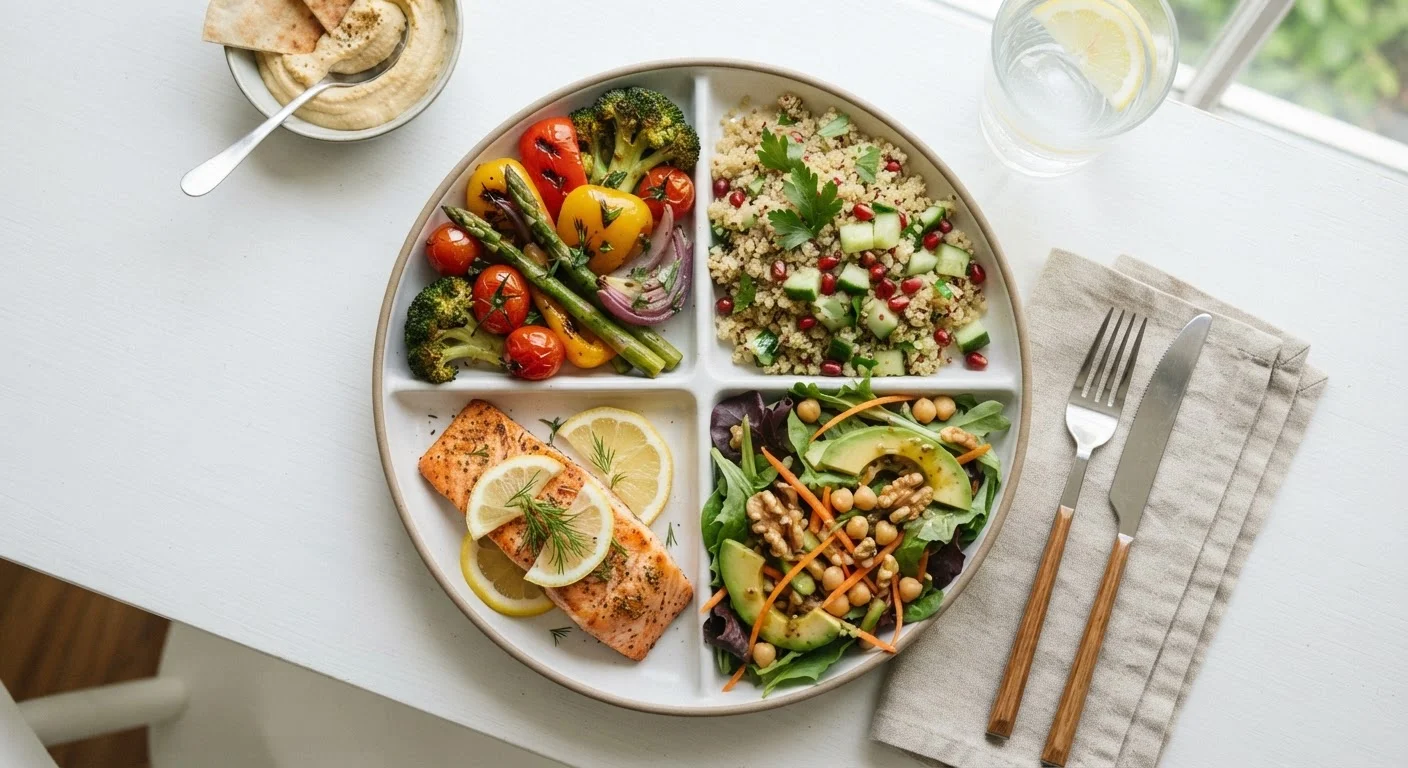
The plate method is a visual meal-planning tool that divides a standard dinner plate into sections, each representing a different food group. Instead of tracking grams or calories, you use the physical space on your plate as a guide to proportion - making balanced eating tangible and intuitive.
Registered dietitians and organizations such as the American Diabetes Association have long used this approach because it translates abstract nutrition goals into something you can see and act on at every meal. It's particularly helpful for beginners who feel overwhelmed by nutrition labels or complex diet plans. For foundational context on why food group balance matters, see our complete nutrition starter's resource.
Non-starchy vegetables
Vegetables that are low in carbohydrates and calories, such as leafy greens, broccoli, and peppers. They provide fiber and micronutrients without significantly raising blood sugar.
Whole grains
Grains that retain all three parts of the original seed - bran, germ, and endosperm. Examples include brown rice, oats, and whole-wheat bread. They contain more fiber and nutrients than refined grains.
Lean protein
Protein sources that are relatively low in saturated fat, such as chicken breast, fish, eggs, beans, and tofu. Protein is essential for muscle repair, immune function, and keeping you feeling full.
Macronutrients
The three main categories of nutrients that provide energy: carbohydrates, protein, and fat. The plate method helps you balance all three without needing to count them.
Portion size
The amount of a food you actually eat in one sitting. The plate method uses visual space on your plate as a practical stand-in for measuring portion sizes.
How to Build Your Plate, Section by Section
Picture a standard 9-inch dinner plate. Here's how to fill it:
Half the Plate: Non-Starchy Vegetables
Fill the largest section with colorful, non-starchy vegetables - think leafy greens, broccoli, peppers, cucumbers, tomatoes, zucchini, or carrots. These foods provide fiber, vitamins, and minerals while keeping calorie density low. Variety matters: different colors generally signal different nutrients.
One Quarter: Quality Protein
Dedicate roughly one quarter of your plate to a protein source. Options include poultry, fish, eggs, beans, lentils, tofu, or low-fat dairy products. Protein supports muscle maintenance, satiety, and many body processes. Choosing preparations that add minimal saturated fat - grilling, baking, or steaming rather than deep-frying - keeps the overall meal balanced.
One Quarter: Whole Grains or Starchy Foods
The remaining quarter goes to whole grains or starchy foods such as brown rice, quinoa, whole-wheat bread, oats, sweet potatoes, or corn. Whole grains retain fiber and nutrients that refined grains lose during processing, which helps sustain energy more steadily. Our guide on eating for steady energy explains why this matters for how you feel throughout the day.
On the Side: Dairy or Fruit
Many plate-method frameworks include a small glass of milk or a fortified plant-based alternative and a piece of fruit alongside the plate. These add calcium, additional vitamins, and natural sweetness without crowding your plate.
Common Mistakes and How to Avoid Them
Even a simple framework has a few stumbling blocks worth knowing in advance.
- Skipping the vegetable half: It's easy to let grains or proteins crowd out vegetables. Serve the vegetable portion first, then add the others around it.
- Treating all grains equally: White rice and white bread occupy the same section but deliver less fiber than whole-grain options. Gradually swapping in whole grains is a small change with a meaningful payoff.
- Underestimating added fats: Heavy sauces, dressings, and cooking oils aren't visualized in the plate sections. Be mindful of how much you're adding - a little healthy fat (olive oil, avocado) is beneficial; large quantities shift the overall balance. Learning to read nutrition labels helps you spot hidden fats in packaged sauces.
- Applying it too rigidly: The plate method is a guide, not a law. A meal that's 40% vegetables instead of exactly 50% is still a nutritious meal.
Start With One Meal Per Day
If overhauling every meal feels daunting, apply the plate method to just one meal - dinner is often the easiest starting point. Once that feels natural, extend it to lunch. Small, consistent changes tend to stick better than dramatic overhauls.
Adapting the Plate Method to Real Life
The plate method holds up well across diverse eating patterns, cuisines, and budgets. A grain bowl, a taco plate, or a stir-fry can all be assessed through the same proportional lens - is roughly half the meal vegetables, with moderate protein and a smaller grain component?
For mixed dishes like soups, stews, and casseroles, mentally estimate whether the ingredients follow the spirit of the template. You don't need a separate plate; the concept still applies.
If you cook for a family or meal-prep in bulk, the plate method is equally useful as a planning template before you shop. Our practical grocery list guide walks through how to stock your kitchen with each section of the plate in mind.
Some people find that the plate method pairs well with other eating strategies. For a comparison with other structured approaches, our article on structured eating windows vs. intuitive eating outlines how different frameworks can complement or contrast with this one.
Ultimately, the plate method earns its place among daily healthy habits because it's low-effort and high-return - a visual checkpoint that works whether you're cooking from scratch or assembling a meal from what's already in the fridge.
This article is for general informational and educational purposes only and is not a substitute for professional medical or dietary advice. Consult a registered dietitian or qualified healthcare provider for guidance tailored to your personal health needs.