

Key Takeaways
Why Nutrition Labels Feel Confusing - and How to Fix That
Nutrition labels are one of the most underused tools in everyday eating. Most people glance at the calorie count and move on, leaving a panel full of useful information unread. The confusion is understandable: numbers, percentages, and unfamiliar nutrient names crowd a small space. But the label follows a predictable, standardized format set by the U.S. Food and Drug Administration (FDA), which means once you learn the logic, you can decode any packaged food in seconds.
This guide walks through each section of the label in order, explaining what it means in plain language. If you want a broader foundation first, our complete beginner's nutrition resource covers macros, micros, and meal balance from the ground up.
What you will need
Step-by-Step: Reading the Label from Top to Bottom
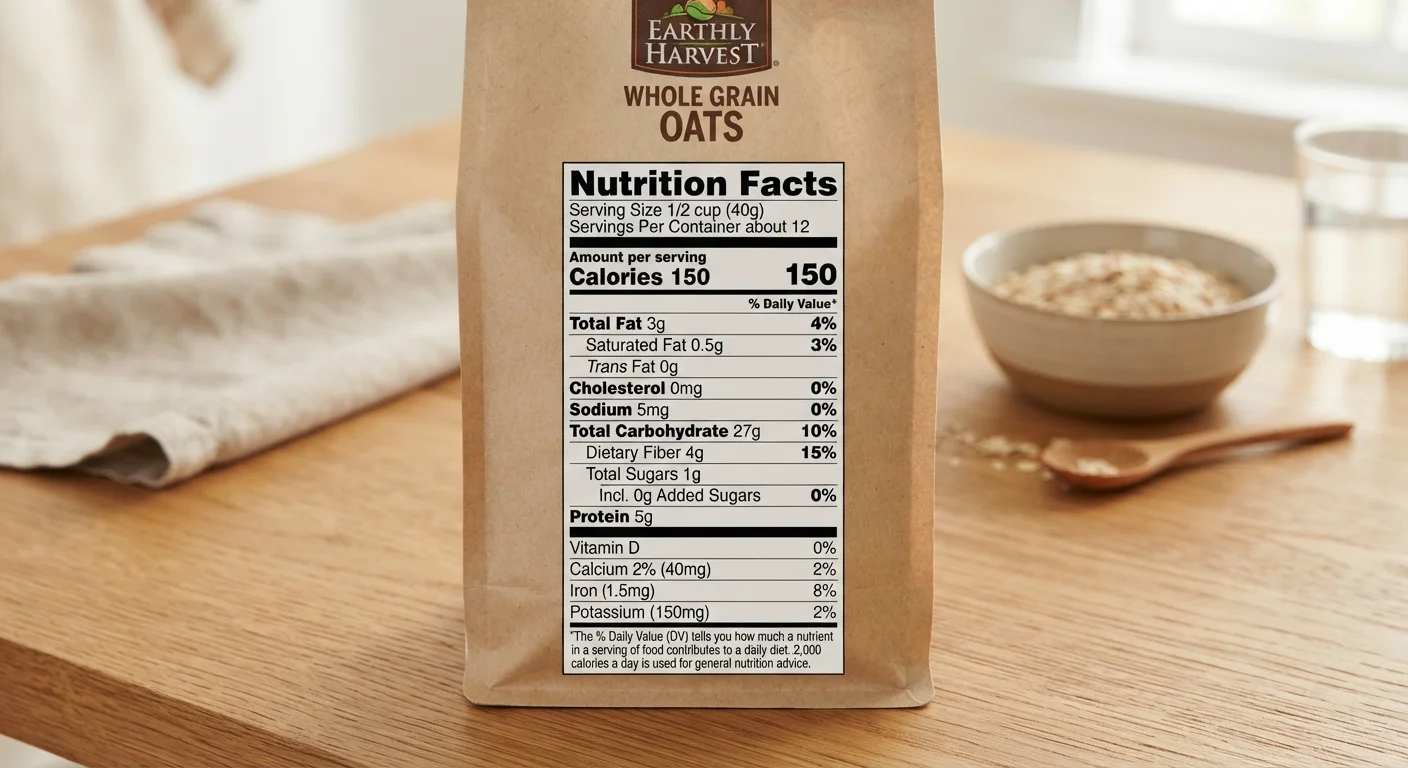
The Nutrition Facts panel is intentionally laid out in order of importance. Work through it top to bottom using the steps below, and it will quickly become second nature.
Start with serving size
The very first line of the label lists the serving size and the number of servings per container. Every single number below it - calories, fat, sodium, everything - applies to that one serving, not the whole package. A bag of chips with 3 servings means you triple every value if you eat the whole bag. This is the most common source of label misreading, so always anchor yourself here before reading further.
Check the calorie count
Calories measure the total energy one serving provides. The label displays this number in large, bold type. Calories alone don't tell you whether a food is nutritious - 100 calories from almonds and 100 calories from a cookie deliver very different nutrients - but the number is a useful reference point for overall energy intake. Use it in context, not in isolation.
Review nutrients to limit
The next section lists nutrients most Americans consume in excess: saturated fat, trans fat, cholesterol, and sodium. Health guidance from bodies like the American Heart Association and the Dietary Guidelines for Americans generally recommends keeping these low. Aim for 5% Daily Value (DV) or less per serving as a rule of thumb for "low."
- Saturated fat: Found in many animal products and some tropical oils; linked to cardiovascular risk when consumed in excess.
- Trans fat: Industrially produced trans fats are largely phased out, but check for "partially hydrogenated oils" in the ingredients.
- Sodium: Most packaged foods are a significant source; the Dietary Guidelines recommend limiting sodium for the general adult population.
Identify nutrients to prioritize
Below the "limit" nutrients, the label lists nutrients many people don't get enough of: dietary fiber, vitamin D, calcium, iron, and potassium. For these, higher % DV is generally better. Look for 20% DV or more per serving as a guideline for "high." These nutrients support bone health, immune function, oxygen transport, and more - topics covered in depth in our micronutrients guide.
Decode the % Daily Value column
The % Daily Value (%DV) column runs down the right side of the panel and does the math for you. It shows how much of a nutrient one serving contributes toward a general daily reference amount (based on a 2,000-calorie diet). The FDA's quick guide: 5% DV or less is low; 20% DV or more is high. Use this scale to compare similar products side by side - it's the fastest way to spot which option has less sodium or more fiber without doing any calculations yourself.
Find added sugars specifically
Under Total Carbohydrates, the label breaks out Dietary Fiber and Total Sugars, and indented below that: Includes X g Added Sugars. This distinction matters. Total sugars include naturally occurring sugars (like lactose in milk or fructose in fruit), while added sugars are those incorporated during manufacturing. The Dietary Guidelines for Americans recommend limiting added sugars to less than 10% of total daily calories. Checking this line helps you compare two seemingly similar products - one yogurt may have 5g of added sugar while another has 20g.
Understanding Ingredients and What Else to Watch For
The ingredients list, usually printed just below or beside the Nutrition Facts panel, is a separate but equally valuable tool. Ingredients are listed in descending order by weight - so whatever appears first makes up the largest portion of the product. A loaf of bread that lists enriched white flour first and whole wheat flour fifth is mostly refined grain, regardless of how the packaging is worded on the front.
Scan the first three to five ingredients for a quick read on product quality. Long ingredient lists aren't automatically bad - some minimally processed foods have many components - but multiple forms of added sugar (cane sugar, high-fructose corn syrup, dextrose, maltose) appearing early and repeatedly is a useful flag. Our article on natural vs. added sugars explains how sugars are named and what health guidance generally recommends.
Front-of-Pack Claims Can Be Misleading
Words like "natural," "multigrain," or "light" on the front of a package are marketing terms, not regulated nutritional standards. The Nutrition Facts panel and ingredients list on the back are the authoritative sources. Always flip the package and read the label rather than relying on front-of-pack claims. This habit pairs well with understanding the whole foods vs. processed foods spectrum.
Labels also tell you what a food lacks. Low fiber content, for example, is easy to spot once you know that 5% DV or less per serving is considered low. For a deeper look at why fiber deserves attention, see our guide on dietary fibre. And to put label-reading into practice at mealtimes, the plate method offers a simple visual framework dietitians use to build balanced meals without counting every number.
This article provides general nutrition education and is not a substitute for personalized advice from a registered dietitian or qualified healthcare professional.