

Key Takeaways
Summary
28 items · 20-40 minutes
Why a Category-Based Grocery List Works
Most people don't struggle with eating well because they lack willpower - they struggle because the kitchen isn't stocked to support it. When you open the fridge and see a random collection of unrelated ingredients, building a balanced meal becomes a creative challenge rather than a simple task.
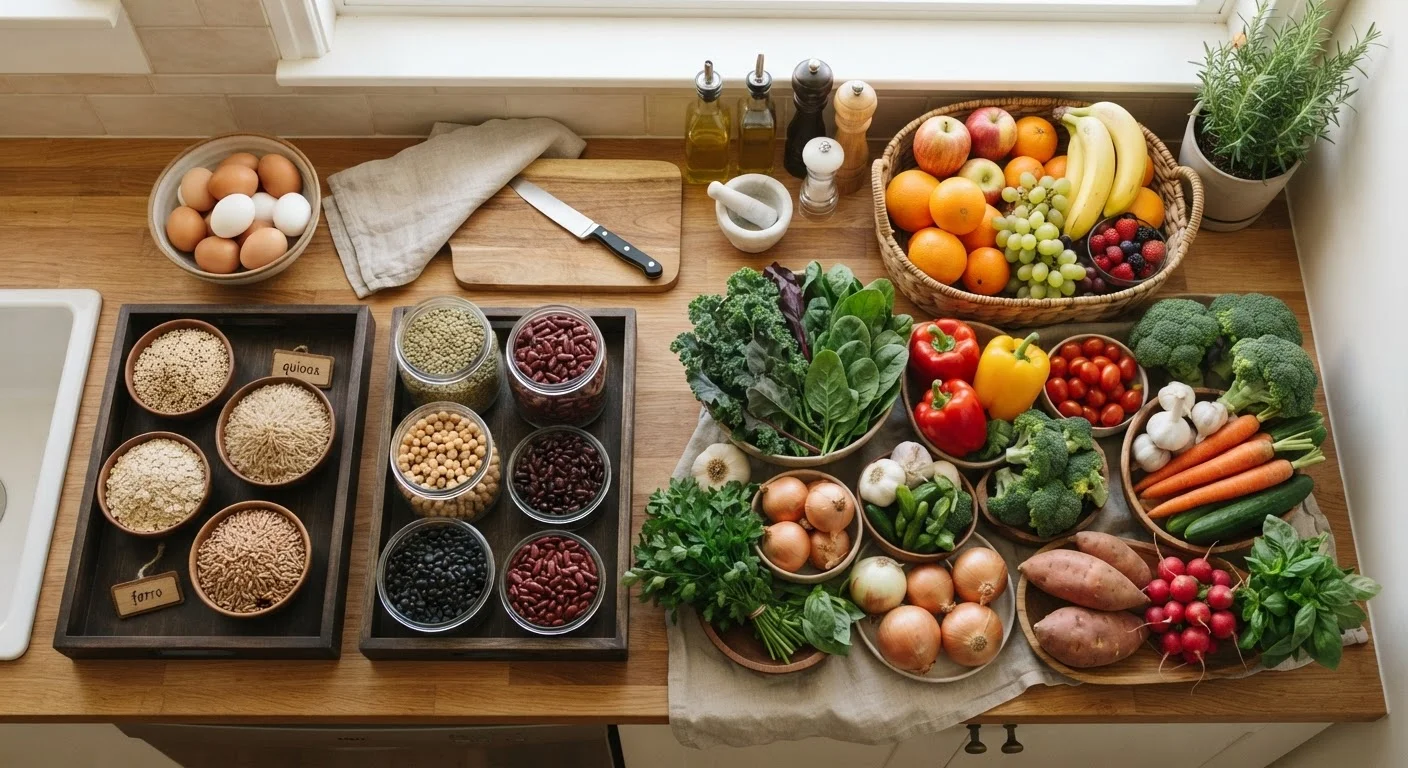
Organizing your shopping by food category solves this at the source. Instead of thinking meal by meal, you ensure that every type of nutrient-dense food is represented in your kitchen throughout the week. This approach draws on a core principle in nutrition education: variety across food groups is one of the most reliable ways to cover your nutritional bases without obsessing over individual nutrients.
If you're new to thinking about food this way, our beginner's nutrition guide explains the role macronutrients and micronutrients play in everyday eating - a helpful companion to this checklist.
Use the list below as a flexible framework. Swap freely within each category based on what's in season, what fits your budget, and what your household will actually eat. The goal isn't a perfect shopping cart - it's a kitchen set up to make balanced choices the easy ones.
Reusable grocery bag with category dividers
Keeps your groceries organized by food group from store to kitchen, reducing sorting time at home.
Smartphone notes app or printed checklist
Lets you track items in real time as you shop, preventing forgotten staples.
Kitchen scale
Helps you portion proteins and grains consistently without eyeballing, useful when learning new cooking habits.
Meal planning notebook or template
Connects your weekly grocery list to specific meals so nothing you buy goes unused.
How to Use This Checklist
Before you head to the store, scan what you already have at home. Cross off anything well-stocked, then build your list from the gaps. Aim to have at least one item from each category represented in your kitchen at all times.
The checklist below is organized into eight food categories. Items marked must are foundational - without them, building balanced meals becomes harder. Items marked should are strongly recommended for variety and nutritional coverage. Nice-to-have items add depth but can be skipped if you're working within a tight budget or just getting started.
If food costs are a concern, pairing this list with a clear household budget can help you prioritize. Our seven-step budgeting guide is a practical starting point if you've never mapped your spending before.
Vegetables
Fruits
Protein Sources
Whole Grains & Starches
Dairy or Dairy Alternatives
Healthy Fats
Pantry Essentials & Flavor Builders
Hydration & Beverages
This article is for general informational and educational purposes only and is not a substitute for personalized medical or dietary advice. Always consult a qualified healthcare professional for guidance specific to your health needs.
Turning Your Groceries Into a Week of Meals
A stocked kitchen only pays off if you actually use what's in it. The most common reason food goes to waste is a missing connection between what's on the shelf and what's planned for dinner. Here's a simple approach: after unpacking groceries, take five minutes to sketch two or three meal ideas using what you bought.
For example, the chicken you bought Monday can become a stir-fry with your bell peppers and brown rice, then the leftovers become a wrap with spinach and avocado Tuesday lunch. Beans from a can can anchor a quick soup, a grain bowl, or a taco night. This kind of flexible, ingredient-first thinking reduces stress and waste simultaneously.
Building these habits gradually - rather than overhauling your entire routine at once - makes them far more likely to stick. Our day-by-day healthy habits starter plan offers a gentle weekly framework for layering changes like this without feeling overwhelmed. And if you want a broader view of how nutrition fits into daily well-being, our daily healthy habits overview covers the full picture for beginners.
This Is a Guide, Not a Prescription
This checklist reflects general nutrition principles and is intended as educational guidance only. Individual dietary needs vary based on age, health conditions, medications, and other factors. If you have a specific health condition, are pregnant, or are managing a chronic illness, consult a registered dietitian or your healthcare provider before making significant changes to your diet.
Don't Shop on an Empty Stomach
Research consistently shows that shopping while hungry leads to more impulse purchases, often of highly processed or high-sugar foods. Eat a small snack before heading to the store. Having a written list also reduces in-aisle decision fatigue significantly.
Expiry Dates Matter for Safety
Perishables like dairy, meat, and fresh produce should be checked against your planned meal schedule before you buy. Buying more than you can realistically use before items spoil wastes money and may lead to food safety risks. When in doubt, choose frozen versions of produce and protein for longer shelf life.