

Key Takeaways
Added Sugar vs. Natural Sugar
Natural sugars are found inherently in whole foods like fruit and milk. Added sugars are sweeteners - such as table sugar, honey, or corn syrup - that manufacturers or cooks introduce during processing or preparation. Your body digests both types similarly at the molecular level, but the foods that carry them differ dramatically in nutritional value.
On U.S. Nutrition Facts labels, 'Added Sugars' is listed as a sub-line under 'Total Sugars,' a distinction mandated by the FDA to help consumers track discretionary sweetener intake separately from naturally occurring sugars.
What Makes a Sugar 'Natural' or 'Added'?
The distinction isn't about chemistry - it's about context. Natural sugars exist within the original structure of a food: lactose in milk, fructose in an apple, glucose in a carrot. They arrive alongside fiber, water, protein, and micronutrients that influence how your body processes them.
Added sugars, by contrast, are introduced at some point during production or preparation. That includes the sugar stirred into your morning coffee, the high-fructose corn syrup in a soft drink, and the honey drizzled onto granola before baking. The ingredient itself may be 'natural' in origin, but its role in that food is as a sweetener addition - which is why it counts as added sugar on labels.
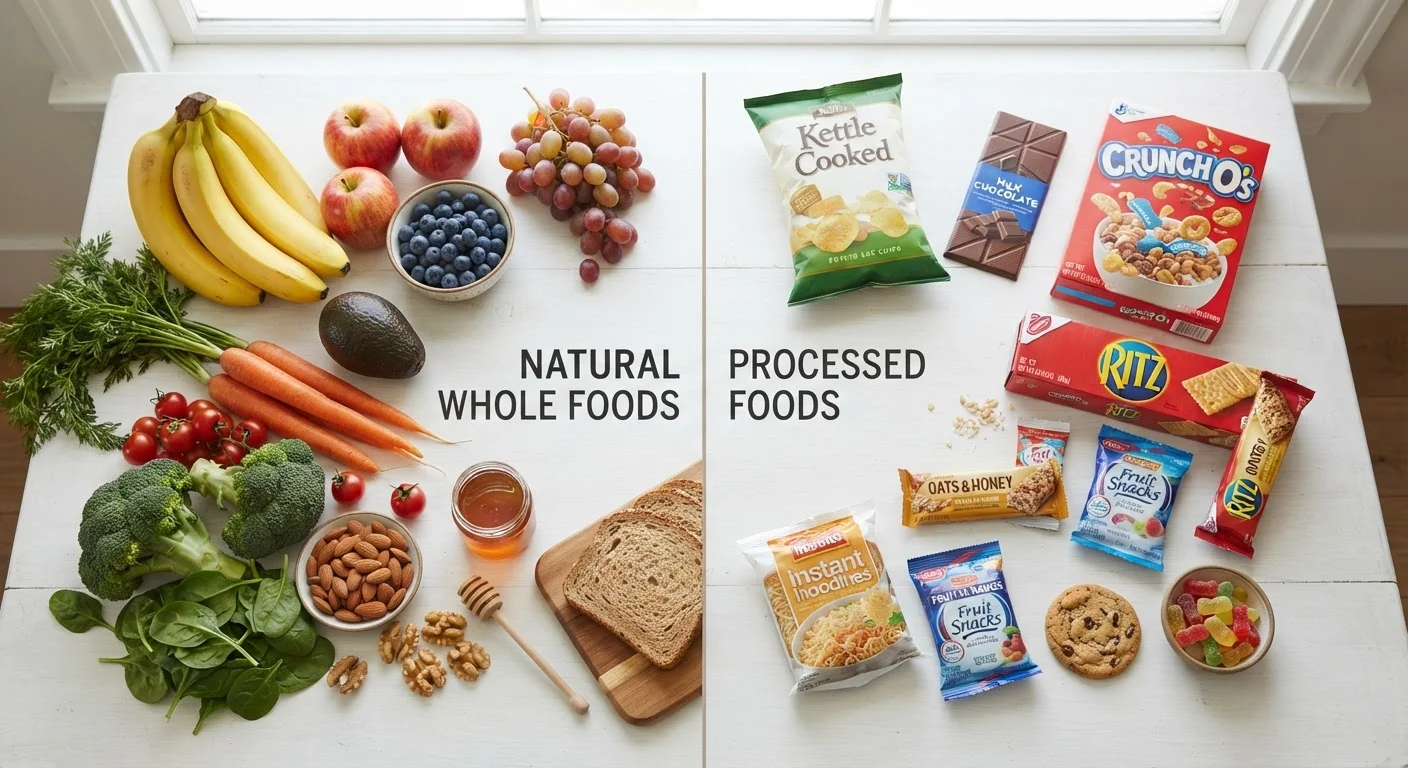
This context matters because whole foods that contain natural sugars almost always deliver something else of value. A medium apple provides roughly 19 grams of sugar, but it also provides fiber and vitamin C. A 12-ounce regular soda may contain a similar or higher amount of sugar with essentially no accompanying nutrients. See our guide to whole vs. processed foods for a broader look at why that nutritional package matters.
How Added Sugars Show Up on Labels
One of the most practical changes to U.S. food labeling in recent years was the FDA's requirement that Nutrition Facts panels break out 'Added Sugars' as a separate sub-line under 'Total Sugars.' Before this change, consumers had no reliable way to tell how much of the sugar in a product was inherent to its ingredients versus scooped in during manufacturing.
Here's how to read it: 'Total Sugars' captures everything - natural and added combined. The indented 'Includes X g Added Sugars' line tells you specifically how much was added. If a flavored yogurt lists 22g total sugars and 12g added sugars, that means 10g came from the milk itself (lactose) and 12g were sweeteners added to make it palatable.
17 tsp
Average daily added sugar intake for US adults
The CDC reports that U.S. adults consume roughly 17 teaspoons of added sugar per day on average - well above most health recommendations.
~39g
Added sugar in a standard 12-oz regular soda
A single 12-ounce can of a typical cola-style soft drink contains approximately 39 grams of added sugar, close to or exceeding a full day's recommended limit.
10%
Added sugar limit as share of daily calories
The Dietary Guidelines for Americans recommend that added sugars account for less than 10% of total daily caloric intake for adults and children over age 2.
The label also shows added sugars as a % Daily Value, based on a reference intake of 50 grams of added sugar per day for a 2,000-calorie diet. Many health organizations recommend staying well below that ceiling. For a full walkthrough of reading every part of a nutrition label, see our plain-language nutrition label guide.
Where Added Sugars Hide
Sweetened beverages - sodas, energy drinks, flavored coffees, and fruit-flavored drinks - are the single largest source of added sugar in the average American diet, according to the CDC. But added sugars also appear in many foods people don't think of as sweet.
- Condiments: Ketchup, barbecue sauce, and many salad dressings often contain several grams of added sugar per serving.
- Bread and crackers: Many commercially produced breads include sugar or high-fructose corn syrup to improve texture and shelf life.
- Flavored yogurt and oatmeal: 'Fruit on the bottom' yogurts and instant oatmeal packets can contain as much added sugar as a dessert.
- Breakfast cereals: Even cereals marketed toward adults can carry 10-15 grams of added sugar per serving.
Checking ingredient lists is also useful: sugar often appears under multiple names, including sucrose, dextrose, maltose, cane juice, and brown rice syrup. The more of these names you see near the top of an ingredient list, the more added sugar that product likely contains.
What Health Guidance Generally Recommends
Major health organizations converge on a similar message: most Americans eat significantly more added sugar than is considered beneficial, and reducing intake is worthwhile for the general population.
The American Heart Association recommends limiting added sugars to no more than 25 grams per day for most women and 36 grams per day for most men. The Dietary Guidelines for Americans suggest keeping added sugars below 10% of total daily calories. These are population-level guidance figures, not personal prescriptions - your own needs depend on your overall health, activity level, and other factors your healthcare provider is best positioned to evaluate.
Start With Your Drinks, Not Your Food
If you're looking for the single highest-impact change, audit what you drink before worrying about what you eat. Sweetened beverages - sodas, energy drinks, flavored coffees, and juice drinks - account for a disproportionately large share of added sugar for most people. Replacing even one daily sweetened drink with water or an unsweetened alternative can make a measurable difference over weeks and months.
Importantly, these recommendations focus on added sugar, not the natural sugars in whole fruits, vegetables, and plain dairy. Eating an orange is not the same as drinking an orange-flavored drink with equivalent sugar content. The goal is not to fear all sweetness, but to make informed choices about where your sugar is coming from.
Practical Ways to Cut Back on Added Sugar
You don't need to overhaul your entire diet to make progress. Small, consistent changes tend to stick better than dramatic restrictions.
- Swap sweetened drinks for water or unsweetened options. This single swap often produces the largest reduction in added sugar intake for most people.
- Choose plain versions and add your own sweetness. Plain yogurt with a handful of berries typically contains far less added sugar than a pre-flavored variety.
- Read labels before buying packaged food. Comparing two similar products - say, two pasta sauces - often reveals significant differences in added sugar content.
- Scale back gradually. If you take two sugars in your coffee, try one for a few weeks. Your palate adjusts over time.
- Prioritize whole fruit over juice. Whole fruit delivers fiber that slows sugar absorption; juice removes most of that fiber.
This is general information for educational purposes. If you have a specific health condition - such as diabetes or metabolic syndrome - consult a registered dietitian or your physician before making significant dietary changes.
This article is for informational purposes only and does not constitute medical or nutritional advice. Always consult a qualified healthcare professional for guidance specific to your health needs.