

Key Takeaways
Why Road Trip Costs Surprise Most Drivers
Most drivers budget for gas and accommodation, then discover they've spent twice what they expected by the time they get home. Road trips have a way of multiplying costs that feel small individually - a drive-through here, a toll road there, a tire pressure issue in an unfamiliar town - until the total is genuinely alarming.
The gap between expected and actual costs usually comes down to one thing: planning at too high a level. A rough guess at fuel and one hotel price isn't a budget - it's a starting point. As this guide on travel budget failures explains, most overspending happens in predictable categories that most people simply forget to account for. This article walks through each of those categories so you can build a budget that holds up on the road.
Fuel: Your Biggest and Most Variable Expense
Fuel is almost always the largest single cost on a long drive, and it's also the easiest to estimate - if you do the math before you leave. The basic formula is straightforward:
- Find your vehicle's miles per gallon (MPG). Check the sticker in your door jamb, your owner's manual, or a fuel-economy database. Use the combined MPG figure, which blends city and highway driving.
- Estimate your total miles. Map your route and add 10-15% for detours, wrong turns, and in-town driving at your destination.
- Divide miles by MPG to get estimated gallons needed.
- Multiply by a realistic fuel price. Check current average prices for the states you'll travel through - prices vary significantly by region.
For example, a 1,200-mile trip in a vehicle averaging 28 MPG requires roughly 43 gallons. At an average of $3.50 per gallon, that's about $150 in fuel. A pickup truck or older SUV averaging 16 MPG on the same trip would need about 75 gallons - closer to $263.
Buffer Your Fuel Estimate for Real Conditions
Driving at highway speeds above 65 mph, running the air conditioning heavily, or carrying a full load of passengers and gear can reduce your real-world fuel economy by 10-20% compared to the rated figure. Build that buffer into your calculation from the start, and you won't be caught short at the pump.
Keep in mind that driving at highway speeds above 65 mph, running the air conditioning heavily, or carrying a full load of passengers and gear can reduce your real-world fuel economy by 10-20% compared to the rated figure. Build that buffer into your calculation.
Accommodation: From Free to Pricey
Where you sleep each night will likely be your second-largest expense. The range is wide. Campgrounds at public land or state parks can cost as little as $10-$35 per night. Budget motels in smaller towns typically run $60-$100. Mid-range chain hotels in popular tourist corridors can reach $130-$200 or more, especially on weekends or near major attractions.
This comparison of overnight stop options breaks down the trade-offs in comfort, cost, and convenience for each approach. The key budget principle: multiply your estimated nightly cost by the number of nights, then add 15% to account for nights when your preferred option isn't available and you have to pay more.
Booking in advance - especially for weekend nights or stops near national parks - generally locks in lower prices and prevents last-minute panic spending.
Food and Drink on the Road
Food costs are highly personal but easy to underestimate. A family of four eating three meals a day from restaurants can spend $150-$200 daily on food alone. Solo travelers eating fast food might spend $25-$40 a day, but that adds up to $175-$280 over a week.
A realistic approach combines strategies:
- Grocery stops for breakfast items, snacks, and simple lunches keep daily costs lower.
- One sit-down meal per day as a planned expense rather than an impulse.
- A dedicated cooler with drinks and snacks eliminates the $4-$6 convenience store runs that add up to a surprising total by trip's end.
Budget roughly $20-$35 per person per day as a baseline, then adjust up or down based on your habits. If you're traveling with children, see these strategies for managing long drives with kids, which also touches on keeping snack costs under control.
Hidden Costs That Catch Drivers Off Guard
These are the expenses that don't make it into most people's initial plan:
- Tolls
- Major highway corridors - particularly in the Northeast and Midwest - can add $20-$60 or more in tolls per day of driving. Map your route and check toll calculators for states you'll cross.
- Parking
- Urban destinations and national park visitor centers often charge $15-$35 per day for parking. Budget for this if your destination includes any city time.
- Entrance fees
- National parks charge per-vehicle fees, typically $25-$35 per site, valid for seven days. If you plan to visit multiple parks, an annual pass may be worth considering.
- Vehicle maintenance and emergencies
- A roadside repair - a flat tire, dead battery, or minor mechanical issue - can cost $50-$300 or more. This is the most important reason to maintain a contingency fund.
- Attractions and activities
- Museum entry, guided tours, and paid recreation sites add up quickly. Estimate per-activity costs before you go rather than deciding on the fly.
Before you leave, review this vehicle preparation checklist to reduce the chances of a mechanical surprise mid-trip.
Don't Skip the Emergency Fund
A roadside breakdown in an unfamiliar area is stressful enough without the added pressure of not having funds to cover it. A basic mechanical repair, tow, or overnight stay while waiting for service can easily run $200-$500. Always set aside a contingency amount before you calculate whether a trip is affordable - if you can't fund the emergency cushion, the trip budget isn't truly complete.
Building Your Road Trip Budget Step by Step
Once you've thought through each category, putting together a working budget is straightforward. Use this structure:
- Fuel estimate - calculated from miles, MPG, and current prices.
- Accommodation total - nightly rate × number of nights, with a 15% buffer.
- Food total - daily per-person estimate × number of people × number of days.
- Tolls and parking - researched ahead of time, not guessed.
- Activities and entrance fees - listed individually, not lumped together.
- Contingency fund - 15-20% of the total of all the above. This is non-negotiable.
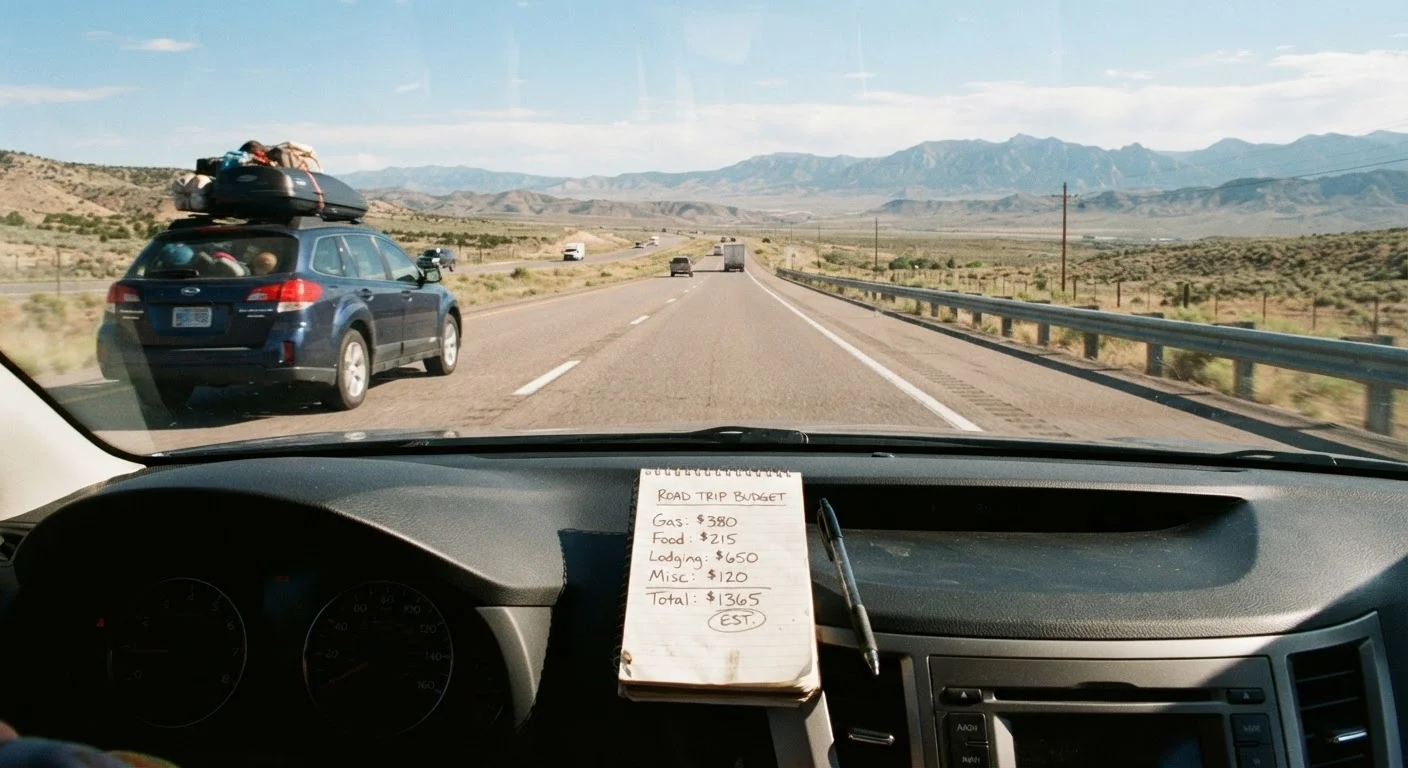
Write every number down. A budget that exists only in your head isn't a budget - it's a wish. Even a simple spreadsheet or notes app entry gives you something to compare against actual spending as you go.
For a fuller picture of how budgeting fits into the overall planning process, this complete first-timer's road trip guide walks through every stage from route planning to arrival. And if your past trips have consistently gone over budget, this look at why road trips fall apart identifies the planning gaps most likely to be responsible.
A road trip on a realistic budget is genuinely more enjoyable than one where you're constantly anxious about what things cost. The time you spend planning now pays off every day on the road.