

Key Takeaways
Our Verdict
No single overnight option wins for every trip - the right choice depends on your budget, vehicle, comfort needs, and flexibility. Motels deliver reliable rest with minimal setup; campgrounds reward those with gear and time; sleeping in your car suits tight budgets and spontaneous itineraries when done safely and legally.
| Best for | Recommended |
|---|---|
| Drivers prioritizing consistent comfort and a guaranteed good night's sleep | Motels |
| Travelers with camping gear who want to save money and enjoy nature | Campgrounds |
| Solo drivers on tight budgets making unplanned, flexible stops | Sleeping in Your Car |
| Long trips mixing cost control with occasional comfort | A combination of all three |
Why Your Overnight Choice Matters More Than You Think
On a multi-day road trip, where you sleep each night isn't just a logistics detail - it shapes how rested you are, how much you spend, and how early you can hit the road the next morning. A cramped or poor-quality overnight stop can leave you fatigued behind the wheel, which is a genuine safety concern. Making an informed choice before you leave helps you plan your route, set a realistic budget, and pack the right gear.
The three most common options for road trip overnights are campgrounds, motels (or budget hotels), and sleeping in your car. Each comes with real trade-offs. See our road trip budgeting guide for a fuller picture of how accommodation fits into your overall trip costs.
| Camping | Motels | Sleeping in Your Car | |
|---|---|---|---|
| Typical nightly cost | Free-$35 (public sites) | $60-$100+ (budget options) | Free (legal spots only) |
| Comfort level | Moderate (gear-dependent) | High (bed, bathroom, A/C) | Low to moderate (setup-dependent) |
| Setup effort | High (tent, gear) | None | Low to moderate (bedding) |
| Advance booking needed | Often, especially peak season | Recommended in busy areas | Not applicable |
| Route flexibility | Moderate | Low (fixed location) | High |
| Safety considerations | Wildlife, weather, fire rules | Generally low risk | Location choice, CO risk, legal restrictions |
| Best vehicle type | Any (gear stored separately) | Any | SUV, minivan, or flat-folding wagon |
Camping: Low Cost, High Effort
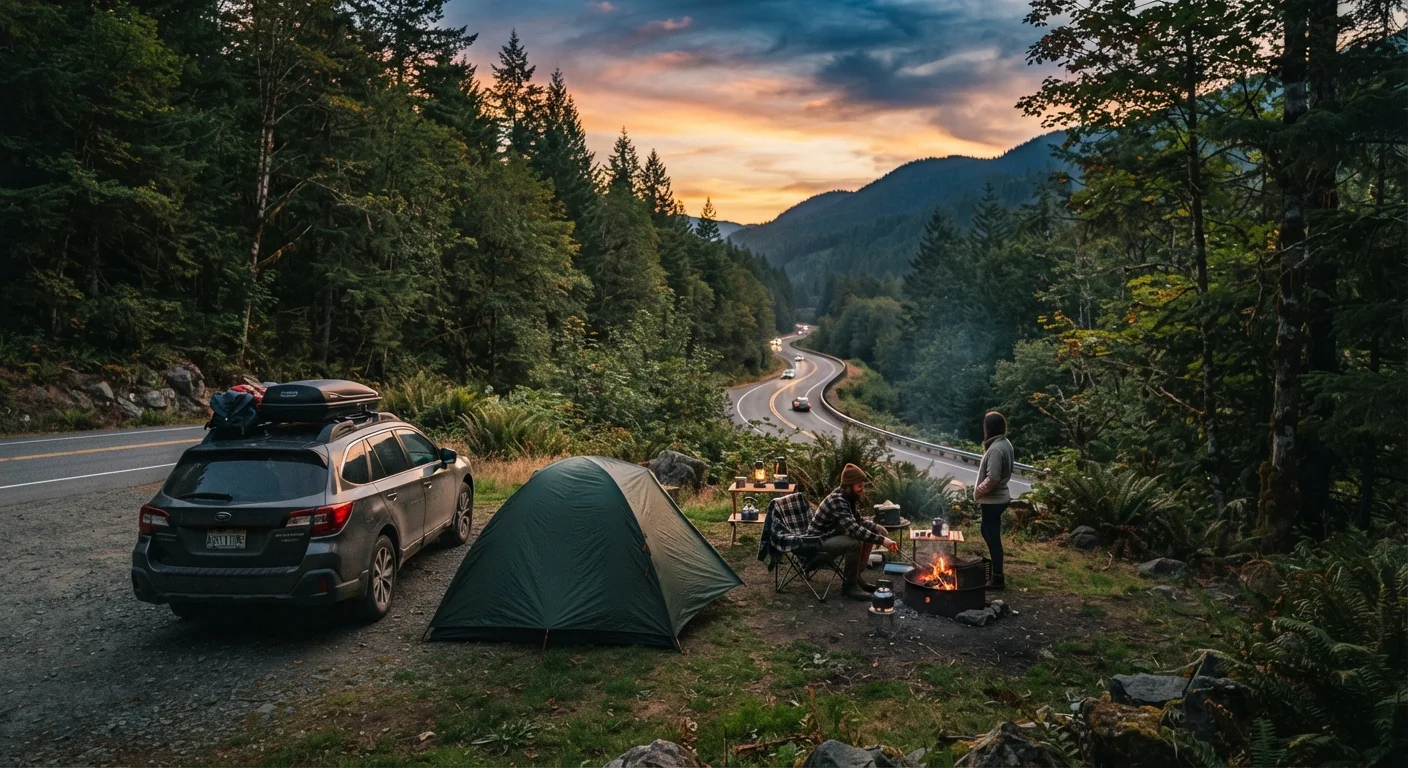
Campgrounds - from developed sites with hookups to primitive dispersed spots on public land - are generally the most affordable overnight option. Nightly fees at public campgrounds can range from free to around $30-$35 at developed sites, though private campgrounds and RV parks may cost more.
The trade-off is preparation. You need to carry and set up gear, and weather can turn a good night's sleep into a difficult one. Campground reservations are increasingly necessary during summer and holiday weekends, so spontaneity has limits. That said, camping rewards you with outdoor settings that no motel can replicate, and it's a natural fit if your route passes through national forests, state parks, or scenic rural areas.
If camping is part of your plan, think carefully about what you pack. Our guide on packing your car efficiently can help you fit gear without sacrificing comfort on the drive itself.
Motels: Reliable Rest at a Price
A motel or budget hotel offers something the other options struggle to match: consistency. You get a bed, climate control, a bathroom, and a lock on the door. For drivers covering long daily distances who need quality sleep to stay alert, this reliability has real value.
The downside is cost. Budget motels along major US highways typically start around $60-$100 per night, with prices climbing sharply in high-demand areas or during peak season. Booking ahead - especially in tourist corridors - is important. Our article on booking accommodation in the right order explains why timing your reservations strategically can save both money and stress.
Motels also lock you into specific stopping points, which can make flexible routing harder. If your plans are loose and you prefer driving until you feel like stopping, pre-booking every night becomes a constraint rather than a comfort.
Sleeping in Your Car: Flexible but Requires Care
Sleeping in your car costs nothing beyond what you're already spending on the vehicle, making it the leanest option on paper. It's most practical in larger vehicles - SUVs, minivans, or wagons where rear seats fold flat - though with the right setup, many sedans can work for a single night.
Legal and safety considerations matter enormously here. Parking overnight is not permitted in many public areas, including most highway rest stops (time limits often apply), private parking lots without permission, and many city streets. Cracking windows for ventilation, never running the engine to heat or cool the car while sleeping (due to carbon monoxide risk), and choosing well-lit locations are basic safety steps. National forest dispersed camping areas, some Bureau of Land Management (BLM) lands, and designated overnight rest areas are often legal options - but always verify local rules before settling in.
Comfort gear matters: a quality sleeping pad or inflatable mattress, a sleeping bag matched to nighttime temperatures, and window covers for privacy and insulation all significantly improve the experience. Factor in how seasonal conditions affect overnight temperatures when planning this option.
How to Choose What's Right for Your Trip
Most road trippers aren't locked into one approach for an entire journey. A practical strategy is mixing methods based on where you are and what that night demands. Drive through a national park corridor? A campsite may be both convenient and memorable. Arriving late after a long stretch of highway? A motel takes the pressure off finding a campground in the dark. Need to cut costs mid-trip? A car sleep on a safe, legal stretch of BLM land can balance the budget.
As you plan, think through these questions: How much gear can your vehicle realistically carry? How important is consistent sleep quality to your driving performance? How flexible is your route? And what does the sequence of your reservations look like - do you have the freedom to leave some nights unplanned?
Answering these honestly will point you toward the right mix. For a complete overview of trip planning foundations, the Trip Planning hub is a useful starting point before you finalize your route.