

Key Takeaways
Option A
Grout
The rigid, gap-filling standard for tile fields.
Best for: Filling the uniform spaces between tiles on flat, stable surfaces like floors and walls.
Option B
Caulk
The flexible sealant for joints that move or meet different surfaces.
Best for: Sealing corners, edges, and transitions where tile meets tubs, counters, or dissimilar materials.
If you are filling the spaces between tiles on a wall or floor field
Grout
Grout bonds rigidly to tile edges across a flat plane and resists the foot traffic and surface pressure those areas endure.
If you are sealing the joint where a tiled wall meets a bathtub or shower pan
Caulk
That joint flexes as the tub expands and contracts with temperature; only caulk can absorb that movement without cracking.
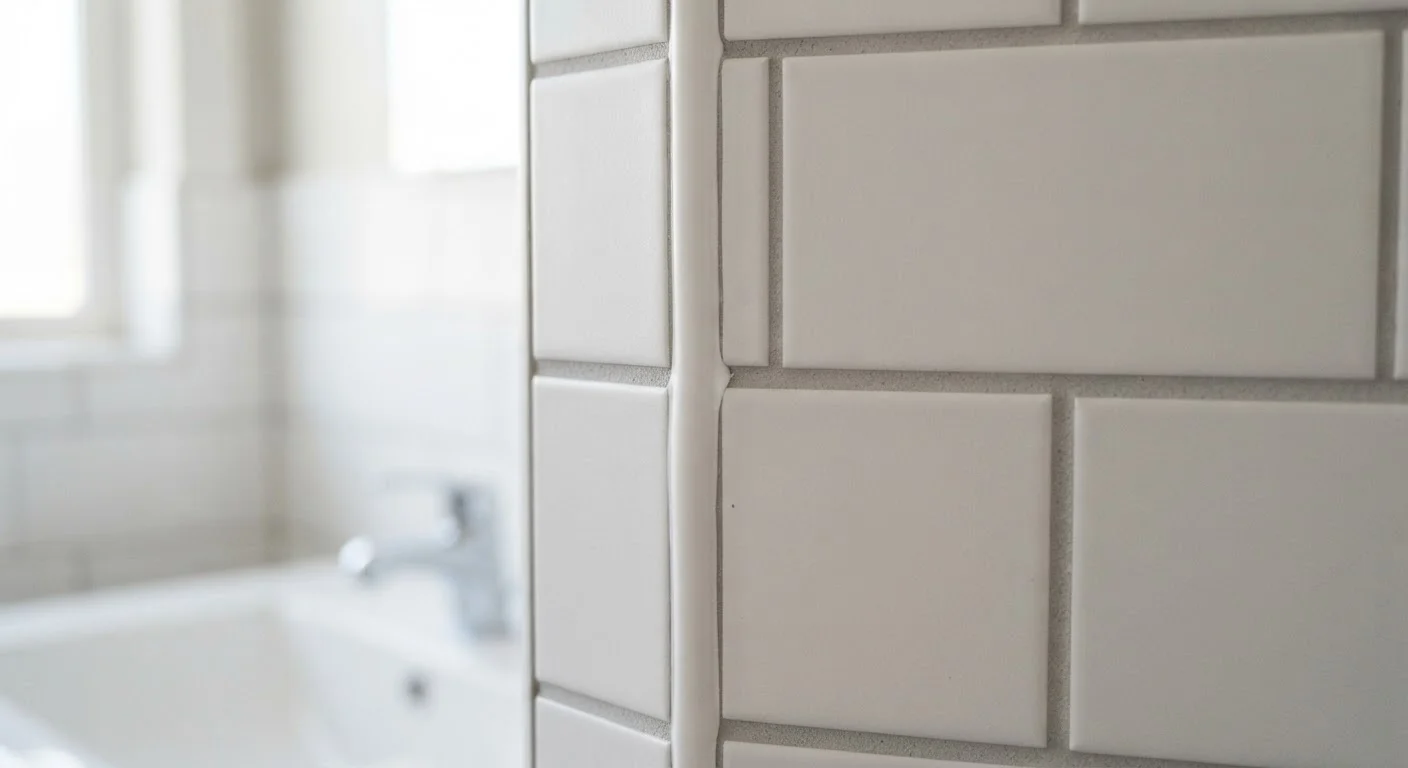
If you are finishing an inside corner where two tiled walls meet
Caulk
Corner joints experience constant structural movement; grout will crack here, letting moisture behind the tile.
If you are tiling a kitchen backsplash and need to seal the gap at the countertop edge
Caulk
The countertop and wall expand at different rates, so a flexible caulk bead prevents gaps and water infiltration over time.
What Each Material Actually Is
Grout and caulk are both gap-fillers, but their chemistry and mechanics are entirely different. Grout is a cement-based (or epoxy-based) compound that cures into a hard, rigid fill. It bonds tile edges together across a flat surface and holds its shape under compression. Caulk is a flexible sealant - most commonly acrylic latex or silicone - that stays somewhat pliable after it cures, allowing it to stretch and compress slightly with its surroundings.
That single difference - rigid vs. flexible - determines where each product belongs. No amount of color-matching or careful application can make grout do caulk's job, or vice versa.
| Criterion | Grout | Caulk |
|---|---|---|
| Flexibility after curing | Rigid | Flexible / semi-pliable |
| Primary use location | Between tiles on flat surfaces | Corners, edges, and surface transitions |
| Handles structural movement | No - will crack | Yes - absorbs flex |
| Common base materials | Cement or epoxy | Silicone or acrylic latex |
| Moisture resistance (wet areas) | Good when sealed | Excellent (silicone) |
| Needs sealing after application | Usually yes (cement type) | No |
| Color-matching to grout | N/A | Available from most manufacturers |
Where Grout Belongs
Grout belongs in the joints between tiles on any field of flat, stable tile work - bathroom walls, kitchen backsplashes, floor tile runs, and shower surrounds. These joints need a hard fill that resists pressure, foot traffic, and repeated cleaning without compressing or tearing.
When selecting grout, tile spacing is the key variable. Gaps narrower than 1/8 inch typically call for unsanded (fine) grout; wider gaps need sanded grout, which includes fine aggregate to prevent shrinkage cracking. For high-moisture areas, sealing grout after it cures is common practice to reduce staining and water absorption - though epoxy grout skips that step entirely.
See our step-by-step backsplash tiling guide for a full walkthrough of mixing, applying, and finishing grout correctly.
Where Caulk Belongs
Any joint where two different surfaces meet, or where structural movement is expected, belongs to caulk. The most common locations in a typical bathroom or kitchen include:
- Inside corners where two tiled walls meet
- The joint where tile meets a bathtub or shower pan
- Where a tiled backsplash meets a countertop
- Where tile meets wood trim, a window sill, or a door frame
In wet areas, silicone caulk is generally preferred because it repels water more effectively and resists mold growth better than acrylic latex. Acrylic latex (paintable) caulk works well in lower-moisture applications like baseboards and dry wall transitions. Most manufacturers produce color-matched caulk designed to coordinate with popular grout colors, so the visual transition can be nearly invisible.
For tips on why caulk fails prematurely and how to prep surfaces properly, see our guide on why caulking fails and how to prevent it.
The Consequences of Using the Wrong One
The most common mistake beginners make is grouting all the way into a corner or tub joint. Because buildings naturally flex - due to thermal expansion, settling, and vibration - rigid grout in a movement joint will crack, typically within one to two heating-and-cooling cycles. Once cracked, moisture finds its way behind the tile, promoting mold growth and, eventually, tile failure.
Conversely, using caulk between field tiles (instead of grout) creates a softer joint that compresses under foot traffic, leaves a visible texture inconsistency, and is much harder to keep clean. It is not structurally appropriate for flat tile fields.
#1
Cause of tile moisture damage
Industry tile installers commonly cite failed corner joints - typically from misapplied grout - as the leading entry point for water behind tile assemblies.
1-2 seasons
Before corner grout typically cracks
Rigid grout placed in movement joints often shows visible cracking within one to two thermal expansion cycles, according to tile installation standards.
A simple rule of thumb used by professional tilers: if the joint connects tile to tile on the same flat plane, use grout. If the joint connects tile to anything else - another plane, another material, or a change in direction - use caulk.