

Key Takeaways
Our Verdict
Both plant and animal proteins can support a healthy diet, but they come with different trade-offs in amino acid completeness, bioavailability, and accompanying nutrients. The right choice depends on individual health goals, dietary preferences, and how well the overall diet is planned.
| Best for | Recommended |
|---|---|
| Those seeking complete amino acids with minimal meal planning | Animal Protein |
| Those prioritizing heart health, fiber intake, and environmental considerations | Plant-Based Protein |
| Flexitarians or those wanting balanced nutrition from both sources | Mixed Approach |
What Makes a Protein 'Complete' or 'Incomplete'?
Proteins are built from smaller units called amino acids. Your body can manufacture some of these on its own, but nine - known as essential amino acids - must come from food. A protein source that contains all nine in adequate amounts is called a complete protein.
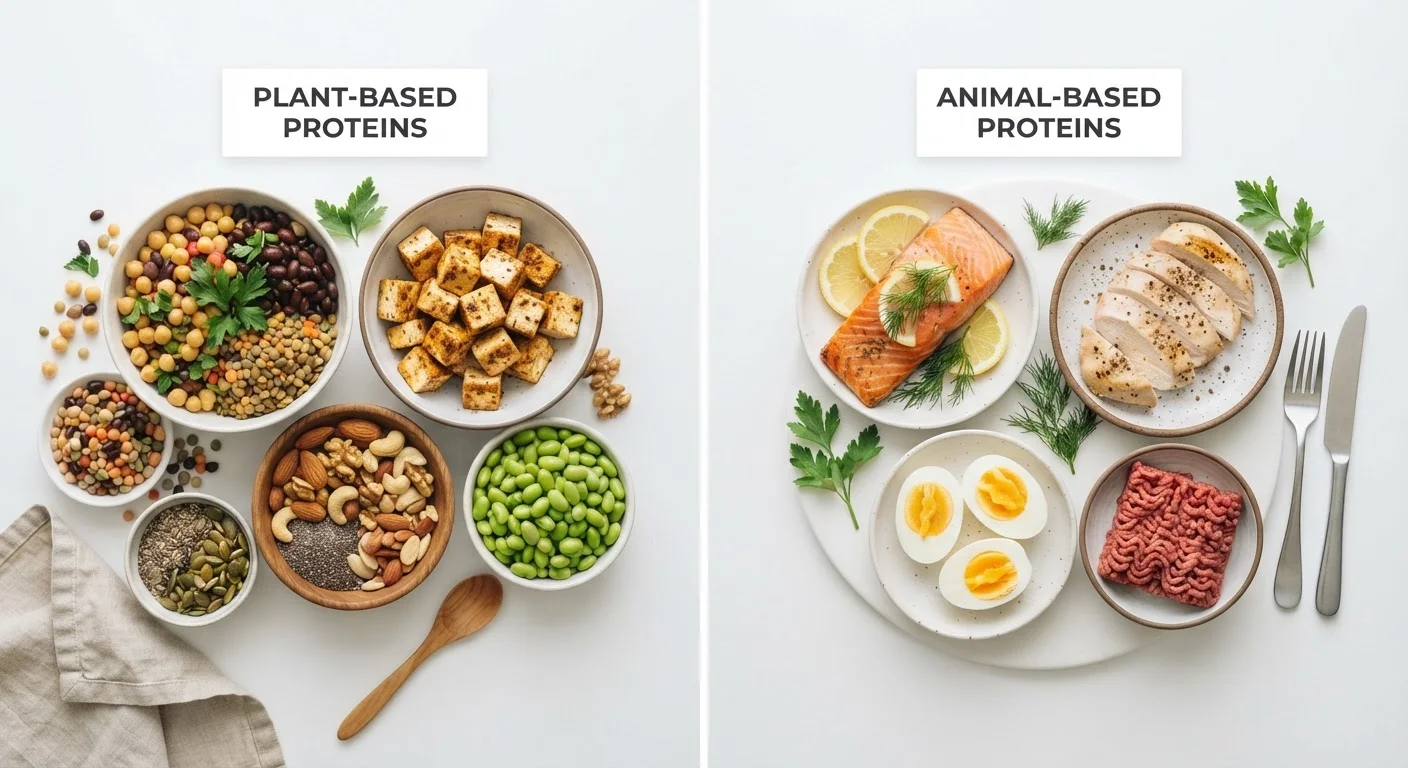
Animal proteins - including meat, poultry, fish, eggs, and dairy - are all complete proteins. Most plant proteins, such as those found in legumes, grains, nuts, and seeds, are considered incomplete because they're low in one or more essential amino acids. Notable exceptions include soy, quinoa, and hemp seeds, which are complete plant proteins.
This doesn't mean plant protein is inferior - it simply means that people relying primarily on plant sources need to eat a variety of foods across the day. Pairing rice with beans, for example, provides a complementary amino acid profile. You don't need to combine them at every single meal; variety throughout the day is sufficient.
Bioavailability: How Much Protein Does Your Body Actually Use?
Bioavailability refers to the proportion of a nutrient your body can actually absorb and use. Animal proteins score highly on this measure. Eggs, for instance, are often used as a reference standard in nutrition science because the body uses nearly all of the protein they provide.
Plant proteins are generally digested less efficiently. This is partly because plant foods contain antinutrients - naturally occurring compounds like phytates and tannins that can interfere with protein and mineral absorption. Cooking, soaking, fermenting, or sprouting plant foods can meaningfully reduce antinutrients and improve absorption.
| Plant Protein | Animal Protein | |
|---|---|---|
| Amino acid completeness | Usually incomplete (soy/quinoa are exceptions) | Complete - all 9 essential amino acids |
| Bioavailability | Moderate; can be improved by cooking/soaking | High; efficiently absorbed |
| Saturated fat content | Generally low | Varies; higher in red/processed meats |
| Fiber content | High - adds digestive benefits | None |
| Vitamin B12 | Absent unless fortified | Naturally present |
| Heme iron availability | Not present (non-heme iron only) | Present; more readily absorbed |
| Phytonutrients & antioxidants | Rich in beneficial plant compounds | Minimal |
One useful benchmark is the DIAAS, a rating system developed by the Food and Agriculture Organization to evaluate protein quality. Animal foods consistently receive higher DIAAS scores than most plant foods, though processed plant proteins like soy protein isolate score competitively. Understanding these differences can help you make more informed choices - see how to read a nutrition label to put these numbers in context when shopping.
What Comes Along With the Protein?
Protein never arrives in isolation - each source carries a package of other nutrients, and those extras matter.
Animal proteins can be rich in nutrients like vitamin B12, heme iron (a highly absorbable form), zinc, and omega-3 fatty acids (especially from fatty fish). However, some animal sources - particularly processed and red meats - also carry higher amounts of saturated fat and dietary cholesterol. Dietary patterns high in processed red meat have been associated in observational research with elevated cardiovascular risk, though the science is nuanced and context-dependent.
Plant proteins bring fiber, antioxidants, and a wide range of phytonutrients (beneficial plant compounds). They tend to be lower in saturated fat and contain no dietary cholesterol. However, plant sources are often lower in vitamin B12 (essentially absent without fortification), heme iron, and certain omega-3 fatty acids. People following exclusively plant-based diets should be aware of these potential gaps and consider speaking with a registered dietitian.
For a broader view of how food processing affects the nutrient package of what you eat, understanding whole foods vs. processed foods offers helpful context.
Build Your Plate With Variety in Mind
Rather than stressing over a single protein source, aim to rotate across several throughout the week. Including lentils on Monday, eggs on Wednesday, and salmon on Friday gives your body a broad range of amino acids and complementary nutrients. Small, consistent variety is one of the most evidence-supported habits in nutrition science.
Putting It Into Practice
For most people, the most practical approach is to focus on dietary patterns rather than fixating on individual foods. Research on dietary patterns - including the Mediterranean diet and well-planned plant-based diets - consistently supports variety, minimally processed whole foods, and moderation as the cornerstones of good nutrition.
- If you eat animal products, lean toward fish, eggs, and legume-meat combinations, and limit processed red meats.
- If you eat primarily plant foods, prioritize variety - legumes, whole grains, nuts, and seeds - and consider discussing supplementation (particularly B12) with a healthcare provider.
- If you eat both, use plant proteins like lentils and tofu to diversify your protein sources without fully eliminating the foods you enjoy.
No single food makes or breaks a diet. Small, consistent shifts are more sustainable than dramatic overhauls - and more likely to stick. For personalized guidance suited to your health history and goals, consult a registered dietitian or your primary care provider.
This article is for general informational and educational purposes only and does not constitute medical or dietary advice. Always consult a qualified healthcare professional or registered dietitian before making significant changes to your diet.