

Key Takeaways
Macronutrients
Macronutrients - often called "macros" - are the three main categories of nutrients your body uses in large amounts every day: carbohydrates, protein, and fat. Each one provides energy (measured in calories) and performs essential functions that keep your body running. Unlike vitamins and minerals, which are needed in tiny amounts, macronutrients form the bulk of everything you eat.
Carbohydrates and protein each provide 4 calories per gram, while fat provides 9 calories per gram - making fat the most energy-dense macronutrient.
Why All Three Macronutrients Matter
Nutrition headlines love to single out one macronutrient as the villain - carbs, fat, and even protein have each had their turn. But decades of research consistently point in the same direction: your body needs all three to function well. Think of them less as competitors and more as teammates, each handling a different set of jobs.
Understanding what each macronutrient actually does removes a lot of the confusion that surrounds everyday eating decisions. This article walks through the role of each one in plain language - no calorie formulas required. For a broader foundation, see our complete beginner's nutrition resource.
45-65%
Recommended daily calories from carbohydrates
According to the Dietary Guidelines for Americans, most adults should aim for this carbohydrate range as part of a balanced diet.
10-35%
Recommended daily calories from protein
The Acceptable Macronutrient Distribution Range for protein, per the National Academies of Sciences, Engineering, and Medicine.
20-35%
Recommended daily calories from fat
The evidence-based range for total fat intake in healthy adults, as established by the National Academies of Sciences, Engineering, and Medicine.
Carbohydrates: Your Body's Preferred Fuel
Carbohydrates are broken down into glucose - a form of sugar your cells use for energy. Your brain, in particular, relies heavily on a steady glucose supply. When you eat carbs, your digestive system converts them to glucose, which enters your bloodstream and either gets used right away or stored in your muscles and liver as glycogen for later use.
Not all carbohydrates work the same way. Simple carbs (found in refined grains and added sugars) digest quickly, causing faster blood sugar changes. Complex carbs (found in whole grains, legumes, and most vegetables) digest more slowly, providing steadier energy and, in many cases, dietary fibre. Fibre deserves its own spotlight - learn more in our article on why fibre is the nutrient most people underestimate.
A common misconception is that carbohydrates cause weight gain. In reality, overall calorie balance and food quality matter far more than any single nutrient. For a closer look at that claim, our piece on nutrition myths that refuse to die covers the evidence in detail.
Protein: Builder, Repairer, and More
Protein is made up of smaller units called amino acids, and your body uses them to build and repair nearly every tissue - muscles, skin, hair, organs, and enzymes. Your immune system also relies on proteins to make antibodies that fight infection.
Beyond repair and maintenance, protein plays a practical role in how hungry you feel. It tends to be the most satiating macronutrient, meaning it helps you feel fuller for longer compared to the same number of calories from carbs or fat. This is one reason higher-protein meals are often associated with reduced snacking between meals.
Good protein sources include poultry, fish, eggs, dairy, legumes, tofu, tempeh, nuts, and seeds. Eating a variety of sources - especially across plant-based diets - helps ensure your body receives the full range of amino acids it cannot produce on its own.
Fat: Essential, Not the Enemy
Dietary fat has been unfairly maligned for decades, in large part due to oversimplified public health messaging from earlier eras. In reality, fat is essential for survival. It cushions your organs, insulates your body, and forms the membrane of every single cell you have.
Fat is also the transport system for fat-soluble vitamins - A, D, E, and K - meaning that without adequate dietary fat, your body struggles to absorb these nutrients regardless of how much of them you eat. Fat is also required to produce many hormones, including sex hormones and those that regulate inflammation.
The type of fat matters. Unsaturated fats (found in olive oil, avocados, nuts, and fatty fish) are well-supported by research as part of a healthy eating pattern. Saturated fats (found in red meat and full-fat dairy) are fine in moderate amounts for most people. Trans fats - largely removed from the food supply in the US - are widely considered harmful and best avoided altogether.
Alongside fat, water is an underappreciated part of how your body processes nutrients. See our guide on how hydration fits into your nutrition for more.
Putting It Together: Balance Over Perfection
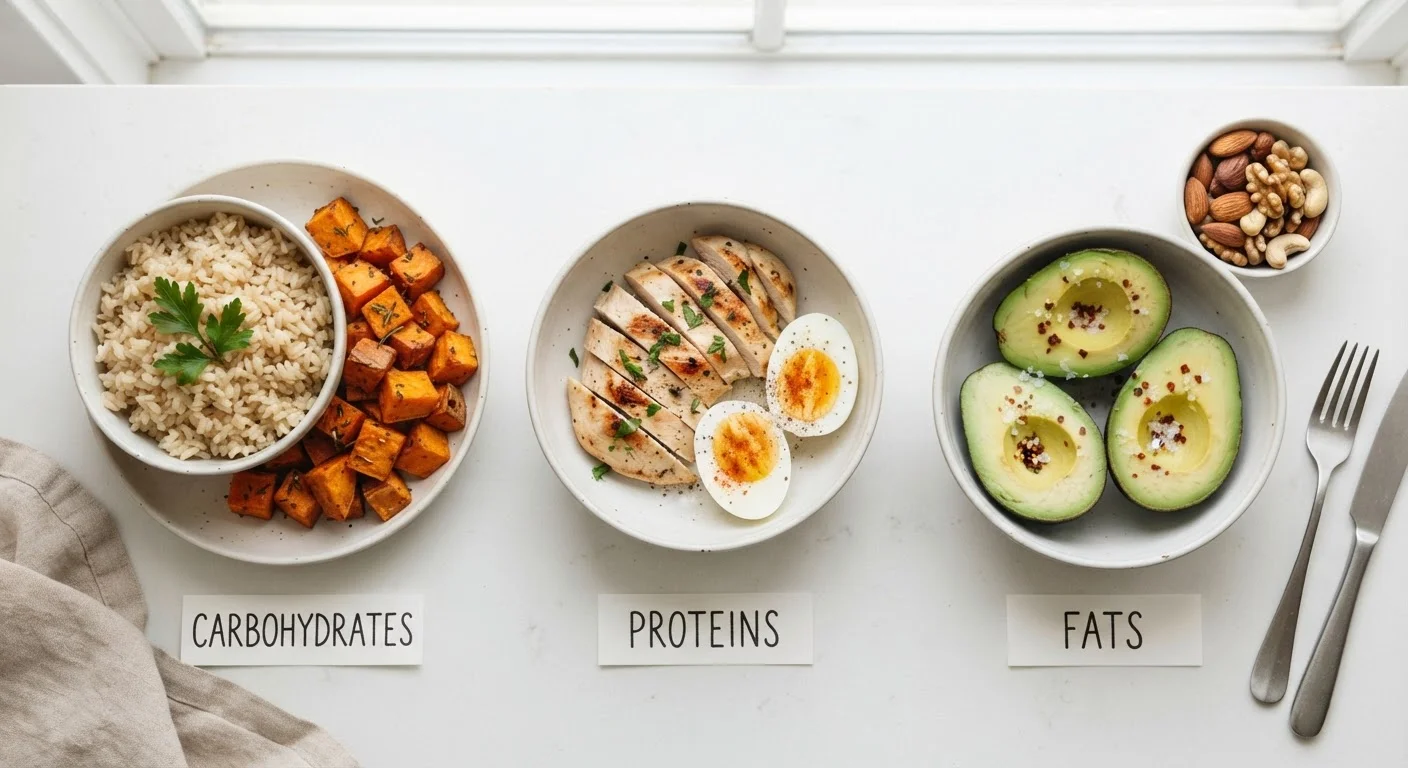
No macronutrient should be cut out entirely without a medical reason. A practical approach is to build meals around a variety of whole foods - a source of carbohydrates, a source of protein, and a source of healthy fat at most meals. This naturally covers all three without requiring any calculation.
For a deeper understanding of nutrients your body needs in smaller quantities, our article on vitamins and minerals your body depends on is a helpful next step.
Individual needs do vary - age, activity level, health conditions, and goals all influence how much of each macronutrient is right for a particular person. A registered dietitian can give you guidance tailored to your situation.
This article is for general informational and educational purposes only and is not a substitute for professional medical or nutritional advice. Always consult a qualified healthcare provider or registered dietitian before making significant changes to your diet.