

Key Takeaways
Hydration and Nutrition
Hydration and nutrition are closely linked aspects of how your body gets what it needs to function. Hydration refers to maintaining enough fluid in your body, while nutrition covers the foods and beverages that supply energy and essential nutrients. Together, they affect digestion, how well your body absorbs vitamins and minerals, and even how hungry you feel throughout the day.
Water is involved in nearly every metabolic process, including transporting nutrients across cell membranes and facilitating enzymatic reactions in digestion.
Water Is a Nutrient, Not Just a Beverage
Most people think of nutrition as the food on their plate - proteins, carbohydrates, fats, vitamins, minerals. But water is technically a nutrient too, and one your body cannot produce in meaningful quantities on its own. Every cell in your body depends on water to carry out basic functions: regulating temperature, cushioning joints, and moving other nutrients to where they're needed.
This matters for nutrition because water doesn't operate separately from what you eat - it's woven into the entire process. When you chew food, saliva (which is mostly water) begins breaking it down. As digestion continues, water helps move food through your digestive tract, allowing your intestines to absorb nutrients efficiently. Understanding this overlap is a foundation of the broader topic covered in our complete nutrition starter's resource.
How Food Contributes to Your Fluid Intake
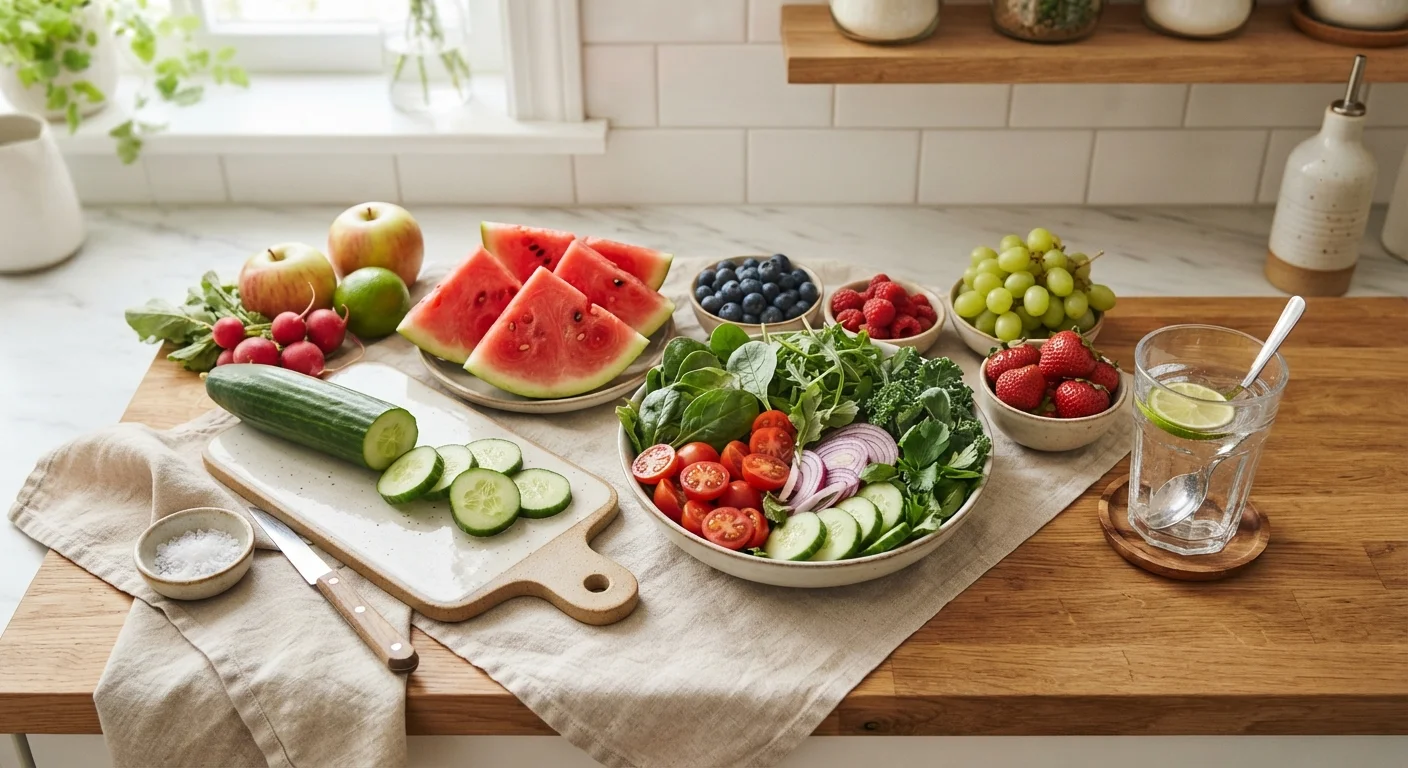
Most of us assume hydration comes entirely from what we drink, but that's not the full picture. Estimates from nutrition researchers suggest that around 20% of daily fluid intake comes from food. Fruits and vegetables are particularly high in water content - cucumbers and lettuce are over 95% water by weight, and watermelon sits at roughly 92%. Dairy products, cooked grains, legumes, and soups also deliver meaningful amounts of fluid alongside their other nutrients.
This has a practical implication: a diet rich in whole, minimally processed foods naturally supports hydration. Highly processed foods - which tend to be low in water and high in sodium - can work against it. If your meals lean heavily on packaged snacks or fast food, you may need to compensate with more fluid from beverages.
~20%
Daily fluid intake from food, not drinks
Nutrition researchers estimate that roughly one-fifth of most adults' fluid intake comes from water-rich foods rather than beverages.
92-96%
Water content in cucumbers and lettuce
According to USDA food composition data, some vegetables are nearly all water by weight, making them among the most hydrating foods available.
1-2%
Body water loss that signals mild dehydration
Research published in nutrition and physiology literature indicates that even modest fluid deficits can affect cognitive function and perceived hunger.
For more on how food components interact with your body, see our overview of what carbohydrates, protein, and fat actually do.
Water's Role in Digestion and Nutrient Absorption
Digestion is a water-intensive process. Your body uses water to produce digestive juices, bile, and the mucus lining your gut. Without adequate hydration, digestion slows - which can contribute to constipation and discomfort. This connection is especially important when it comes to dietary fiber. Fiber needs water to do its job; without it, fiber can actually worsen constipation rather than relieve it. Learn more about fiber's role in our article on why fiber is often underestimated.
Water also plays a direct role in nutrient absorption. Water-soluble vitamins - including vitamin C and the B-vitamin family - dissolve in water and are carried through the bloodstream. Fat-soluble vitamins (A, D, E, and K) rely on dietary fat for absorption, but water still supports the digestive environment that makes that absorption possible. For a detailed look at these vitamins and minerals, see our guide to micronutrients your body depends on.
Hydration, Appetite, and Eating Habits
There's a well-documented connection between hydration status and appetite regulation. The hypothalamus - the part of the brain that governs both hunger and thirst - can sometimes send mixed signals. Mild dehydration may be interpreted as hunger, leading people to eat when their body actually needs fluid. This isn't a flaw in willpower; it's a physiological overlap worth being aware of.
One practical habit some people find useful is drinking a glass of water before or during meals. This can create a mild sense of fullness and help with portion awareness. It doesn't interfere with digestion in the way some myths suggest. Building consistent hydration habits throughout the day - not just at mealtimes - is explored in more depth in our article on what drinking enough water really does for your body.
A Simple Way to Eat More Hydrating Foods
Try adding one water-rich food to each main meal - a side of sliced cucumber, a broth-based soup, or a piece of fruit. These small additions require no special planning and gradually increase both your fluid intake and nutrient variety. Over time, small shifts like this can build into lasting habits without feeling like a major diet overhaul.
This article is for general informational purposes only and does not constitute medical or dietary advice. If you have specific health concerns or conditions affecting your fluid or nutritional needs, consult a qualified healthcare professional.