

Why Right-of-Way Rules Trip Up Even Experienced Drivers
Right-of-way rules are not intuitive - they're learned. And for many drivers, that learning happened years ago, was never fully reinforced, and has since been patched together with habit and guesswork. The result: hesitation at junctions, near-misses at roundabouts, and confusion that compounds under pressure.
This reference guide covers the situations most likely to cause uncertainty, explains the underlying logic clearly, and gives you the language to think about these rules confidently. For a broader look at how driving environments shape your decision-making, see our guide on urban vs. rural driving hazards.
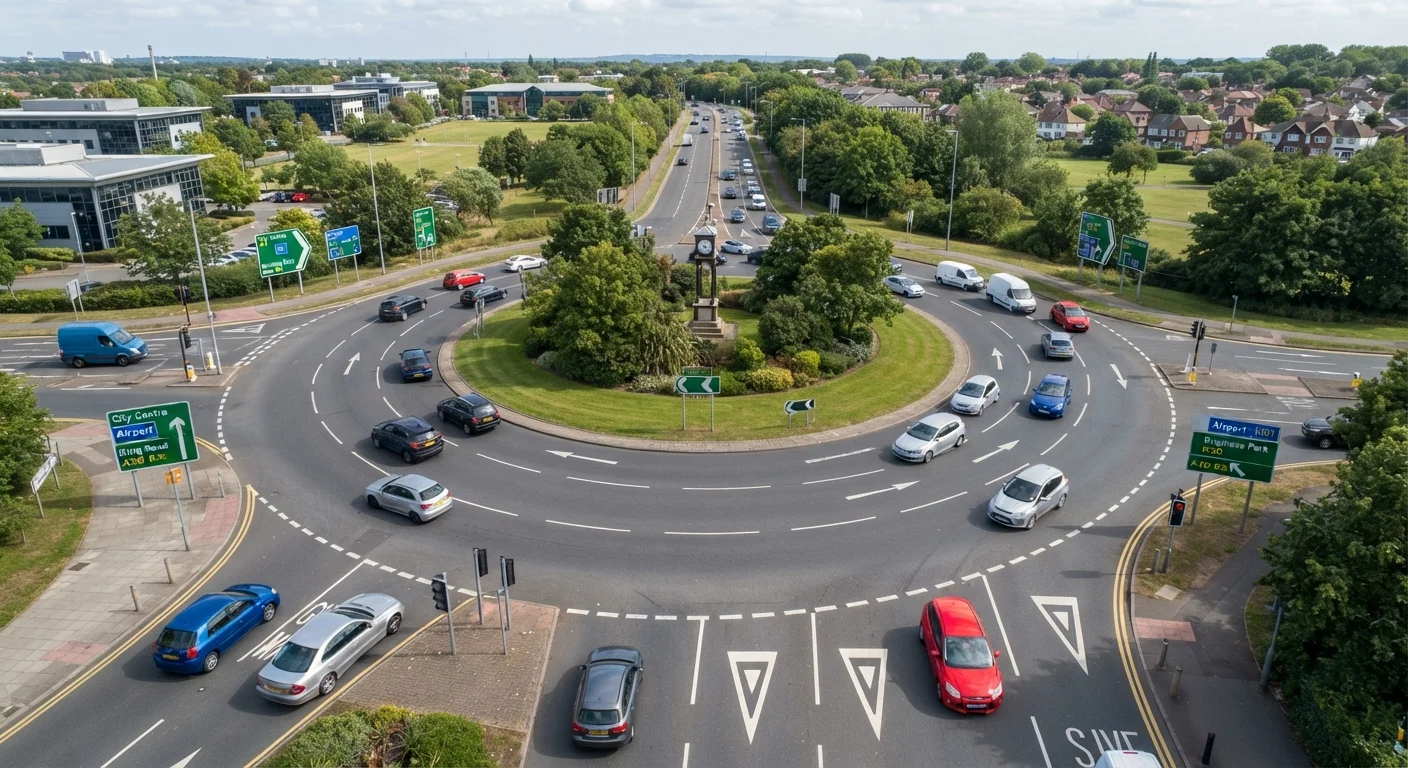
Roundabouts: Lane Choice, Yield Rules, and Common Mistakes
The core rule is simple: traffic already in the roundabout has priority. You must yield to vehicles circulating from your right before you enter. Do not pull in if doing so forces a circulating driver to brake.
Choosing the Correct Lane
- Turning left (first exit): Approach and stay in the left lane. Signal left on approach and maintain it through the exit.
- Going straight ahead (second exit): Use the left lane on approach. No signal needed on entry; signal left once you pass the exit before yours.
- Turning right or completing a U-turn (third exit or beyond): Approach in the right lane, signal right on entry, then switch to a left signal as you pass the exit before yours and exit from the inner lane.
Multi-Lane Roundabouts
On larger roundabouts with two or more lanes, lane markings on the approach will guide your choice - follow them carefully. The most common mistake is drifting from the inner lane to exit via the outer lane, cutting across traffic. Always check your mirrors and blind spot before moving outward to exit.
Hesitating at roundabouts is one of the habits that can calcify early - our article on early driving habits that are hard to shake explains how to address this before it becomes automatic.
Junction Priority: T-Junctions, Crossroads, and Give Way Lines
At a T-junction, the vehicle on the minor road (the road that ends) must give way to traffic on the major road. If you're emerging from a side street onto a main road, you yield - regardless of which direction you're turning.
Crossroads Without Signs
At an unmarked crossroads - where no signs, lines, or traffic signals indicate priority - no vehicle has automatic right of way. All drivers should proceed with extreme caution and be prepared to yield. In practice, courtesy and clear communication (eye contact, brief pauses) are what prevent conflict here.
Give Way vs. Stop Lines
- A give way line (dashed white line) means slow down and yield to traffic already on the road you're joining, but you may proceed without fully stopping if it's clearly safe.
- A stop line (solid white line) means you must come to a complete halt before the line, even if no traffic is visible.
Treating a stop line as a give way line is a common and potentially dangerous error - and one that can appear on a driving test.
Four-Way Stops and Other Rules Drivers Regularly Misapply
At a four-way stop (common in the US), all vehicles stop in turn. The order is:
- The vehicle that arrived first proceeds first.
- If two vehicles arrive simultaneously, the one on the right goes first.
- If facing each other and going straight, both may proceed together. If one is turning left across the other's path, the left-turning vehicle yields.
Turning Left Across Oncoming Traffic
This is one of the most misjudged situations in everyday driving. When turning left at a junction or intersection, you must yield to all oncoming vehicles before completing the turn - even if you've been waiting a long time. Impatience here causes serious collisions. Wait for a clear gap, not a tight one.
Pedestrians at Junctions
When you are turning at any junction - left or right - pedestrians who have already stepped into the crossing have priority. You must wait for them to clear before completing your turn. Many drivers overlook this, treating the pedestrian phase as secondary to vehicle flow.
Building the habits to handle these situations smoothly takes deliberate practice. Our full resource on building driving confidence covers the mindset and skills that help everything click into place.
Right of way
The legal or conventional entitlement of one vehicle or road user to proceed before another. It is granted by road rules - not something a driver can claim or force.
Give way line
A dashed white line painted across a lane indicating that you must yield to traffic on the road you are entering. You do not have to stop fully if the way is clear.
Stop line
A solid white line requiring a complete halt before proceeding, regardless of whether other traffic is present. Failing to stop is a traffic violation.
Yield
To slow down or stop and allow another road user to proceed first. Yielding does not mean stopping indefinitely - once the way is clear, you continue.
Unmarked crossroads
A junction where two roads cross without any signs, signals, or painted markings to assign priority. No vehicle has automatic right of way; all must proceed with caution.
Circulating traffic
Vehicles already moving inside a roundabout. These vehicles have priority over any vehicle waiting to enter from an approach road.