

Key Takeaways
Oil Viscosity Grade
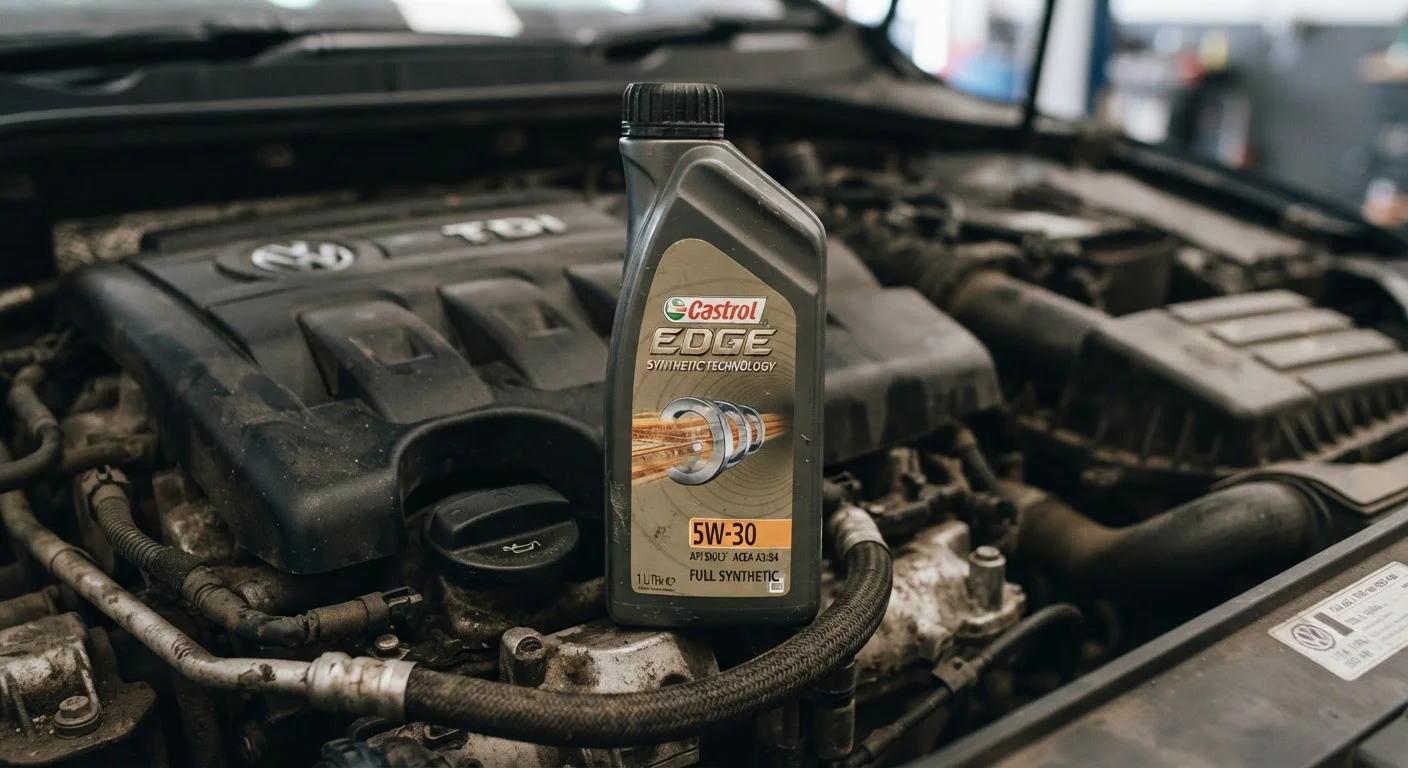
A viscosity grade is a standardized rating that describes how easily motor oil flows at different temperatures. The numbers on an oil bottle - such as 5W-30 - tell you how the oil behaves when your engine is cold at startup and when it reaches normal operating temperature. Choosing the right grade means your engine gets proper lubrication in all conditions.
The Society of Automotive Engineers (SAE) developed the viscosity grading system used on oil labels worldwide. The 'W' stands for 'Winter,' not 'Weight,' indicating the oil's cold-weather performance rating.
Breaking Down the Number Code
Pick up any bottle of motor oil and you'll see something like 5W-30, 0W-20, or 10W-40 printed prominently on the label. These aren't random codes - they're a standardized rating system developed by the Society of Automotive Engineers (SAE) that communicates exactly how an oil behaves across different temperatures.
The label is split into two parts by a hyphen. The number before the W describes the oil's viscosity - that is, its resistance to flow - in cold conditions. The W stands for Winter, not weight. The lower this number, the more freely the oil flows when your engine is cold, which matters most during those critical first seconds after startup in cold weather.
The number after the hyphen describes the oil's viscosity at normal engine operating temperature, typically around 212°F (100°C). A higher number here means a thicker oil film at operating temperature, which can be important for engines with more clearance between moving parts or those running under heavy loads.
~40%
Of engine wear occurring at cold startup
Industry engineers widely cite cold-start conditions as the period of greatest engine wear, underlining why low-temperature viscosity ratings matter.
5,000-7,500 miles
Typical oil change interval for modern engines
Many modern vehicles with synthetic-blend or full synthetic oil are designed for longer change intervals than the old 3,000-mile rule - always verify with your owner's manual.
Over 30
SAE viscosity grades defined for motor oil
The SAE has established more than 30 distinct viscosity classifications, though a handful of multi-grade oils cover the vast majority of passenger vehicle applications.
Why Cold-Start Viscosity Is More Important Than Most Drivers Realize
Most engine wear doesn't happen during normal driving - it happens in the first few seconds after you turn the key, before oil has fully circulated through the engine. During this cold-start window, oil must flow immediately to bearings, camshafts, and cylinder walls. An oil with a high 'W' number - say, 20W - thickens considerably in winter temperatures, slowing that critical flow.
This is why vehicles designed for cold climates often specify oils with lower 'W' ratings like 0W or 5W. In a region where winter temperatures regularly drop below 0°F, the difference between a 0W-20 and a 15W-40 at startup can be significant. Conversely, in consistently warm climates, a slightly higher cold-rating may not matter as much.
The key point: always match the cold-weather rating to the climate you actually drive in, within the range your manufacturer allows. Your owner's manual may list acceptable alternatives for different temperature ranges. For a broader look at how oil fits into your vehicle's fluid system, see our guide to under-hood fluids.
High-Temperature Viscosity: Protecting the Engine Under Load
The second number in the grade - the one after the hyphen - tells you how thick the oil remains when your engine is fully warmed up and working hard. This number matters most during highway driving, towing, or operation in hot climates.
An oil rated 30 at operating temperature is thinner than one rated 40 or 50. Modern engines, especially fuel-efficient ones with tighter manufacturing tolerances, are often designed for thinner oils like 20 or 30. Older or high-performance engines may call for thicker grades. Using oil that's too thin for your engine's design can allow metal surfaces to make contact; using oil that's too thick can restrict flow through narrow oil passages.
The bottom line: the number itself isn't 'better' or 'worse' - the right number is whichever one your vehicle's manufacturer has specified. This is one area where following the owner's manual precisely pays off over time.
Always Check Your Owner's Manual First
Before buying any motor oil, open your vehicle's owner's manual and find the recommended viscosity grade. Manufacturers specify this based on precise engine tolerances and testing - it's not a general suggestion. Some manuals also list acceptable alternative grades for extreme cold climates, giving you a safe range to work within.
Synthetic vs. Conventional: Same Grade, Different Formula
One common point of confusion is whether synthetic oil has different viscosity grades than conventional oil. It doesn't - both use the same SAE system. A synthetic 5W-30 and a conventional 5W-30 will both meet that viscosity specification, but they're manufactured differently and perform differently under stress.
Synthetic oils are engineered at the molecular level to flow more consistently across temperature extremes and resist breakdown longer. Conventional oils, refined from crude oil, are a good baseline option for many everyday driving situations. The viscosity grade on the label tells you about flow characteristics; the synthetic or conventional designation tells you about the oil's fundamental formulation and longevity.
For a full side-by-side look at how these two types compare in real-world use, see our plain-language breakdown of synthetic vs. conventional oil. And if you've ever wondered whether the old '3,000-mile oil change rule' still applies, our article on common maintenance myths has the answer.