

Key Takeaways
Why Your Battery Dies Sooner Than It Should
A car battery is a relatively simple component, but it interacts with nearly every electrical system in your vehicle - from starting the engine to powering your infotainment screen. Most drivers don't think about it until it fails on a cold morning in a parking lot. The frustrating truth is that most premature battery failures aren't random - they're the result of ordinary habits repeated over months or years.
Understanding how a battery works helps put these mistakes in context. Your battery stores electrical energy in chemical form. Each time you start the car, it discharges a burst of power, and the alternator (a generator driven by the engine) recharges it while you drive. Anything that upsets this charge-discharge cycle shortens the battery's effective life. The mistakes below are the most common ways drivers unknowingly upset it.
For context on how small neglected issues compound over time, see our article on how deferred maintenance escalates into bigger bills.
The Most Common Battery-Draining Mistakes
Each of the following habits is easy to fall into - and easy to correct once you know what to look for.
Taking only short trips day after day without any longer drives.
Why it happens: Urban and suburban drivers often make multiple brief stops - school runs, coffee shops, grocery stores - each under ten minutes. It feels efficient, but each start drains the battery and short drives don't give the alternator enough time to restore the lost charge.
Leaving accessories powered on when the engine is off.
Why it happens: It's easy to forget a phone charger in the USB port, a dash cam left running, or interior lights left on. These small loads - called parasitic drain - draw current continuously from the battery even when the car is parked.
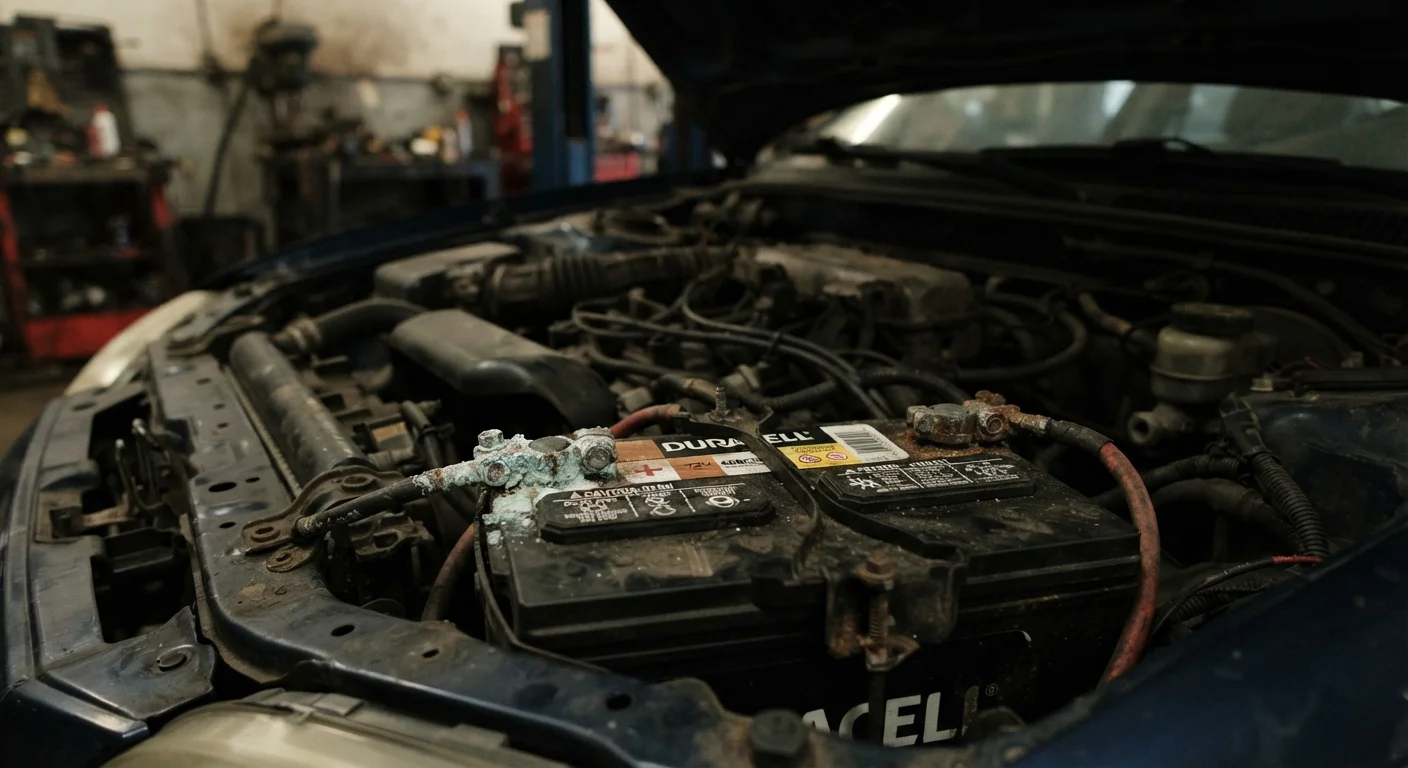
Ignoring terminal corrosion until it causes a no-start situation.
Why it happens: Corrosion builds gradually and isn't always visible without looking closely. Drivers often assume their battery is dying when the real issue is a corroded terminal creating resistance in the electrical circuit.
Parking in extreme temperatures without taking protective steps.
Why it happens: Many drivers know cold weather is hard on batteries, but heat is equally damaging - it speeds up the internal chemical reactions that degrade battery capacity. Parking outdoors in summer heat repeatedly accelerates battery aging.
Assuming a battery is fine because the car still starts.
Why it happens: A battery can hold enough charge to crank the engine while having significantly reduced overall capacity. Drivers interpret a successful start as proof the battery is healthy, when in fact it may be close to failing under heavier load.
Battery care fits into a broader picture of routine vehicle upkeep. If you want to build stronger maintenance habits overall, our guide on common car maintenance myths is a useful companion read.
Simple Checks That Keep Your Battery Healthy
Prevention doesn't require special tools or mechanical expertise. A few basic habits go a long way:
- Inspect terminals every few months. Look for a white or blue-grey powdery buildup around the metal posts - that's corrosion. A mechanic can clean this quickly, or you can learn to do it safely yourself with baking soda, water, and a wire brush. Always disconnect the negative terminal first and reconnect it last.
- Limit short trips when possible. Combining errands into one longer drive gives the alternator time to top the battery back up. If your driving is mostly short-range, consider a periodic longer drive or a dedicated battery maintainer (also called a trickle charger) to keep the charge level healthy.
- Check for parasitic drain. If your battery keeps dying despite regular driving, ask a mechanic to perform a parasitic draw test - a simple diagnostic that measures how much current the battery is losing when the car is off.
- Know your battery's age. Most batteries carry a date code on a sticker. If yours is approaching the four-year mark, have it load-tested at an auto shop. This measures how well it holds charge under realistic demand - and gives you advance warning before it fails.
3-5 years
Average car battery lifespan
The Car Care Council notes that most conventional lead-acid batteries last between three and five years under normal operating conditions.
~50%
Capacity lost in extreme heat
AAA research has found that high ambient temperatures can reduce a battery's effective capacity by roughly half, making summer heat a significant aging factor.
Good battery habits pair well with other maintenance routines. Our tyre care guide shows how similarly small, consistent actions protect other critical components.