

Key Takeaways
Our Verdict
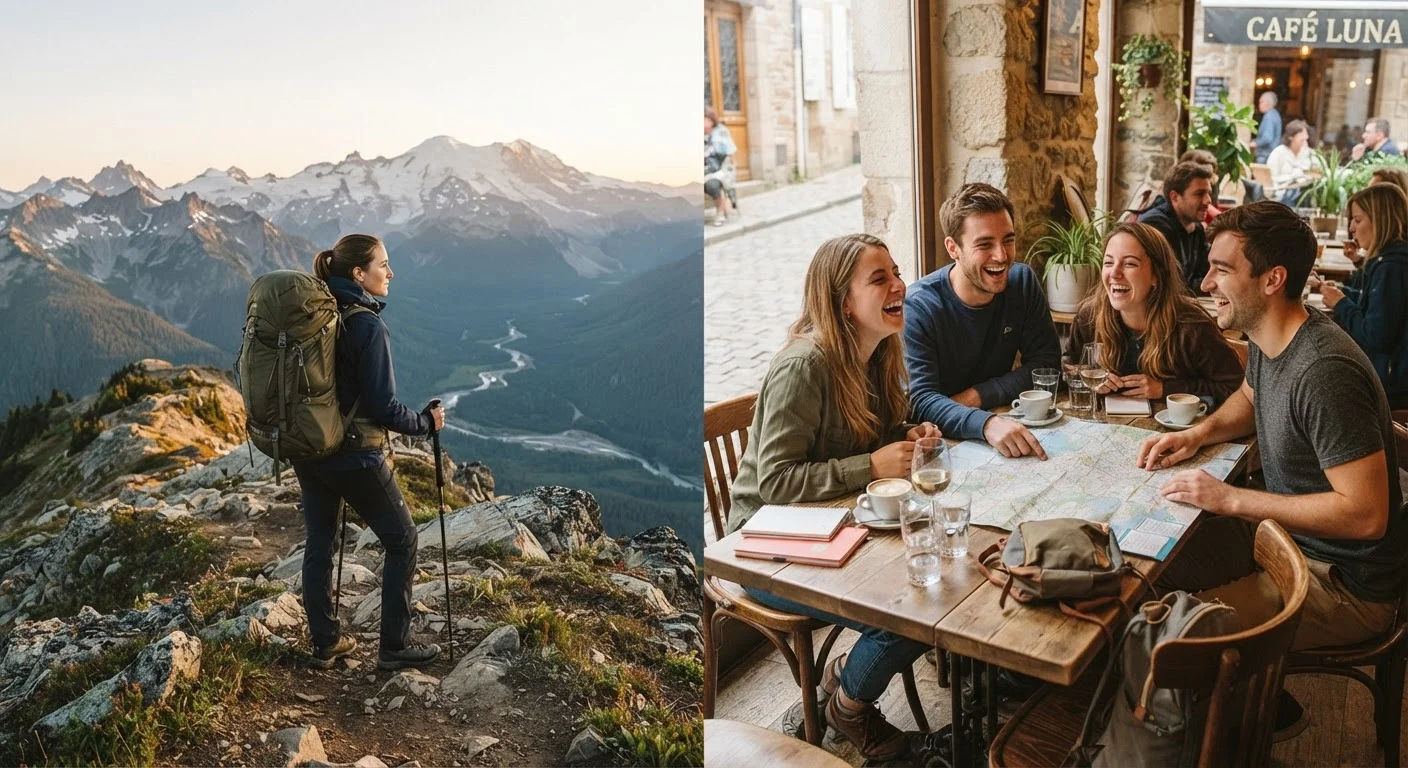
Neither solo nor group travel is universally better - the right choice depends on your budget, social preferences, and how much itinerary control matters to you. Solo travel rewards those who prioritize freedom and self-discovery, while group travel works best for travelers who value shared experiences and cost efficiency. Many seasoned travelers shift between both formats depending on the destination and trip goal.
| Best for | Recommended |
|---|---|
| Travelers who want complete itinerary freedom and self-paced exploration | Solo Travel |
| First-timers who want built-in support and shared logistics | Group Travel |
| Budget-conscious travelers splitting accommodation and transport costs | Group Travel |
| Those seeking deep personal immersion in a destination or culture | Solo Travel |
Why the Solo vs. Group Decision Matters More Than You Think
Choosing to travel alone or with others doesn't just affect who you share a dinner table with - it shapes your budget, your daily schedule, your safety calculus, and even the kinds of experiences you're likely to have. For first-time and casual travelers, this decision is often made impulsively, based on who happens to be available. But approaching it intentionally can make the difference between a trip that energizes you and one that leaves you frustrated.
Understanding the genuine trade-offs - not just the Instagram version of each - is where good trip planning starts. For a broader foundation, the Travel Essentials hub covers the core logistics every traveler should sort before departure.
| Solo Travel | Group Travel | |
|---|---|---|
| Cost per person | Often higher (single supplements, no cost-splitting) | Often lower (shared rooms, rental cars, tours) |
| Itinerary flexibility | Complete - change plans anytime | Limited - requires group consensus |
| Built-in social support | None - must be created independently | Yes - travel companions provide backup |
| Depth of local engagement | High - solo travelers interact with locals more readily | Lower - group dynamic can create an insular bubble |
| Logistics complexity | Simpler - one person's decisions | More complex - coordinating multiple schedules and preferences |
| Ideal experience style | Self-directed, immersive, spontaneous | Shared, celebratory, collaborative |
Cost and Budget: Where the Numbers Really Land
One of the most common misconceptions is that solo travel is automatically cheaper because you're only paying for yourself. In practice, solo travelers frequently pay a single supplement - an extra charge hotels and tour operators add when a room or package designed for two is occupied by one person. This can add 25-50% to accommodation costs on some tours.
Group travel, by contrast, allows costs to be divided across multiple people: shared Airbnbs, split rental car fees, and group tour packages that spread fixed costs across more participants. A group of four splitting a vacation rental often pays significantly less per person than four solo hotel bookings.
The flip side: groups tend to spend more on dining out together and coordinated activities, and one person's splurge can create social pressure on others. Solo travelers control every spending decision themselves - there's no peer dynamic nudging you toward the expensive restaurant. For more on how planning choices affect your wallet, see how DIY vs. package travel changes your budget equation.
Flexibility, Pace, and Itinerary Control
Solo travel's most celebrated advantage is the ability to pivot on a whim. Stumble across a compelling local festival? Stay an extra day. Feel like skipping the museum everyone else loves? No negotiation needed. This kind of freedom is genuinely meaningful, especially for travelers who are energized by spontaneity.
Group travel demands coordination. Even among close friends, aligning schedules, energy levels, budget comfort zones, and activity preferences takes real effort. Someone always wants to leave earlier; someone always wants to stay longer. This isn't a flaw so much as a feature: compromise and shared planning can actually deepen group bonds, and many travelers find that the collective excitement of a group enhances the experience.
A Hybrid Approach Often Works Best
Many experienced travelers book solo but plan overlapping days with friends already in the destination. This gives you the freedom of solo planning while building in social time without the full coordination burden of a joint trip. It's especially effective in popular cities where friends are more likely to already be traveling.
Seasonality affects both formats. A solo trip during a crowded peak season can feel isolating in an overwhelming way, while an off-season group trip might find more things closed than expected. How seasonality shapes every part of your trip is worth reading before you commit to dates.
Safety, Confidence, and Social Experience
Safety perceptions around solo travel - particularly for those traveling alone for the first time - are often shaped more by anxiety than by evidence. That said, practical safety differences do exist. Solo travelers have no built-in backup if something goes wrong: a missed flight, a health issue, or a theft is handled alone. Groups provide a natural support network.
For solo travelers, that support network needs to be built intentionally: sharing itineraries with someone at home, staying in social accommodation, and keeping communication reliable. Our companion piece Common Myths About Travelling Safely as a Solo First-Timer separates real risk factors from outdated assumptions.
Socially, solo travel pushes you to engage with strangers - locals, fellow travelers, hostel roommates - in ways that group bubbles often prevent. Group travelers, meanwhile, arrive with ready-made company but may find it harder to connect authentically with a destination or its people. There's also a meaningful psychological dimension: some people find solo time restorative; others find it draining. Understanding the difference between solitude and loneliness can help you gauge which category you're in before committing to a solo trip.