

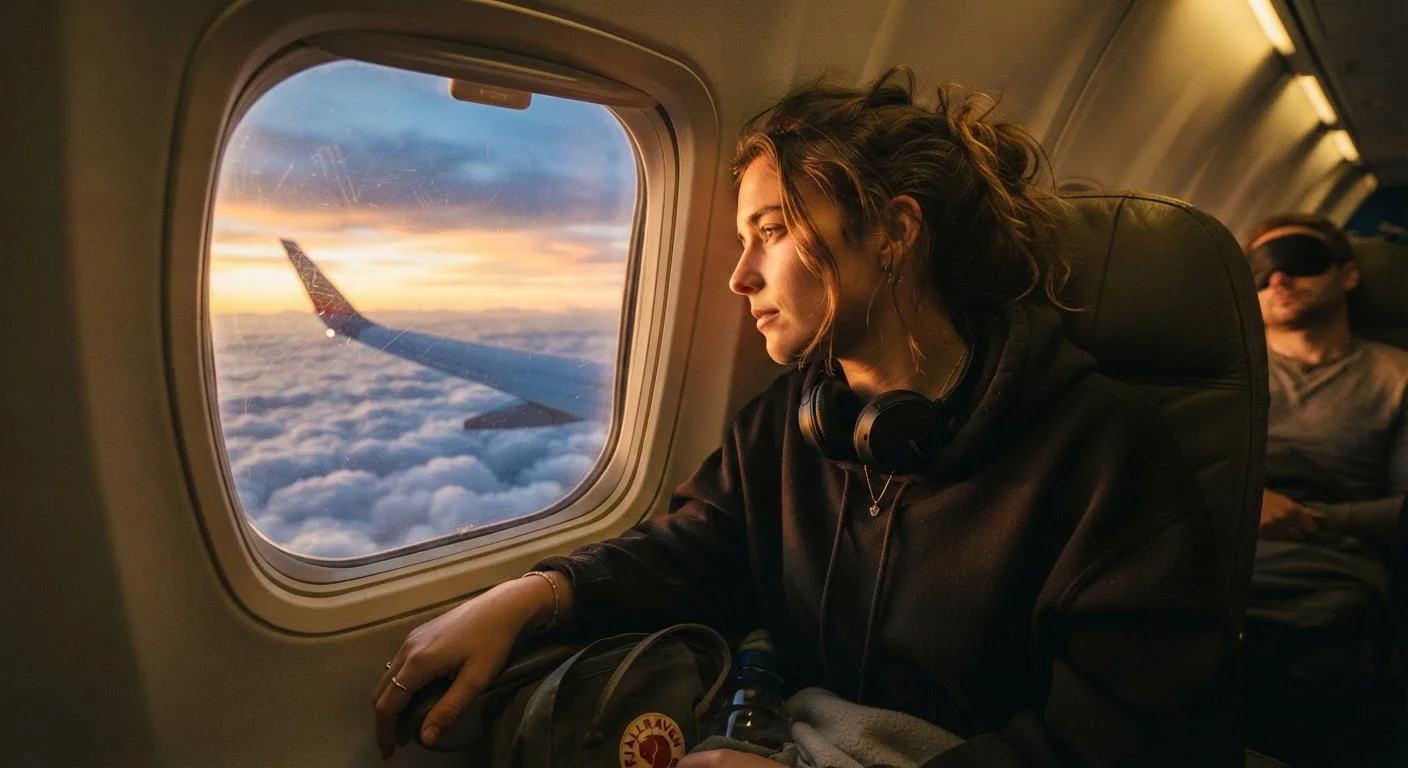
Key Takeaways
Jet Lag
Jet lag is a temporary condition caused by traveling rapidly across multiple time zones, leaving your body's internal clock out of sync with the local environment. It's not simply tiredness from a long flight - it's a physiological mismatch between your biological rhythms and the new day-night cycle around you. Symptoms commonly include difficulty sleeping, daytime fatigue, trouble concentrating, and digestive upset.
Jet lag is formally classified as a circadian rhythm sleep disorder (CRSD). The circadian clock - governed largely by a region of the brain called the suprachiasmatic nucleus (SCN) - takes time to realign to new light-dark cues after rapid transmeridian travel.
What Your Body Clock Actually Is
Deep inside your brain sits a tiny cluster of neurons called the suprachiasmatic nucleus (SCN) - your body's master clock. It coordinates nearly every biological rhythm you have: when you feel sleepy, when your core temperature peaks, when your digestive system ramps up, and even when certain hormones are released. This clock runs on roughly a 24-hour cycle, kept accurate by a powerful external cue: light.
When light hits the retina, that signal travels directly to the SCN, which then signals the brain to suppress melatonin (the hormone associated with sleepiness) and boost alertness. Come darkness, melatonin rises and your body prepares for rest. This beautifully calibrated system works perfectly - until you step off a plane in a city where it's 9 a.m. and your body is convinced it's 2 a.m.
Your Clock Isn't Just in Your Brain
Recent research has shown that nearly every cell in the body contains its own peripheral clock, synchronized by the master clock in the SCN. This means organs like the liver, gut, and heart all maintain their own timekeeping - and they don't all reset at the same speed after travel. It's one reason why digestive symptoms and mood effects can linger even after you start sleeping normally at a destination.
Why Time Zone Crossings Cause Real Physical Symptoms
When you fly rapidly across time zones, your SCN hasn't received the light signals it needs to reset. Your internal clock is still operating on home time, but the external world - meals, sunlight, activity - is running on destination time. That mismatch creates a cascade of physiological conflict.
Common symptoms include:
- Insomnia or fragmented sleep - your body wants to sleep when it's light outside, or stay awake when the local clock says midnight.
- Daytime fatigue and brain fog - concentration and reaction time can genuinely suffer.
- Digestive disruption - hunger signals, bowel habits, and even stomach acid secretion follow the internal clock, not local mealtimes.
- Mood changes - irritability and low mood are reported frequently, likely linked to disrupted hormone cycles.
Eastward travel is typically harder than westward because advancing your clock (sleeping earlier) fights your body's natural drift. Your circadian rhythm runs slightly longer than 24 hours, so delaying sleep is more natural than accelerating it.
~1 day
Recovery time needed per time zone crossed
A commonly cited clinical rule of thumb - though individual recovery varies based on health, age, and flight direction.
24.2 hrs
Average natural human circadian period length
Research published in the journal Science found the average human circadian cycle runs slightly longer than 24 hours, helping explain why westward travel is easier to adapt to.
50%+
Of long-haul travelers report jet lag symptoms
Estimates vary, but multiple travel medicine reviews suggest the majority of passengers crossing five or more time zones experience meaningful circadian disruption.
How the Body Gradually Resets
The good news: your body is designed to adapt. The SCN recalibrates primarily through photic entrainment - the process of resetting via light exposure. When you arrive at your destination, the most powerful thing you can do is expose yourself to natural daylight during local morning hours. This directly signals the SCN to start shifting your clock forward or backward to match the new environment.
Exercise, meal timing, and social activity serve as secondary cues called zeitgebers (German for "time givers"). Eating at local mealtimes, engaging with the environment, and keeping active during daylight hours all help nudge the clock in the right direction. Conversely, hiding in a dark hotel room during the day or sleeping through morning light will slow down the process.
Most travelers see meaningful improvement within two to three days for short hauls, and up to a week after a very long transmeridian flight. For longer trips, some travelers begin adjusting their sleep schedule by 30-60 minutes per day in the days before departure - though this takes planning and discipline.
If you'll be sitting for extended periods during your flight, it's worth knowing that prolonged immobility carries its own effects on the body. Learn more about countering the effects of long periods of sitting and consider simple movement habits during your flight.
Practical Habits That Support Adjustment
While there's no shortcut past biology, several evidence-informed habits can reduce severity and speed recovery. These are general principles - always consult a healthcare professional before making changes based on your personal health circumstances.
Before You Leave
- Arrive well-rested. Starting the trip sleep-deprived makes every symptom worse.
- Consider gradually shifting bedtime 30 minutes earlier or later over a few days, depending on travel direction.
During the Flight
- Set your watch to destination time immediately and start thinking in local terms.
- Stay well hydrated - airplane cabins are notoriously dry, and dehydration amplifies fatigue.
- Limit alcohol and excess caffeine, both of which interfere with sleep quality.
- Move around when it's safe; even light stretching in your seat helps circulation.
After Arrival
- Seek morning sunlight at your destination - this is the single most effective reset tool available.
- Resist the urge to nap for long periods during the day, which can deepen the cycle of disruption.
- Eat meals on local time, even if hunger signals feel misaligned.
Long layovers can also factor into how worn down you arrive - see what new travelers should know about airport layovers to make connection time work in your favor.
One more consideration often overlooked: screen use. Blue-light exposure at the wrong time can suppress melatonin and delay your clock adjustment. Read about how evening screen exposure affects sleep quality for context that applies just as much at your destination as at home.
This article is for general informational purposes only and is not medical advice. If you have health conditions or concerns about travel-related sleep disruption, consult a qualified healthcare professional before your trip.