

Key Takeaways
Blue Light & Sleep Disruption
Blue light is a type of light emitted by smartphones, tablets, computer monitors, and LED televisions. Your brain interprets blue light as a signal that it's daytime, which can delay the release of melatonin - the hormone that tells your body it's time to sleep. Using screens in the evening may therefore shift your internal clock and make falling asleep harder.
Blue light wavelengths (roughly 450-490 nm) are particularly effective at suppressing melatonin via retinal photoreceptors called intrinsically photosensitive retinal ganglion cells (ipRGCs), which feed directly into the brain's circadian timing system.
What Happens in Your Brain When You Look at a Screen at Night
Your body runs on a roughly 24-hour internal clock called the circadian rhythm. One of its most important jobs is coordinating the release of melatonin from the pineal gland - a process that normally begins a couple of hours before your habitual bedtime as natural light fades.
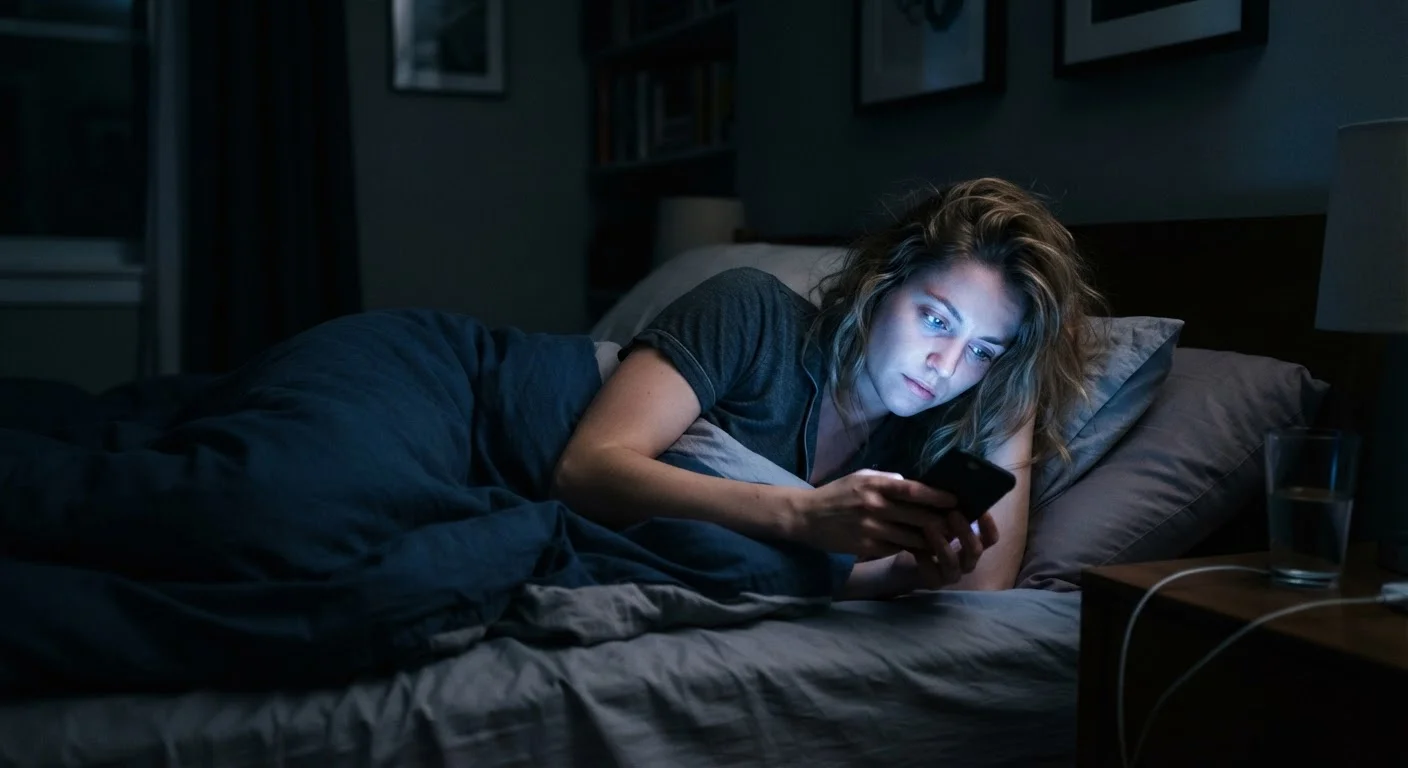
Screens interfere with this process because they emit blue-wavelength light, which the brain reads as daylight. When your eyes detect this light in the evening, the melatonin release is delayed. The result: your body's internal signal to sleep arrives later than it should, making it genuinely harder to fall asleep at your intended time - not just a matter of willpower.
This is the same underlying mechanism that causes travelers to struggle with jet lag when their light exposure pattern shifts suddenly. The physiological effects of light on your internal clock are well established in circadian science.
Individual Sensitivity Varies Considerably
Not everyone responds to evening screen use in the same way. Factors like screen brightness, the distance you hold a device from your face, how long you use it, and your own biological sensitivity all influence the degree of impact. If you've tried reducing screen time and still struggle with sleep, other factors - stress, caffeine, sleep environment, or an underlying sleep condition - may be involved. A healthcare provider can help identify the cause.
It's Not Just the Light - Content Matters Too
Blue light is only part of the picture. What you're watching or reading also affects how alert your brain stays. Scrolling through emotionally charged social media posts, reading breaking news, or watching suspenseful content activates your nervous system in ways that make the transition to sleep difficult - regardless of the screen's color temperature.
Research in sleep science consistently points to arousal - mental and emotional stimulation - as a key barrier to sleep onset. A screen set to warm night-mode can still keep you wide awake if the content is engaging or stressful. This is worth keeping in mind if you've tried blue light filters and found them less helpful than expected.
For a broader look at how the quality of your sleep routine compares to simply getting enough hours, the relationship between sleep hygiene and sleep quantity is worth understanding.
Practical Changes That Actually Support Better Sleep
You don't need a dramatic overnight overhaul to start improving your sleep environment. Small, consistent adjustments tend to be more sustainable than rigid rules. Here are some well-supported starting points:
- Create a screen buffer: Aim to finish screen-intensive activities 30-60 minutes before bed. Use that window for something less stimulating - light reading, gentle stretching, or a brief journaling practice.
- Dim your screen brightness: Lower brightness settings reduce the intensity of light reaching your eyes in the evening, even if you're still using a device.
- Enable warmer display settings: Night mode or warm color filters on your devices shift the screen's output away from cooler blue wavelengths. It's not a complete fix, but it can help at the margins.
- Charge devices outside the bedroom: Removing screens from the sleep environment reduces temptation and reinforces your bedroom as a space associated with rest.
Start With One Small Change Tonight
If giving up screens entirely before bed feels unrealistic, try a single adjustment: plug your phone in to charge outside your bedroom 20 minutes before your usual bedtime. This one change removes the device from arm's reach without requiring a complete routine overhaul, and it's a sustainable first step toward a calmer wind-down.
Whatever changes you make, consistency matters more than perfection. Even shifting screen use 20 minutes earlier each night can gradually nudge your wind-down routine in a healthier direction.
Poor sleep doesn't just affect how tired you feel - it has downstream effects on mood and emotional regulation. Understanding how sleep shapes emotional resilience can be a useful motivator for taking your wind-down routine seriously.
This article is for general informational purposes only and is not a substitute for professional medical advice. If you have persistent sleep difficulties, consult a qualified healthcare provider.