

| US Passport Validity (Adults) | 10 years (US Department of State) |
| US Passport Validity (Under 16) | 5 years (US Department of State) |
| Common Passport Validity Requirement Abroad | 6 months beyond travel dates (Standard requirement in many countries; verify per destination) |
| Countries in Visa Waiver Program (approx.) | 40+ (US Department of Homeland Security) |
| REAL ID Domestic Air Travel Deadline | May 7, 2025 (US Department of Homeland Security) |
| US Emergency Passport Processing | Available for imminent travel (US Department of State - appointment required) |
Why Travel Document Vocabulary Matters
Standing at an airline check-in counter and realizing you're unsure whether your passport is "valid enough" - or discovering you needed an eTA you never applied for - is a stressful way to start any trip. The good news: these terms are easy to understand once someone explains them plainly.
This reference guide breaks down the essential travel document terminology you'll encounter from the moment you plan an international trip to the moment you clear customs at your destination. Whether you're heading abroad for the first time or brushing up on entry requirements, understanding these terms builds the quiet confidence that makes departure day feel manageable. See our first international trip guide for a broader overview of the full planning process.
| US Passport Validity (Adults) | 10 years (US Department of State) |
| US Passport Validity (Under 16) | 5 years (US Department of State) |
| Common Passport Validity Requirement Abroad | 6 months beyond travel dates (Standard requirement in many countries; verify per destination) |
| Countries in Visa Waiver Program (approx.) | 40+ (US Department of Homeland Security) |
| REAL ID Domestic Air Travel Deadline | May 7, 2025 (US Department of Homeland Security) |
| US Emergency Passport Processing | Available for imminent travel (US Department of State - appointment required) |
Core Document Terms: Passport, Visa, and Authorization
Your passport is the foundation of all international travel - it's your government-verified proof of who you are and where you're from. But a passport alone doesn't guarantee entry everywhere. Many destinations also require a visa, which is essentially a permission slip from the foreign government granting you the right to enter for a defined purpose (tourism, business, study) and a defined period.
Some countries have replaced the traditional visa with an eTA (Electronic Travel Authorization) for visa-exempt travelers. Canada and Australia use this system. An eTA is applied for online before departure, costs a small fee, and is tied electronically to your passport number - you never receive a physical stamp. It sounds simple, but travelers who miss this step can be denied boarding.
A transit visa is a lesser-known requirement that catches many first-timers off guard. If you have a layover in a country that requires transit visas from your nationality - even if you never leave the airport - you may need one. Always check the rules for every country your flight touches down in, not just your final destination. The article What Visa-Free Travel Actually Means is an excellent companion read on this nuance.
Always Verify With Official Sources
Document requirements - including visa rules, eTA fees, and passport validity thresholds - change frequently and vary by nationality. Before any international trip, check the official entry requirements for your destination through the US Department of State's travel portal (travel.state.gov) and the destination country's official immigration authority. This article provides general education, not legal or immigration advice.
Passports Up Close: Validity, Biometrics, and What to Check
Not all passports in your drawer are usable, even if they haven't technically expired. Passport validity requirements set by destination countries often demand that your passport remain valid for six months beyond your planned return date - meaning a passport expiring two months after your trip could still get you denied boarding.
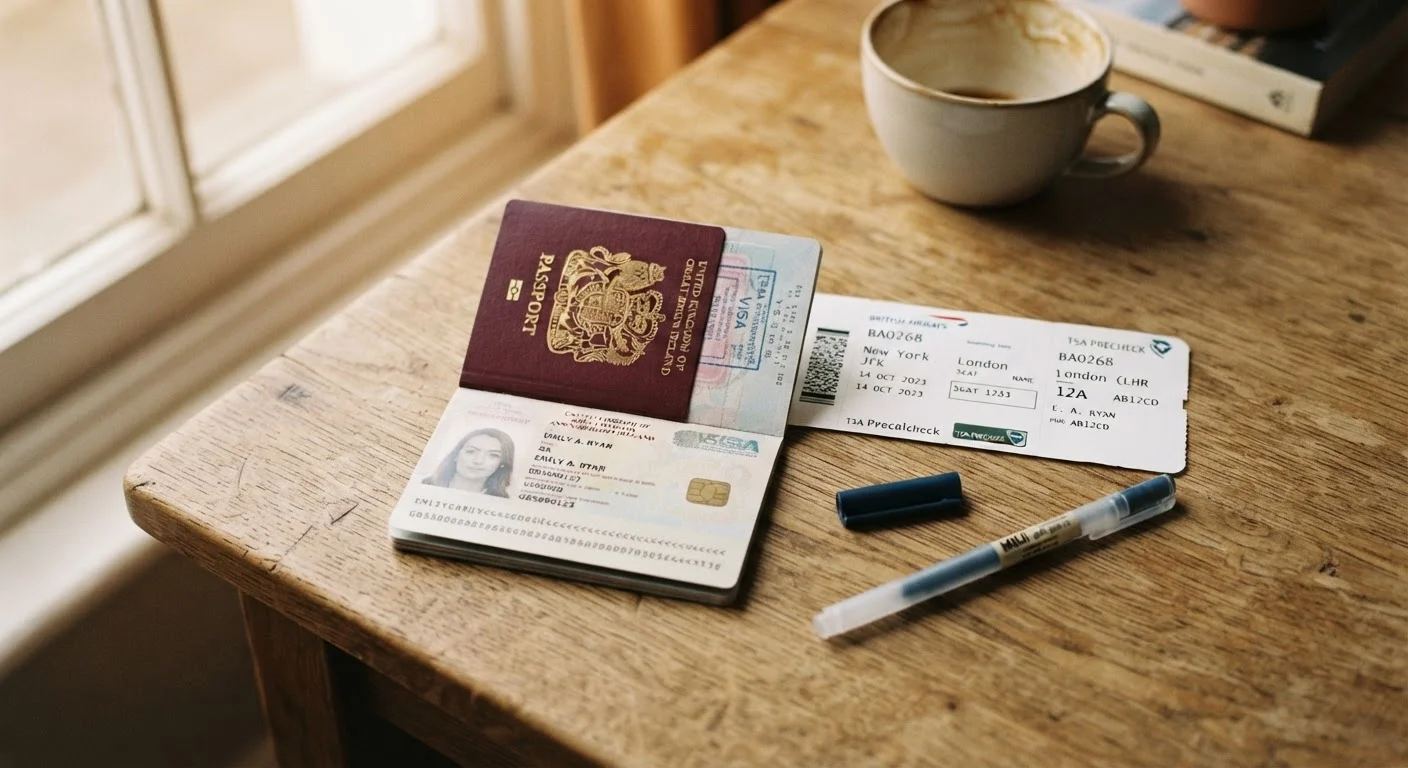
The biometric passport (sometimes printed as "e-Passport") is the current US standard. The small gold symbol on the cover indicates the embedded chip. This chip enables automated passport kiosks at many international airports - making arrivals faster and reducing queuing at immigration. If your US passport was issued after 2007, it is biometric.
Before any trip, physically open your passport and check: the expiration date, that your name matches your ticket exactly, and that no pages are torn or heavily damaged. Border agents can deny entry for a passport that appears tampered with or damaged, regardless of validity.
Domestic ID, Customs, and Arrival Terms
For travel within the United States, your state driver's license has historically been enough for airport security - but that's changing. A REAL ID-compliant license (look for a star in the upper corner) is now required for domestic air travel. A standard, non-compliant ID will no longer be accepted at TSA checkpoints after the federal deadline. If you're unsure whether your license qualifies, your state's DMV website will tell you.
Once you land internationally, you'll move through a port of entry - the official checkpoint where immigration officers verify your documents and eligibility. After that, you'll typically complete a customs declaration form, disclosing what you're bringing into the country. Failing to declare required items accurately is a legal violation, not a technicality - always fill this out honestly.
Finally, if you ever face an emergency abroad - a lost or stolen passport, for example - consular services from the nearest US embassy or consulate are your lifeline. Register your trip in advance at the State Department's Smart Traveler Enrollment Program (STEP) so they can reach you in a crisis. Once you've got the vocabulary down, a practical next step is running through our pre-departure checklist before you leave.