
Why Europeans and Americans Often Experience the Same City Completely Differently

Key Takeaways
Cultural Travel Perception Gap
The cultural travel perception gap describes how travelers from different countries - shaped by different habits, expectations, and daily norms - often experience the identical destination in fundamentally different ways. What feels relaxingly slow to a European visitor might feel frustratingly inefficient to an American, and vice versa. Neither reaction is wrong; both are shaped by deeply ingrained assumptions about how cities, services, and social life should work.
Researchers in cross-cultural psychology sometimes call this 'cultural schema interference' - the way existing mental frameworks filter and interpret unfamiliar environments.
The Invisible Assumptions We Carry When We Travel
Every traveler arrives somewhere with invisible luggage: a set of assumptions about how cities work, how services operate, and how people interact. For Americans visiting Europe, those assumptions were built by a lifetime of US-specific experiences - big roads, 24-hour convenience, service-industry tipping culture, and suburban sprawl. European cities weren't designed with any of that in mind.
This isn't a flaw on either side. It's simply the result of two distinct urban traditions colliding. Common myths about travel planning often trace back to exactly this mismatch - travelers expecting one type of experience and finding something genuinely different.
“Travel is fatal to prejudice, bigotry, and narrow-mindedness, and many of our people need it sorely on these accounts.”
— Mark Twain, American author, 'The Innocents Abroad' (1869)
Transit, Pace, and the Art of Going Slower
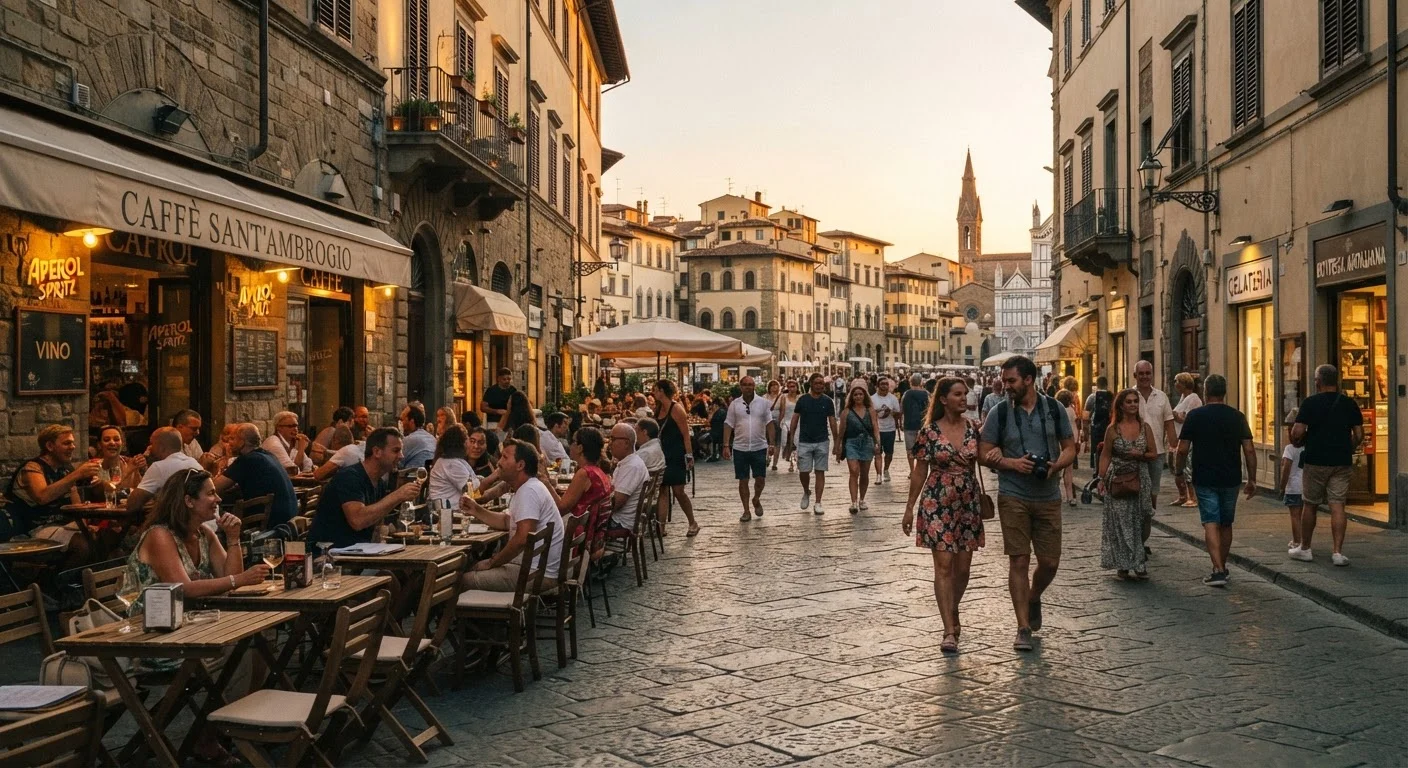
One of the first things American visitors notice is that European city life moves at a different cadence. Meals are longer. Afternoons are quieter. Transit runs on fixed schedules with zero apology. In southern Europe especially - Spain, Italy, Portugal - midday closures can catch visitors off-guard if they haven't planned around them.
For a deeper feel for how this plays out regionally, our traveler's orientation to Portugal captures exactly how local rhythms shape the experience on the ground.
European transit systems are also a significant adjustment. Cities like Paris, Berlin, and Amsterdam have dense, reliable metro and tram networks that locals navigate without thinking twice. For Americans used to driving everywhere, that first experience of boarding the right train confidently can feel like a genuine accomplishment - and it gets easier fast.
72%
Americans who own at least one vehicle
According to Gallup polling data, the vast majority of American households are car-dependent, which shapes expectations about urban mobility before traveling abroad.
45+ days
Minimum paid leave in several EU countries
Many European workers receive significantly more statutory vacation time than their American counterparts, influencing a broader cultural acceptance of leisure, slower pacing, and extended meals.
54 countries
Nations on the African continent
Referenced here as a reminder that generalizing any region - including Europe - obscures enormous internal variation in culture, infrastructure, and travel experience.
Tipping, Service Culture, and Unspoken Rules
Perhaps no single habit generates more confusion than tipping. In the US, tipping isn't optional - it's a structural part of how service workers are compensated. In most of Europe, it ranges from optional to mildly unusual, depending on the country. Handing over an American-style 20% tip in a small Parisian bistro or a Lisbon café might surprise your server more than delight them.
That doesn't mean service is worse in Europe - it's just built on a different economic model. Servers often earn regulated wages and aren't dependent on tips to make rent. The trade-off is that the hyper-attentive, check-back-every-five-minutes American diner experience is largely absent. In Europe, the table is yours for the evening. Many Americans initially read this as inattentiveness; regulars come to see it as genuine hospitality.
Reading a destination's culture before you arrive is one of the most effective ways to sidestep these small but meaningful misreads.
What Makes This Gap Worth Understanding
Recognizing the cultural perception gap isn't about judging one system as better. It's about releasing the expectation that a Lisbon neighborhood should feel like a well-run American suburb, or that a Berlin transit system should mirror a US airport shuttle. When you stop measuring an experience against a different context, you start actually seeing the place you're in.
Seasonality adds another layer to this - how a European city feels in August versus November can be dramatically different, affecting crowds, service, and local character. Our guide on how seasonality shapes every part of your trip breaks down how to factor that into your planning.
The travelers who tend to enjoy Europe most aren't the ones who came prepared with the most money or the most elaborate itineraries. They're the ones who arrived curious, stayed flexible, and let the city work on its own terms. That shift in approach - from consumer to participant - is available to any American traveler willing to make it.
Adjust Your Clock, Not Your Expectations
Before your trip, spend a few days mentally shifting your schedule. If you're heading somewhere in southern Europe, practice eating dinner an hour or two later than normal and planning any shopping for morning hours. Small mental rehearsals like this make the real adjustment on the ground feel far less jarring - and much more fun.