

Key Takeaways
Northern lights viewing is exclusively a winter phenomenon
The aurora borealis requires darkness, which Iceland only has from roughly September through March. Winter months offer the longest dark windows, maximizing the statistical chance of a sighting - though cloud cover means it's never guaranteed.
Glacial ice caves are only safe and open in winter
Natural ice caves inside Vatnajökull are a winter-only experience, as the ice becomes unstable and dangerous in warmer months. Guided tours typically run from November through March, conditions permitting.
Fewer tourists at major sites and lower accommodation costs
Outside of the Christmas holiday period, winter sees significantly fewer visitors. This translates to a calmer experience at iconic locations and, in many cases, lower pricing on lodging and tours.
Dramatic winter landscapes and frozen waterfalls
Snow-dusted lava fields, partially frozen waterfalls, and crisp winter light create a visual atmosphere that is entirely distinct from summer. Many photographers specifically prefer the low-angle winter sun.
Daylight is severely limited in deep winter
At the winter solstice, Reykjavík receives only around four hours of daylight. Sightseeing windows are short, and driving in darkness on unfamiliar Icelandic roads adds an additional layer of difficulty.
Highland F-roads and interior routes fully closed
Iceland's famous interior Highlands are inaccessible in winter - road closures are official and enforced. Destinations like Landmannalaugar and Þórsmörk require summer or early autumn visits.
Storms can disrupt travel with very little notice
Winter weather in Iceland can escalate rapidly, closing the Ring Road and suspending flights. Flexibility in itinerary and travel insurance that covers disruption are both worth serious consideration.
Summer brings peak pricing and significant crowds
June through August is Iceland's most expensive period. Popular south-coast accommodations often sell out months in advance, and iconic sites can feel far less serene than travel photography suggests.
Midnight sun disrupts sleep patterns for many visitors
Continuous daylight around the June solstice is disorienting for travelers not acclimated to it. Even with blackout curtains, circadian rhythms can take several days to adjust.
No aurora viewing is possible in summer
The absence of darkness from late May through late July makes northern lights sightings impossible. Travelers whose primary goal is the aurora must avoid this window entirely.
Our Verdict
Neither season is definitively better - they deliver fundamentally different experiences of the same island. Winter rewards aurora-chasers and solitude-seekers willing to work around short daylight and road closures. Summer suits road-trippers and hikers who want maximum access and long daylight to explore every corner of the island.
Winter is best for travelers prioritizing the northern lights, lower accommodation costs, and quieter sites; summer is best for those wanting full Highland access, extended daylight, and a more predictable driving experience.
Why the Season You Choose Shapes Everything
Iceland doesn't offer mild seasonal variation - it swings between polar extremes, and those extremes dictate what you can see, where you can drive, and what the trip feels like day to day. For American travelers making a transatlantic journey, the season choice is one of the highest-stakes decisions in the whole planning process.
Seasonality shapes every part of a trip, from accommodation pricing to which roads are passable - and Iceland is perhaps the most dramatic example of that principle anywhere in Europe. Understanding the honest trade-offs upfront means fewer surprises once you land in Reykjavík.
The Case for Visiting in Winter (November-March)
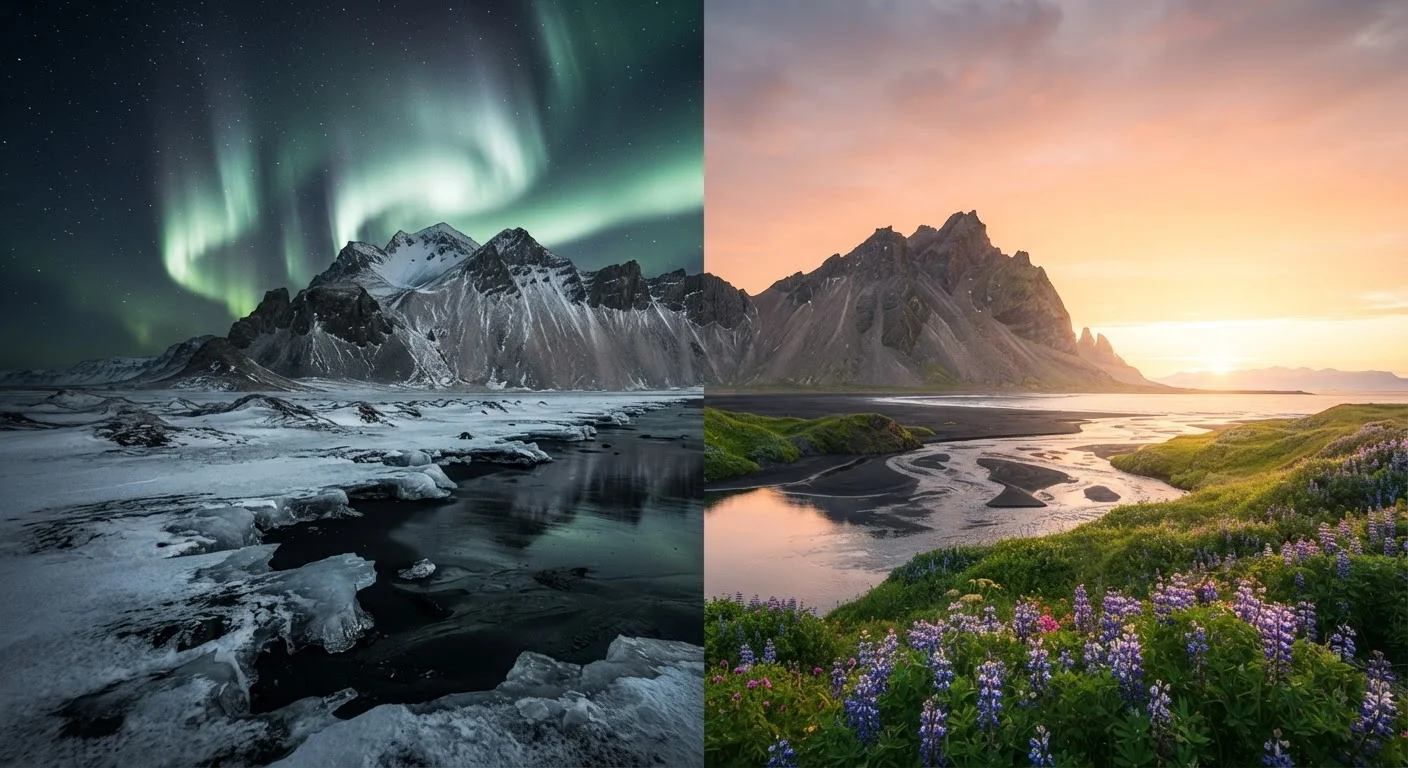
Iceland's winter season draws a specific kind of traveler, and for good reason. The northern lights - technically the aurora borealis - are only visible in genuine darkness, which means late autumn through early spring is the only window when they're possible at all. If witnessing that phenomenon is the primary goal, winter is not optional.
Northern lights viewing is exclusively a winter phenomenon
The aurora borealis requires darkness, which Iceland only has from roughly September through March. Winter months offer the longest dark windows, maximizing the statistical chance of a sighting - though cloud cover means it's never guaranteed.
Glacial ice caves are only safe and open in winter
Natural ice caves inside Vatnajökull are a winter-only experience, as the ice becomes unstable and dangerous in warmer months. Guided tours typically run from November through March, conditions permitting.
Fewer tourists at major sites and lower accommodation costs
Outside of the Christmas holiday period, winter sees significantly fewer visitors. This translates to a calmer experience at iconic locations and, in many cases, lower pricing on lodging and tours.
Dramatic winter landscapes and frozen waterfalls
Snow-dusted lava fields, partially frozen waterfalls, and crisp winter light create a visual atmosphere that is entirely distinct from summer. Many photographers specifically prefer the low-angle winter sun.
Beyond the aurora, winter Iceland is quieter. Iconic locations like Jökulsárlón glacier lagoon and the Golden Circle route see dramatically reduced foot traffic. That solitude has real value, and accommodation prices outside of the holiday peak often reflect it.
Ice caves inside Vatnajökull glacier - the largest glacier in Europe - are only safe and accessible during winter months when the ice stabilizes. These are genuinely once-in-a-kind geological experiences that simply don't exist in summer.
The Real Costs of Choosing Winter
Winter honesty requires acknowledging the significant constraints. Daylight in January runs to roughly four to five hours in Reykjavík, which compresses sightseeing into a narrow window and can feel disorienting for travelers from lower latitudes.
Daylight is severely limited in deep winter
At the winter solstice, Reykjavík receives only around four hours of daylight. Sightseeing windows are short, and driving in darkness on unfamiliar Icelandic roads adds an additional layer of difficulty.
Highland F-roads and interior routes fully closed
Iceland's famous interior Highlands are inaccessible in winter - road closures are official and enforced. Destinations like Landmannalaugar and Þórsmörk require summer or early autumn visits.
Storms can disrupt travel with very little notice
Winter weather in Iceland can escalate rapidly, closing the Ring Road and suspending flights. Flexibility in itinerary and travel insurance that covers disruption are both worth serious consideration.
Summer brings peak pricing and significant crowds
June through August is Iceland's most expensive period. Popular south-coast accommodations often sell out months in advance, and iconic sites can feel far less serene than travel photography suggests.
Midnight sun disrupts sleep patterns for many visitors
Continuous daylight around the June solstice is disorienting for travelers not acclimated to it. Even with blackout curtains, circadian rhythms can take several days to adjust.
No aurora viewing is possible in summer
The absence of darkness from late May through late July makes northern lights sightings impossible. Travelers whose primary goal is the aurora must avoid this window entirely.
The Icelandic interior - known as the Highlands - is entirely closed in winter. The famous F-roads (unpaved mountain tracks requiring four-wheel drive) are inaccessible, cutting off destinations like Landmannalaugar and the Kjölur route. If Highland access is on the wish list, winter rules it out completely.
Storm systems can close roads across the entire island with little warning. The Icelandic Met Office (veður.is) is an essential daily resource, but even experienced local drivers get caught out. Rental car terms for winter driving in Iceland also tend to be stricter - verify coverage conditions carefully before departure. For a broader look at how weather should factor into route planning, see planning around weather for road trips.
The Case for Visiting in Summer (June-August)
Summer Iceland operates on a different logic entirely. The midnight sun - continuous daylight around the summer solstice - means a hike at 11 p.m. is as illuminated as one at noon. That extended light opens up a pace of travel that's impossible in winter, especially for road-trippers tackling the Ring Road (Route 1) around the entire island.
~4 hrs
Daylight hours in Reykjavík at winter solstice
Iceland's latitude places it just south of the Arctic Circle, resulting in extremely short days in December and January that directly limit sightseeing time.
24 hrs
Effective daylight near the summer solstice
Around June 21st, Reykjavík experiences the midnight sun, with the sun dipping below the horizon only briefly - enabling round-the-clock outdoor activity.
Nov-Mar
Primary aurora viewing window
Darkness sufficient for aurora viewing generally returns to Iceland from late September, with peak aurora season considered to run November through March when nights are longest.
All F-roads and Highland routes open, generally from mid-June through early September depending on conditions. Waterfalls run at full volume fed by snowmelt, wildflowers cover the lava fields, and puffin colonies are active on coastal cliffs. The sheer physical accessibility of the island reaches its annual peak.
For travelers who enjoy flexible, self-planned itineraries, summer provides the most room to adapt. The differences between package and DIY travel matter here - summer's infrastructure supports independent exploration better than any other season.
The Real Costs of Choosing Summer
Iceland's summer popularity is not a secret. June through August brings the highest visitor volumes of the year, which means the country's most photogenic spots - Seljalandsfoss waterfall, the Diamond Beach at Jökulsárlón, Geysir - are shared with significant crowds. Early-morning starts or late-evening visits help, but the island is genuinely busy.
Accommodation and flight prices peak in summer, sometimes substantially above winter rates. Booking months in advance is essentially required for popular lodging near the south coast and in Reykjavík. The midnight sun, while extraordinary, also disrupts sleep for many visitors - blackout curtains are standard in Icelandic hotels, but light still creeps in.
Aurora Sightings Are Never Guaranteed
Even in peak winter, a northern lights sighting depends on three overlapping factors: sufficient solar activity, darkness, and clear skies. Iceland's weather is famously changeable, and cloud cover can obscure the aurora for multiple consecutive nights. Travelers who make the aurora the sole purpose of a trip are setting themselves up for potential disappointment - treating it as a wonderful possibility rather than a certainty makes for a much more enjoyable experience.
Summer travelers also need to weigh that the aurora is simply not visible. Iceland's appeal can feel narrowed to landscape rather than the sky-based spectacle that draws so many first-timers.
Shoulder Season: May and September as Middle Ground
May and September offer a genuine hybrid window. Daylight in May extends well past 9 p.m. and some F-roads begin opening by late May. September still carries long evenings alongside the first realistic aurora windows of the season as darkness returns. Prices begin easing from peak, and crowd levels drop noticeably after the first week of September.
The trade-off is unpredictability in both directions - a May snowstorm can still close Highland roads, and September weather can shift quickly. Understanding what shoulder season actually means by destination helps set realistic expectations rather than assuming the middle ground is simply the best of both worlds.
For most first-time visitors from the US, September is arguably the most consistently rewarding window: aurora potential is real, many summer attractions remain open, temperatures are manageable, and the dramatic autumn light quality on Iceland's landscapes is genuinely exceptional.