
New Zealand vs. Australia: Choosing Between Two Very Different Pacific Trips

Key Takeaways
Option A
New Zealand
The compact, adventure-packed wilderness escape.
Best for: Travelers craving dramatic, varied landscapes and outdoor adventure in a small, easy-to-navigate country.
Option B
Australia
The vast, multicultural continent-country with something for everyone.
Best for: Travelers who want a mix of world-class cities, unique wildlife, beach culture, and iconic outback scenery.
If you want dramatic, concentrated scenery and love being outdoors
New Zealand
From glaciers and fiords to volcanic plateaus, New Zealand delivers extraordinary variety in a compact space that's genuinely easy to road-trip through.
If you want a city-and-nature mix with a familiar, cosmopolitan feel
Australia
Cities like Sydney and Melbourne offer world-class food, culture, and beaches, making Australia a great fit for travelers who want urban comfort alongside natural highlights.
If this is your first long-haul international trip and you feel nervous about logistics
New Zealand
New Zealand's smaller scale, English-first culture, and well-marked tourism infrastructure make it one of the more forgiving first international destinations for Americans.
If you're passionate about unique wildlife and iconic bucket-list moments
Australia
Encounters with kangaroos, koalas, the Great Barrier Reef, and Uluru are genuinely hard to replicate anywhere else on earth.
If you're planning a two-week trip and want to feel like you've truly explored a place
New Zealand
Two weeks in New Zealand can realistically cover both the North and South Islands with time to breathe; two weeks in Australia barely scratches the surface.
The First Big Difference: Size and Scale
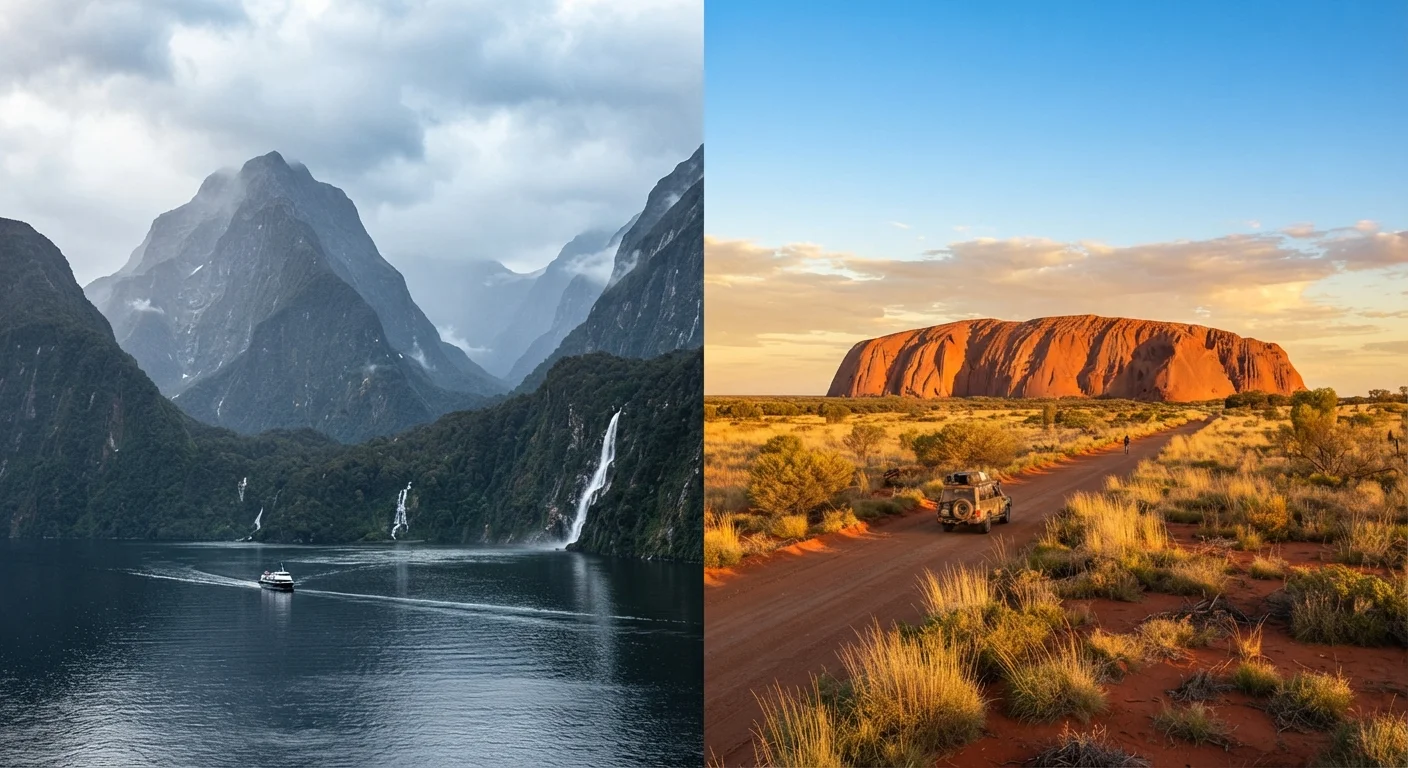
Before anything else, let size sink in. Australia is roughly the size of the contiguous United States. New Zealand, by contrast, is closer to the size of Colorado. That one fact reshapes everything from how you plan your itinerary to how satisfying a two-week trip feels when it's over.
In New Zealand, a well-planned road trip from Auckland to Queenstown via the South Island lets you experience volcanoes, glaciers, wine country, and fiords - all in a single trip. In Australia, flying from Sydney to the Great Barrier Reef to Uluru already puts you in three completely different corners of the country, with significant internal travel costs and time in between.
Neither approach is wrong, but they call for different mindsets. If you prefer depth over breadth and love the idea of a self-driven adventure through constantly changing scenery, New Zealand's scale is a gift. If you're drawn to a specific Australian icon - the Reef, the Red Centre, the Sydney Opera House - it makes more sense to anchor around that region rather than trying to see everything at once. For more on the logistics of hopping between multiple destinations, see what gets more complicated with multi-country trips.
| Criterion | New Zealand | Australia |
|---|---|---|
| Geographic size | Similar to Colorado | Similar to contiguous US |
| Ideal trip length | 2-3 weeks covers a lot | 2-3 weeks covers one region well |
| Primary draw | Outdoor adventure, dramatic landscapes | Cities, wildlife, reef, outback |
| Getting around | Self-drive road trip friendly | Internal flights often necessary |
| Cultural highlights | Māori culture, Polynesian heritage | Aboriginal culture, multicultural cities |
| Wildlife encounters | Unique birds (kiwi, kea), marine life | Kangaroos, koalas, Great Barrier Reef |
| Driving side | Left-hand traffic | Left-hand traffic |
| Best for first-timers | Very accessible, compact | Choose one region for best experience |
Landscapes, Experiences, and Travel Pace
New Zealand's terrain is almost theatrical in its variety. Within a day's drive you can move from geothermal mudpools to snow-capped peaks to vineyard-covered valleys. The country leans heavily into outdoor experiences: hiking (called tramping locally), bungee jumping, kayaking, and skiing all have a serious following here. Māori culture also adds a distinctive and deeply meaningful cultural layer unavailable anywhere else in the world.
Australia's experiences span a different register. Yes, the outback is awe-inspiring - and Uluru (Ayers Rock) carries profound cultural significance for the Anangu people - but Australia also offers a relaxed beach culture, globally celebrated food scenes in Melbourne and Sydney, and the sheer spectacle of the Great Barrier Reef, which remains one of the most biodiverse marine ecosystems on the planet despite facing environmental pressures.
Travel pace matters here too. New Zealand rewards slow, ground-level exploration. Australia often requires strategic selection: choose a region, go deep, and resist the temptation to cover the whole continent in one visit. Either way, thinking through whether you want a guided package or a self-planned trip will shape the experience - something worth exploring through the trade-offs between package holidays and DIY travel.
~30x
Australia's size relative to New Zealand
Australia covers approximately 7.7 million sq km compared to New Zealand's roughly 268,000 sq km, according to publicly available geographic data.
2,900 km
Length of the Great Barrier Reef
The Great Barrier Reef stretches over 2,900 kilometres along Australia's Queensland coast, making it the world's largest coral reef system, per the Great Barrier Reef Marine Park Authority.
~13 hrs
Typical flight time from Los Angeles
Direct flights from Los Angeles to Auckland or Sydney generally take around 12-14 hours depending on routing and wind conditions.
Practicalities: Getting There, Getting Around, and Entry Requirements
From major US cities like Los Angeles or San Francisco, direct or one-stop flights to Auckland run roughly 12-13 hours; flights to Sydney are similar in duration. Both countries are English-speaking, drive on the left (worth mentally preparing for if you plan to rent a car), and have well-developed tourism infrastructure that's genuinely welcoming to international visitors.
As of recent years, both countries have introduced or updated electronic travel authorization systems for American citizens - but entry requirements can change, so always verify current visa and entry rules through official government sources before booking. The same applies to any required vaccinations or health documentation.
Costs in both destinations tend to be moderate to high by global standards. Accommodation, dining, and activities are broadly comparable to Western European prices, though rural or remote areas in Australia can carry significant premium costs due to distance. New Zealand's compact geography keeps logistics simpler and often more affordable for those willing to self-drive. If you're weighing solo travel versus joining a group tour for either country, the considerations around budget, flexibility, and social experience outlined in solo vs. group travel apply directly here.
This article is for general informational and inspirational purposes only. Visa and entry requirements, travel advisories, and costs can change. Always verify current requirements with official government sources and your travel provider before making bookings.