
Breadcrumbing, Situationships, and Slow Fades: A Plain-English Glossary

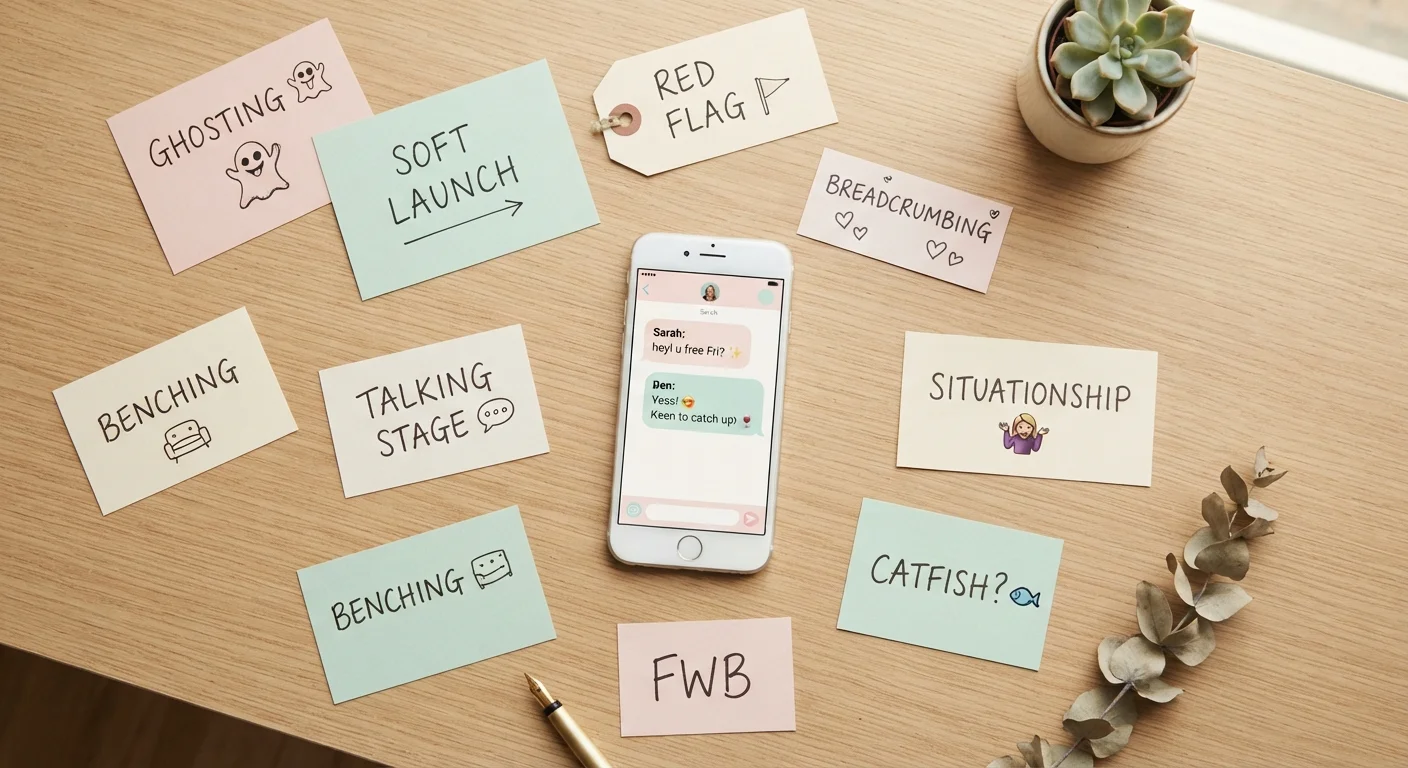
| Origin of 'Ghosting' | The term entered mainstream use around 2014-2015 alongside the rise of smartphone dating apps (Merriam-Webster added 'ghosting' to the dictionary in 2017) |
| Most common platform for breadcrumbing | Social media and messaging apps, where low-effort contact is frictionless |
| Situationship prevalence | A significant share of young adults report having been in undefined romantic relationships (Pew Research Center, American Teens, Social Media and Technology, broader relationship research) |
| Why slow fades happen | Often driven by discomfort with direct rejection conversations rather than deliberate cruelty |
| Related concept: attachment theory | Anxious attachment styles may make breadcrumbing and situationships harder to step back from (Bowlby's attachment theory, widely applied in relationship psychology) |
Why Modern Dating Has Its Own Language
If you've stepped into dating recently - or come back to it after a long break - you've probably encountered words that didn't exist a decade ago. Situationship. Breadcrumbing. Ghosting. These terms aren't just internet slang; they describe real dynamics that millions of people experience but often struggle to name.
Having language for something makes it easier to recognize, talk about, and respond to. This glossary is here to give you exactly that - clear, plain-English definitions without judgment or overcomplication. Whether you're using dating apps or meeting people in everyday life, understanding this vocabulary helps you stay oriented.
Ghosting
When someone abruptly cuts off all contact - texts, calls, and dates - without explanation. The term comes from the idea of simply vanishing like a ghost. It's one of the most widely recognized modern dating terms.
Breadcrumbing
Sending small, infrequent signals of interest - a like, a short text - just enough to keep someone engaged without any real intention of pursuing a relationship. It keeps someone emotionally available without offering reciprocity.
Situationship
An emotionally involved, often romantic connection that lacks a clear label or commitment. It can share many features of a relationship - regular contact, shared time, affection - without either party defining what it is.
Slow Fade
A gradual withdrawal from contact rather than an abrupt ending. Responses slow down, plans become vague, and eventually communication stops entirely. It's often a way of avoiding a direct breakup conversation.
Love Bombing
An overwhelming display of affection, attention, and grand gestures very early in a relationship, often disproportionate to how well two people actually know each other. It can sometimes signal controlling or manipulative behavior.
Orbiting
Ceasing direct communication with someone while continuing to engage passively with their social media - watching stories, liking posts. The person stays on the periphery without making real contact.
Benching
Keeping someone as a backup option while you pursue other people, maintaining just enough contact to ensure they remain interested. Similar to breadcrumbing, but with a more deliberate sense of holding someone 'in reserve.'
DTR (Define the Relationship)
A conversation - often described as 'the DTR talk' - in which two people clarify what they are to each other and what expectations they share. It's the natural solution to situationship ambiguity.
Patterns Worth Knowing - and How to Respond
Naming a behavior is one thing; knowing how to respond is another. Below are some of the most commonly experienced modern dating dynamics, and what they can mean for you.
Breadcrumbing
This is when someone sends just enough attention - a like, a vague text, an occasional check-in - to keep you interested without ever committing to anything real. It can feel confusing precisely because contact is intermittent, not absent. If you notice a pattern where someone disappears and reappears without making concrete plans, that's breadcrumbing.
What helps: Pay attention to consistency over time, not individual moments. Ask yourself whether the contact moves anything forward, or simply keeps you on hold.
The Slow Fade
Unlike ghosting - which is a sudden, complete disappearance - the slow fade is a gradual withdrawal. Replies get shorter. Plans get vaguer. Eventually, contact quietly stops. It's often chosen to avoid difficult conversations, but it can leave the other person confused and second-guessing themselves.
What helps: If you sense a slow fade happening, it's okay to send one clear, low-pressure message asking where things stand. You deserve a direct answer, even if it's not the one you wanted. Understanding your own personal boundaries before you start dating makes these moments easier to navigate.
Situationship
A situationship sits in the gray area between a casual hookup and a committed relationship. Both people may have feelings, spend regular time together, and act like a couple - without ever defining what they are. This ambiguity can feel comfortable at first and exhausting over time.
What helps: Clarity conversations feel vulnerable, but they're kinder than prolonged uncertainty. Knowing what you want before raising the topic makes it easier to express. Your attachment style can also shape how comfortable you feel in undefined relationships - worth reflecting on.
Love Bombing
Intense flattery, constant attention, and grand gestures very early in a relationship can feel wonderful - until it doesn't. Love bombing describes an overwhelming flood of affection that is disproportionate to how long two people have known each other. It can be a warning sign of controlling behavior, though context matters and not every enthusiastic person is a red flag.
What helps: Notice whether the intensity feels mutual and sustainable, or whether it creates pressure and obligation. Pace matters. The way someone communicates early on also signals a lot - see how messaging style shapes early dating.
Orbiting
Orbiting happens when someone stops responding to your messages but continues watching your social media stories and liking your posts. They've ended direct contact while maintaining a low-level digital presence in your life - staying close enough to notice, but not close enough to connect.
What helps: Recognize that orbiting is often about the other person's ambivalence, not your worth. Adjusting your privacy settings is a completely reasonable response if the dynamic feels uncomfortable.
For a broader look at emotional patterns and self-awareness in relationships, the Self & Connection hub offers a helpful starting point. And if some of these dynamics have affected your mental well-being, the mental well-being glossary can help you understand what you might be feeling.