

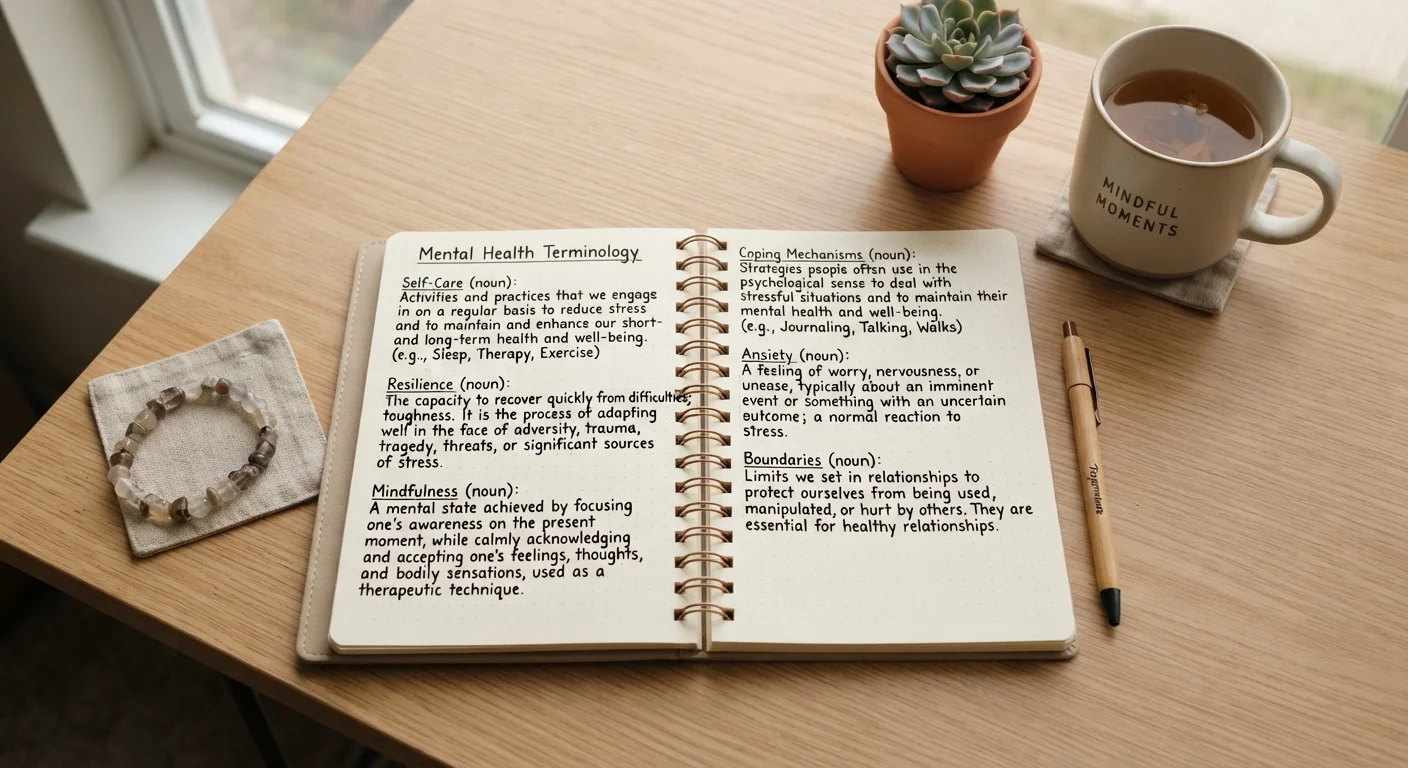
Why Mental Health Has Its Own Vocabulary
Scroll through any wellness article, listen to a therapy-focused podcast, or sit in a counselor's office, and you will quickly encounter words that feel unfamiliar: dysregulation, cognitive distortions, somatic awareness. This specialist language exists for good reason - precision matters when describing how the mind works - but it can make mental health topics feel inaccessible to newcomers.
This glossary is designed to bridge that gap. Each term below is explained in plain English, without clinical jargon, so you can follow conversations, understand self-help resources, and make more informed decisions about your own well-being. For a similar plain-language approach in a different domain, see how our budgeting glossary breaks down financial vocabulary the same way.
This Glossary Is Educational, Not Clinical
The definitions here are designed to help you navigate everyday conversations and resources about mental health. They are not a substitute for professional assessment or therapy. If you are experiencing significant distress, persistent low mood, or other mental health concerns, please speak with a qualified healthcare provider.
Core Terms: Your Mental Well-Being Reference
The definitions below cover concepts you are most likely to encounter when exploring stress management, therapy resources, or everyday mindset tools. Use this as a lookup reference - you do not need to read it in order.
Many of these concepts connect directly to daily habits. Our overview of daily mental well-being practices explains how research generally relates these ideas to routines you can start small with today. You may also find it useful to explore how these terms apply differently across life stages - see mental well-being across life stages for an accessible overview.
Two terms that come up constantly in well-being spaces - mindfulness and meditation - are often confused with each other. Our guide on mindfulness vs. meditation explains the distinction clearly. For deeper self-development vocabulary, the self-awareness glossary is a natural next read. All of these resources fit within the broader framework of daily healthy habits that support lasting well-being.
This article is for general informational and educational purposes only and does not constitute medical or psychological advice. If you have concerns about your mental health, please consult a qualified healthcare professional.