
Sinking Funds: The Simple Technique for Planning Irregular but Predictable Expenses

Key Takeaways
Sinking Fund
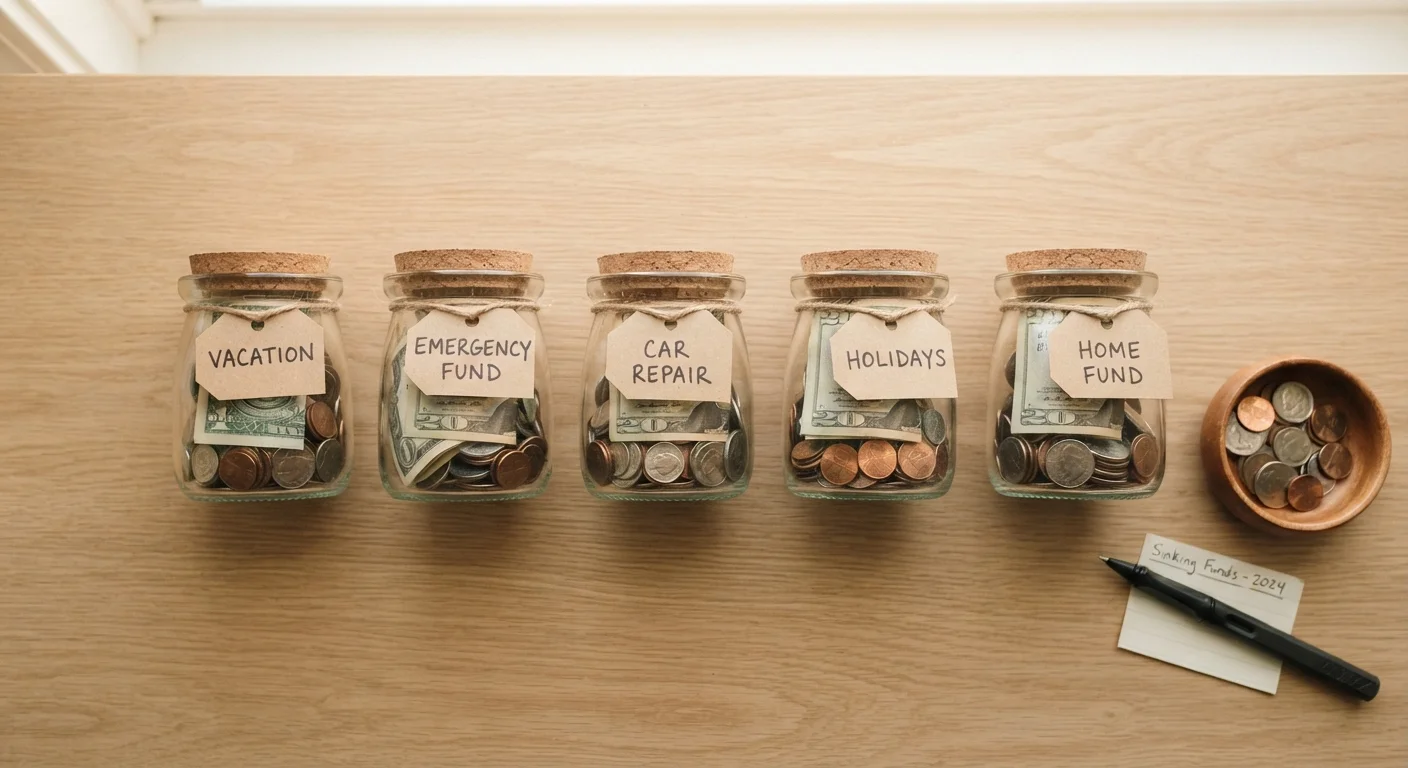
A sinking fund is a dedicated savings pot you fill gradually over time to pay for a known future expense. Instead of scrambling to cover a large cost when it arrives, you spread the saving across many months so the payment feels painless. Common uses include car registration, holiday gifts, home repairs, and annual insurance premiums.
In corporate finance, a sinking fund refers to money set aside to retire debt. In personal finance, the term has been widely adopted to describe goal-specific sub-savings accounts.
Why Regular Budgets Miss Irregular Expenses
Most budgets are built around monthly costs: rent, utilities, groceries, subscriptions. They handle the predictable well. What trips people up are expenses that don't arrive every month - car registration, annual insurance premiums, back-to-school supplies, holiday gifts, or a vacation. These costs are entirely predictable if you think ahead, yet they routinely blow up budgets because they weren't planned for.
The result is a cycle many people recognise: you feel on track financially until a large known bill arrives and you're forced to pull from savings, lean on a credit card, or scramble. A sinking fund breaks that cycle by making you plan for those costs before they arrive.
This approach fits neatly within broader budgeting frameworks. If you're exploring how different systems handle saving, our overview of budgeting methods for new savers explains where sinking funds slot into each approach.
How a Sinking Fund Actually Works
The math is simple. Identify a known future expense, estimate its total cost, count the number of months until you need the money, then divide the total by the months. That's your monthly contribution.
For example: you expect to spend $600 on holiday gifts in December and it's currently June - six months away. Divide $600 by 6 and you get $100 per month. Set aside $100 every month from June through November and the expense is fully funded before it arrives.
1 in 3
Americans with no savings for unexpected expenses
Federal Reserve surveys have consistently found that a significant share of U.S. adults would struggle to cover even a modest unexpected expense, underscoring why planned saving matters.
$1,000+
Average annual car maintenance and repair cost
AAA has reported that vehicle ownership carries substantial ongoing costs beyond fuel, making auto-related sinking funds among the most practical for most households.
12x
Times a year monthly contributors save vs. one lump sum
Spreading a single annual expense across twelve monthly contributions means engaging with and planning for that cost consistently throughout the year.
You're not borrowing from the future or hoping for extra income. You're simply redistributing a cost you already knew was coming across the months leading up to it. That shift in timing changes a stressful lump-sum payment into a manageable routine contribution.
Run this calculation for each expense you want to cover, and you have a clear picture of how much to set aside monthly in total across all your sinking funds.
Sinking Funds vs. Emergency Funds: An Important Distinction
People often conflate these two tools, but they serve entirely different purposes and should never share the same pot of money.
- Emergency fund: Covers unexpected, unplanned events - a layoff, a medical emergency, a car breakdown you didn't see coming. Its purpose is to absorb financial shocks.
- Sinking fund: Covers expected, planned events that you know will cost money - an annual car service, a summer vacation, replacing an aging appliance. Its purpose is to eliminate financial surprises for costs you could anticipate.
Mixing them defeats both purposes. If you drain your emergency fund on a vacation you knew was coming, you have nothing left when the genuinely unexpected hits. Keep them separate - ideally in different accounts - and label each one clearly. For a full breakdown of the emergency fund side, see our Emergency Fund explainer.
Common Sinking Fund Categories to Consider
Once you understand the concept, you'll start spotting irregular-but-predictable expenses everywhere. Here are categories that tend to catch people off guard:
- Vehicle costs: Registration, annual inspection fees, seasonal tires, or a planned major service
- Home maintenance: HVAC servicing, gutter cleaning, or appliance replacement
- Travel: A planned vacation or family visit - sinking funds are a natural fit for trip planning too
- Gifts and celebrations: Holidays, birthdays, weddings, graduations
- Annual subscriptions and premiums: Insurance paid annually, professional memberships, software licenses
- Medical and dental: Known upcoming procedures or planned out-of-pocket costs
You don't need to fund all of these at once. Start with one or two categories that cause you the most financial stress and build from there.
Start With Just One Sinking Fund
If the idea of multiple funds feels overwhelming, pick the single upcoming expense that worries you most and start there. Once you see it filling up month by month, adding a second fund feels natural rather than daunting. Progress builds confidence, and confidence builds better habits.
Setting Up and Maintaining Your Sinking Funds
The most effective setup uses automation and separation. Here's a practical approach:
- List your irregular expenses for the next 12 months and estimate each cost.
- Calculate the monthly contribution for each: total cost ÷ months remaining.
- Open a dedicated savings account - or multiple sub-accounts if your bank allows - and label each fund clearly.
- Automate the transfers on payday so the money moves before you can spend it.
- Review quarterly: Update estimates, add new funds, and close completed ones.
Sinking funds pair especially well with consistent budgeting habits. Our article on habits that keep a budget working long-term covers the routines that make systems like this stick.
If your income varies month to month, the fixed-contribution model needs adjustment - consider percentage-based saving instead. Our guide to budgeting on an irregular income addresses this directly.
This article is for general informational and educational purposes only and does not constitute personalised financial advice. Please consult a qualified financial professional for guidance tailored to your individual circumstances.