

Key Takeaways
Option A
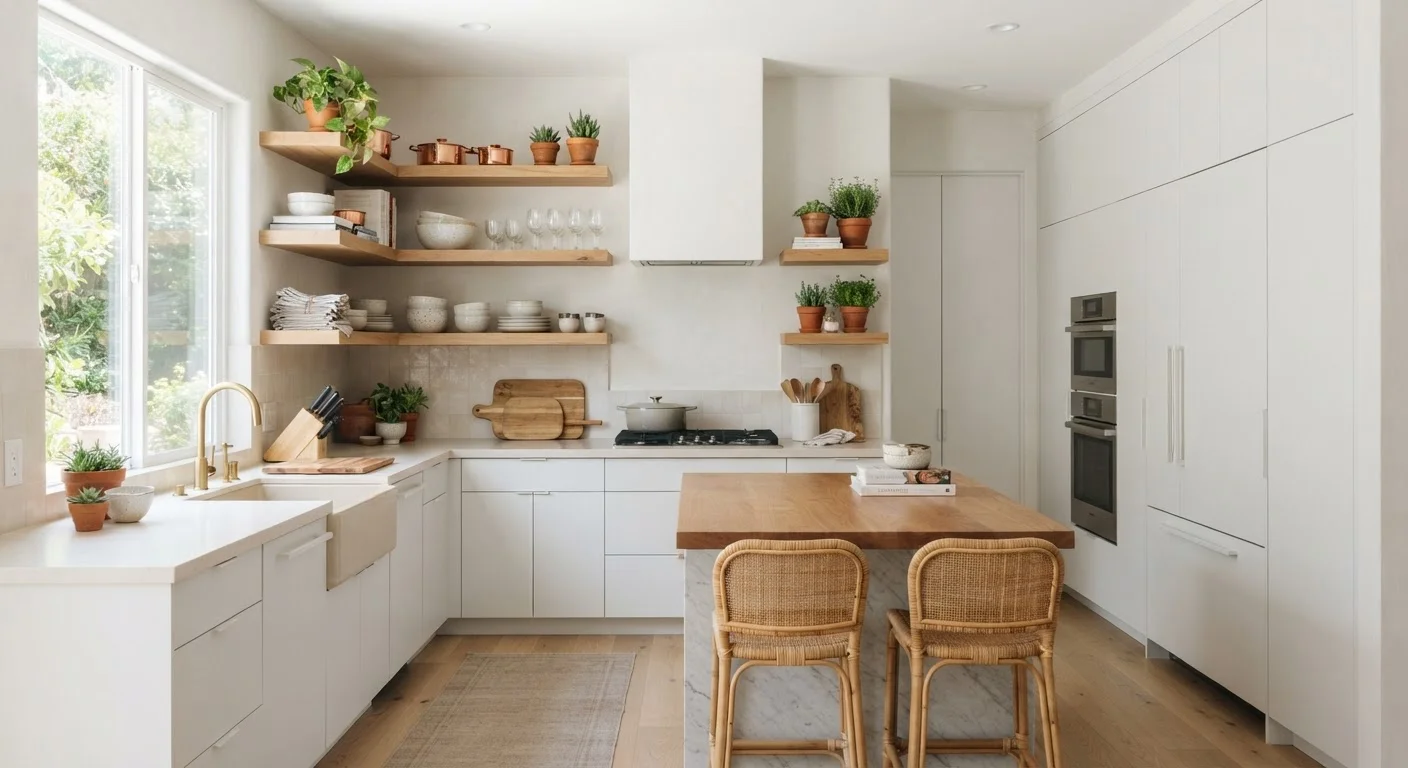
Open Shelving
The airy, design-forward option that puts everything on display.
Best for: Homeowners who keep a curated, organized kitchen and want their space to feel larger and more personal.
Option B
Closed Cabinets
The practical, concealing workhorse of most everyday kitchens.
Best for: Households that prioritize easy tidying, dust-free storage, and visual calm regardless of what's inside.
If you maintain a tidy, minimalist kitchen with curated dishware
Open Shelving
Your items will double as décor, and the open look adds visual spaciousness without sacrificing function.
If your household generates clutter and you prefer easy tidying
Closed Cabinets
Closed doors let you shut away everyday disorder quickly, keeping the kitchen looking clean with minimal effort.
If you're working with a tight renovation budget
Open Shelving
Floating shelves generally require less material and labor than full upper cabinet runs, lowering upfront costs.
If cooking is frequent and generates significant grease and steam
Closed Cabinets
Enclosed storage keeps dishes and pantry items free of the airborne grease and moisture that open kitchens produce.
If you want the benefits of both without committing fully to either
Open Shelving
Use open shelves for a dedicated display zone alongside closed cabinets for everyday storage - the hybrid approach suits most real kitchens.
The Core Difference: Display vs. Concealment
Open shelving replaces cabinet doors with exposed brackets or floating boards, putting your dishes, glasses, and pantry staples on full view. Closed cabinets - whether wall-mounted uppers or full floor-to-ceiling units - hide contents behind doors, keeping the visual field clean regardless of what's stored inside.
The choice isn't purely aesthetic. It shapes how you interact with your kitchen daily: how you clean it, how you organize it, and how forgiving it is when life gets busy. For a deeper look at how cabinet construction affects durability and cost, see our guide to flat-pack vs. custom cabinetry.
| Criterion | Open Shelving | Closed Cabinets |
|---|---|---|
| Visual effect | Airy, spacious feel | Clean, uniform appearance |
| Dust & grease exposure | High - items exposed daily | Low - doors protect contents |
| Access speed | Faster for frequent items | One extra step per use |
| Clutter tolerance | Low - everything visible | High - hides disorder easily |
| Typical installation cost | Generally lower | Generally higher |
| Organization demand | Ongoing, consistent effort | Flexible, less visible |
| Resale / rental appeal | Mixed buyer reaction | Broadly accepted |
Where Open Shelving Earns Its Reputation
Interior designers have long used open shelving to make compact kitchens read as larger and more relaxed. Without cabinet door frames interrupting the sightlines, a small galley kitchen can feel noticeably more open. This effect is real - removing visual weight from walls does help a room breathe.
Open shelves also give everyday items a functional home that's genuinely faster to access. Grabbing a coffee mug from an open shelf requires one motion; a closed cabinet requires two. For frequently used items, that small friction disappears entirely.
Cost is another legitimate advantage. Floating shelves and simple bracket systems typically involve less material, fewer hardware components, and simpler installation than a full run of upper cabinets. If you're renovating on a careful budget, this difference can be meaningful.
Where Closed Cabinets Hold Their Ground
The most common complaint about open shelving isn't how it looks on day one - it's how it looks on day 300. Dust and airborne grease settle on exposed surfaces continuously. In an active cooking kitchen, dishes on open shelves need wiping down before use more frequently than most people anticipate. For households that cook with high heat, oils, or bold spices regularly, this maintenance burden is substantial.
Closed cabinets are also far more forgiving of real-life habits. You can slide mismatched containers, half-used packages, and everyday clutter behind a door in seconds. The kitchen looks tidy regardless of what's inside - a genuine practical advantage for busy families or anyone who doesn't want their storage to double as décor.
Cabinets also offer better protection for items that benefit from darkness and temperature stability, such as certain pantry goods and specialty cookware. And for renters or those planning to sell, closed cabinets typically appeal to a broader range of buyers and landlord expectations.
~30%
Of kitchen renovations include open shelving
Houzz's annual kitchen trends reports have consistently shown open shelving appearing in roughly a quarter to a third of kitchen remodels in recent years.
2×
More frequent cleaning open shelves typically require
Home organization experts generally advise wiping open kitchen shelves at least twice as often as the interiors of closed cabinets to manage grease and dust.
Top 3
Kitchen storage ranked among homeowners' top renovation priorities
Storage capacity consistently ranks among the top three renovation priorities cited by homeowners in National Association of Realtors remodeling surveys.
The Hybrid Approach Most Kitchens Actually Use
In practice, the open-vs.-closed debate is often a false binary. Many everyday kitchens benefit from combining both: closed lower cabinets (which catch the most clutter) and a deliberately limited zone of open shelving at eye level for display. This hybrid keeps maintenance manageable while still bringing visual personality into the space.
A few practical guidelines help the hybrid work well. Reserve open shelves for items you use daily - they won't accumulate dust if they're cycled frequently. Choose a consistent color palette for what's on display (matching dishware or a neutral basket set) so the shelves look intentional rather than cluttered. Keep the closed cabinets for pantry staples, infrequently used equipment, and anything mismatched.
Your household's actual habits are the most reliable guide. If tidying happens in quick bursts between other tasks, closed cabinets will serve you better. If you genuinely enjoy curating and arranging, open shelves can reward that instinct. Neither choice is wrong - the goal is a kitchen that functions well for the people using it every day.