

Key Takeaways
Start here
Why Motorways Feel Different From Other Roads
Next
Merging Onto the Motorway: The Slip Road Explained
Build on it
Lane Discipline and Positioning
Go deeper
Speed, Space, and Staying Safe
Finish strong
Exiting the Motorway Without Panic
Why Motorways Feel Different From Other Roads
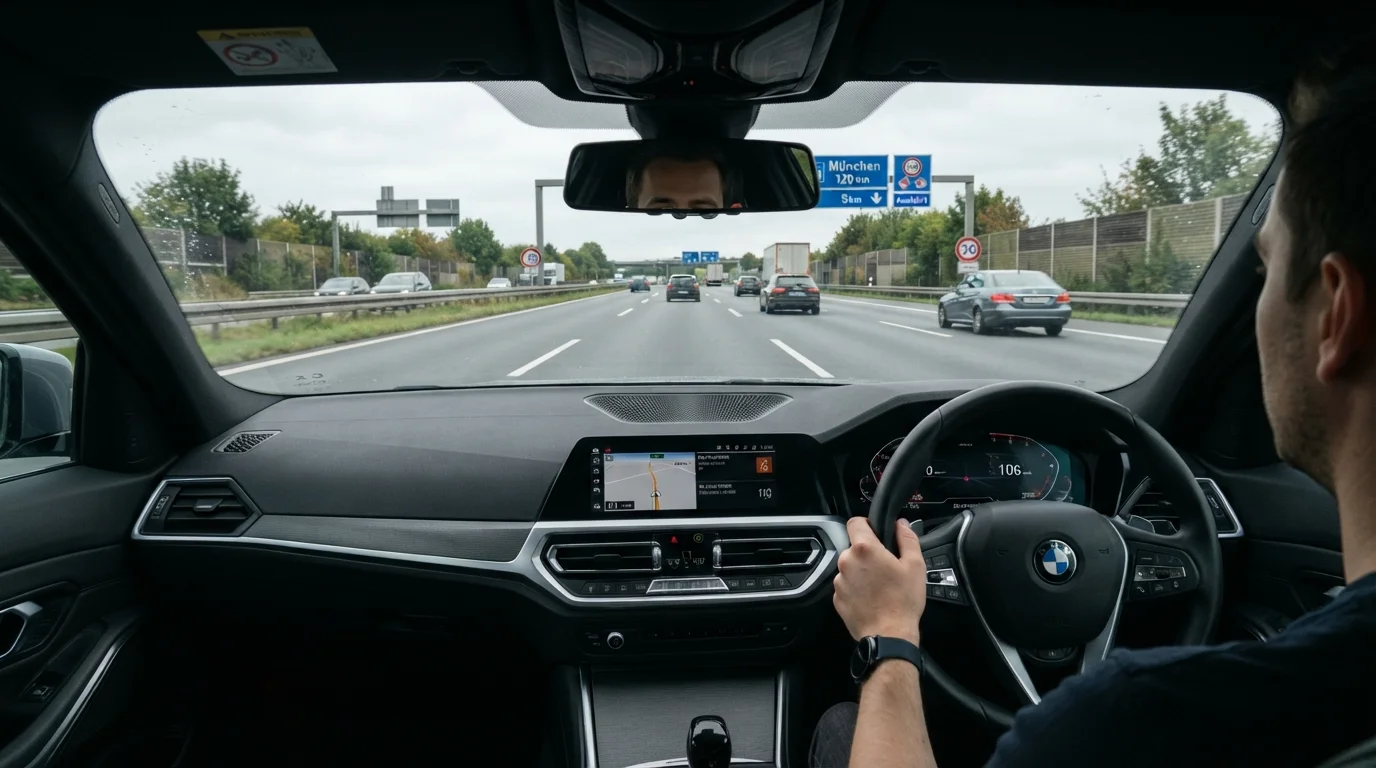
The moment you accelerate onto a motorway for the first time, you'll notice everything happens faster. Signs pass in seconds, vehicles around you feel closer, and decisions that seemed unhurried on a residential street now arrive rapidly. This sensory shift is the main reason motorways unsettle new drivers - not because they're more dangerous, but because they demand a different kind of attention.
In reality, motorways are designed for safety. Traffic flows in one direction only, there are no junctions to cross, no cyclists, no pedestrians, and no traffic lights. The hazards you face are fewer in type but require quick, confident responses. Understanding this distinction helps reframe motorway anxiety: you're not entering a more dangerous environment, you're entering a faster one that rewards smooth, deliberate driving.
If you're still working through your broader driving confidence, the guide on building driving confidence for beginners offers a useful wider context before your first motorway trip.
Slip road
The short acceleration lane that connects a regular road to the motorway, used to build speed before merging into live traffic.
Blind spot
The area beside and slightly behind your vehicle that cannot be seen in your mirrors - requires a quick glance over your shoulder before changing lanes.
Lane discipline
The practice of staying in the left lane when not overtaking, and returning to it promptly after passing another vehicle.
Two-second rule
A method for judging safe following distance: leave at least two seconds of travel time between your vehicle and the one ahead - more in poor conditions.
Countdown markers
Small roadside signs with diagonal lines that warn drivers of an approaching motorway exit, appearing at one mile, half a mile, and at the junction itself.
Overtaking lane
The middle or outer lanes of a motorway, used only to pass slower vehicles - drivers should return left after overtaking.
Merging Onto the Motorway: The Slip Road Explained
The slip road - the acceleration lane that leads onto the motorway - is where most beginner anxiety is concentrated. The goal is straightforward: reach a speed that matches the motorway traffic before you reach the end of the slip road, then merge smoothly into a gap in the left lane.
Here's the practical sequence:
- Accelerate steadily along the slip road rather than dawdling. You need to be at or close to motorway speed before merging.
- Check your mirrors and blind spot (the area not visible in mirrors) early - not at the last moment.
- Identify a gap in the left lane and time your entry to it. Vehicles on the motorway have priority; you're joining their flow, not forcing them to make room.
- Signal and merge in one confident, smooth movement.
If the slip road ends before you find a safe gap, be aware of your surroundings and adjust rather than panic-braking. In practice, traffic usually creates space naturally when you signal clearly and maintain appropriate speed.
Practice the slip road on quiet days first
If possible, take your first motorway trip during off-peak hours - mid-morning on a weekday, for example - when traffic volume is lower. This gives you more space and time to practice merging without the pressure of heavy congestion. Build up to busier conditions gradually as your confidence grows.
Lane Discipline and Positioning
On a three-lane motorway, the left lane is the driving lane - it's where you should spend most of your time. The middle and right (outer) lanes exist for overtaking only. Once you've passed a slower vehicle, move back left. This keeps traffic flowing and is a basic expectation of all drivers.
New drivers sometimes gravitate toward the middle lane because it feels safer - less exposure to slip road traffic on the left and fewer fast-moving vehicles to the right. This instinct is understandable but misplaced, and middle-lane driving actually increases conflict rather than reducing it.
When overtaking, check your mirrors, signal, move out, pass at a consistent speed, signal again, and return left. Avoid hovering alongside another vehicle or matching their speed for extended periods - this creates a blind spot for both of you.
For a broader look at the road rules that trip up even experienced drivers, see our guide to right-of-way rules.
Speed, Space, and Staying Safe
The two-second rule is the standard minimum following distance at motorway speeds: pick a fixed point on the road ahead, wait for the car in front to pass it, then count two seconds before you reach the same point. In wet conditions, double that gap to four seconds. Heavy rain, fog, or tiredness all demand more space.
Motorway speed limits exist as a ceiling, not a target. If traffic is slow or visibility is poor, drive at the speed conditions allow. Smooth, incremental adjustments to speed are far safer than sudden braking - which is also a leading cause of rear-end incidents at high speed.
Fatigue is a genuine motorway hazard. Long stretches of monotonous driving reduce alertness more quickly than town driving. On any longer journey, plan a break every couple of hours. For broader trip planning, our road trip planning hub covers how to structure rest stops and route planning effectively.
Exiting the Motorway Without Panic
Leaving a motorway requires more forward planning than joining one. Countdown markers - small rectangular signs featuring diagonal lines - appear at regular intervals before each junction: one mile out, half a mile, and at the exit itself. Begin positioning yourself in the left lane when you see the one-mile marker.
Once you move onto the exit slip road, check your speedometer. After sustained motorway driving, 40 mph can feel like a crawl, but that same 40 mph approaching a roundabout is genuinely fast. Consciously read your speed rather than trusting how it feels.
If you miss your junction, do not stop or reverse under any circumstances - continue to the next exit. It's a longer route, not a disaster.
Before your next motorway trip, it's worth reviewing your general pre-drive readiness. The article on preparing for your first solo drive covers the practical checklist that applies just as well to motorway journeys as to shorter trips.
This article is intended as general driving guidance and education. Always follow the traffic laws and regulations applicable in your state or jurisdiction, and consult a qualified driving instructor for personalised tuition.