

Key Takeaways
Option A
Mexico City
The sprawling cultural megalopolis with centuries of history.
Best for: Travelers craving world-class museums, street food, architecture, and deep cultural immersion.
Option B
Cancún
The sun-soaked Caribbean resort hub built for relaxation.
Best for: Travelers seeking beach lounging, clear warm water, and easy all-inclusive convenience.
If you want history, art, and food above all else
Mexico City
Mexico City's museums, ancient ruins, and neighborhood food scenes offer an unmatched cultural depth that few cities in the Americas can rival.
If you want to unwind on beautiful beaches with minimal planning
Cancún
Cancún's all-inclusive resorts and calm Caribbean waters make relaxation effortless, especially for first-time travelers who prefer a structured environment.
If you're traveling with young children
Cancún
Cancún's resort infrastructure, calm shallow waters, and family-focused amenities make it an easier logistical fit for families with young kids.
If you're a curious first-time visitor to Mexico who loves big-city energy
Mexico City
CDMX rewards curious travelers with surprising neighborhoods, incredible food markets, and a living mix of ancient and modern Mexican culture.
If time is tight and you want maximum flexibility
Cancún
Cancún's compact Hotel Zone means you can comfortably enjoy beaches, cenotes, and a Mayan ruin day trip even on a short four- or five-day itinerary.
What Kind of Traveler Are You?
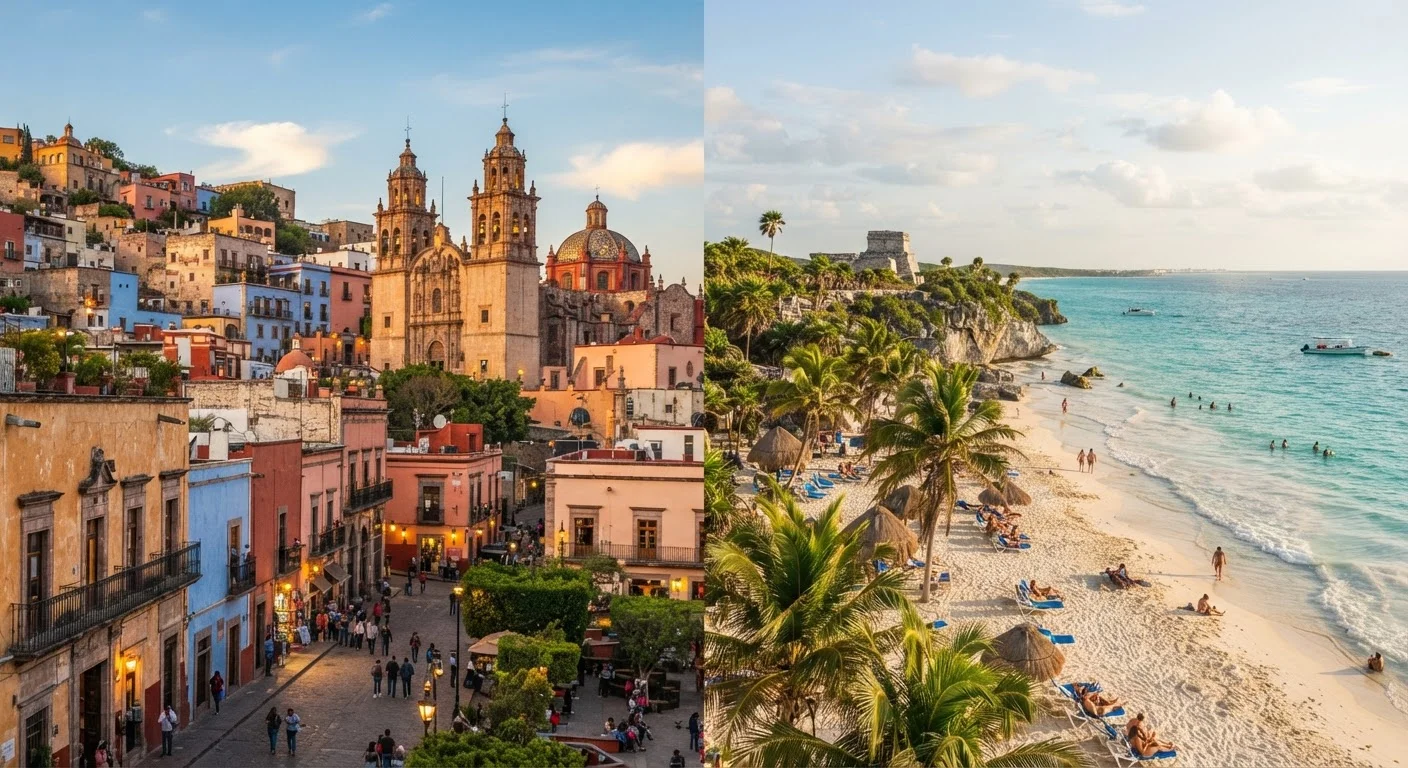
Mexico is one country, but Mexico City and Cancún might as well be different worlds. One is a mountain-altitude megalopolis of 21 million people, steeped in Aztec history, colonial architecture, and some of the most exciting food on the planet. The other is a purpose-built Caribbean resort strip where the water runs the color of a swimming pool and all-inclusive packages reign supreme.
Neither destination is better - they simply serve different travel moods. The real question is what kind of trip you're actually dreaming about right now.
| Criterion | Mexico City | Cancún |
|---|---|---|
| Primary appeal | Culture, history, food | Beach, relaxation, resorts |
| Setting | High-altitude mountain basin | Caribbean coastline |
| Trip planning effort | Higher - many neighborhoods to explore | Lower - resort infrastructure does the work |
| Typical trip length | 4-7 days to scratch the surface | 4-6 days fits comfortably |
| Day trip options | Teotihuacán, Xochimilco, Puebla | Chichén Itzá, cenotes, Isla Mujeres |
| Food scene depth | Exceptional, world-renowned | Good, though resort-heavy areas skew international |
| Altitude consideration | ~7,300 ft - adjustment may be needed | Sea level - no altitude concerns |
| Water activities | Limited (landlocked city) | Excellent - snorkeling, diving, swimming |
Mexico City: Culture, Chaos, and an Incredible Food Scene
Known locally as CDMX (Ciudad de México), Mexico City is one of the most culturally rich urban destinations in the Western Hemisphere. The Museo Nacional de Antropología alone - home to the famous Aztec Sun Stone - is worth an entire day. Neighborhoods like Roma Norte, Condesa, and Coyoacán each have their own distinct personality, from tree-lined café streets to vibrant weekend markets.
Street food here is serious business. Tacos al pastor, tlayudas, tamales from a sidewalk cart at 7 a.m. - the eating never stops, and it doesn't have to be expensive. Mexico City is also one of the more wallet-friendly major capitals for American visitors in terms of day-to-day costs.
One practical note: Mexico City sits at approximately 7,300 feet above sea level. Many visitors feel mild altitude effects - headaches or fatigue - during their first day or two. Staying hydrated and easing into activity on arrival day goes a long way. If you have underlying health concerns, check with your doctor before traveling to high-altitude destinations.
Cancún: Easy Beach Access and the Yucatán Beyond
Cancún's Hotel Zone (Zona Hotelera) is essentially a long barrier island lined with resorts, shops, and restaurants facing the Caribbean Sea. For travelers who want calm, warm, brilliantly clear water without a complicated itinerary, it delivers exactly that. The beach setup is hard to beat, and the all-inclusive model means many visitors never have to think about logistics once they arrive.
But Cancún is also a launching pad. Day trips from here can reach the ancient Mayan city of Chichén Itzá (a UNESCO World Heritage Site), the colorful island of Isla Mujeres by ferry, and dozens of cenotes - the natural sinkholes filled with crystal-clear freshwater that are unique to the Yucatán Peninsula. Travelers who stay only on the Hotel Zone strip miss a lot of what makes this region genuinely special.
Downtown Cancún (known as El Centro) is a short drive from the Hotel Zone and offers a much more authentic slice of local Mexican life - neighborhood taquerías, local markets, and everyday city energy that stands apart from the resort bubble.
Side-by-Side: Key Practical Differences
Beyond vibe and scenery, a few practical factors often tip the decision for American travelers.
Always Check Official Travel Advisories
Before finalizing any trip to Mexico, review the latest guidance from the US Department of State (travel.state.gov) and verify entry requirements directly with the Mexican embassy or consulate. Conditions, visa rules, and safety advisories can change. Booking travel insurance that covers trip interruption is also worth considering for international travel.
Getting there: Both cities are well-connected to major US hubs with frequent direct flights. Travel time from cities like Houston, Dallas, or Miami is roughly 2-3 hours to Cancún and slightly longer to Mexico City depending on your origin. Always verify current entry requirements, including passport validity, with the US Department of State and Mexican consular sources before you travel - these details can change.
Safety awareness: Both destinations are heavily visited by American tourists. As with any international trip, it's worth reviewing current travel advisories from the US State Department, staying in well-trafficked areas, and following local guidance. Neither destination should be approached with fear, but informed awareness is always smart travel practice.